| The University of Connecticut School of Pharmacy and Pharmaceutical Sciences is accredited by the Accreditation Council for Pharmacy Education as a provider of continuing pharmacy education. Statements of credit for the online activity ACPE UAN 0009-0000-26-043-H08-P/T will be awarded when the post test and evaluation have been completed and passed with a 70% or better. Your CE credits will be uploaded to your CPE monitor profile within 2 weeks of completion of the program. |  |
Content
INTRODUCTION
Many pharmacy job sites require pharmacists and technicians to spend several hours standing. What’s the worst that could happen standing upright for hours or bent over a counter? It’s not like an athlete in a contact sport that significantly increases the risk of injury and pain. Or is it? Add a previous injury, a genetic predisposition, just time, or wear and tear and you, too, could be forced out of the job or game. Affecting close to 16 million adults in the United States (U.S.), back pain is the most common medical condition and the primary cause of disability globally.1
Lasting for days, weeks, months, or years, back pain (also known as lumbago; see the SIDEBAR) can be challenging for patients and difficult for healthcare providers to diagnose and treat. Similarly, the game of baseball can be variable in duration, and the rules of the game can seem difficult to understand. The plethora of treatment options for back pain can seem overwhelming to patients. Using the game of baseball as an analogy, this continuing education activity will consider each base a different treatment modality. As the patient, or player, advances to the next plate, various supportive staff must provide direction.
- First base covers the variety of medications used to treat low back pain (LBP)
- Second base describes functional therapy
- Third base explains interventions
- The outfield represents alternative treatment options
- Home plate signifies improvement in LBP factors that include life with decreased pain, patients acquiring the knowledge to prevent future flares, a return to daily functions, and improvement of anxiety and depression.
This activity highlights the various causes and treatments available so pharmacists and technicians can help patients navigate treatment choices and cope with LBP. Advancing to home plate is the goal. Let’s play lumbago!
SIDEBAR: Lumbago!2
“Lumbago” is an old-fashioned medical and lay term for pain in the lower back (the lumbar region). It comes from the Latin lumbus (“loin” or lower back). Historically, physicians used it broadly for almost any LBP without specifying the cause. Today, most clinicians prefer more precise terms such as:
- low back pain
- lumbar strain
- lumbar radiculopathy
- herniated disc
- sciatica (if nerve pain radiates down the leg)
You’ll still encounter the term “lumbago” in older books or films, humorously (“my lumbago is acting up again”); among some older adults, and occasionally in insurance or historical medical records. The word also survives in pop culture. For example, the character Uncle in the video game Red Dead Redemption 2 repeatedly complains about having “lumbago” when asked to do work.
Modern medicine generally considers it a vague, nonspecific term rather than a diagnosis.
STARTING LINEUP
Affecting one in 13 people globally, LBP was estimated to affect 619 million people in 2020.3 Since 1990, cases have increased by 60% due to the aging population and population growth with low and middle-income countries experiencing the largest increase, primarily in the continents of Africa and Asia. Statisticians consider LBP the main cause of disability globally including all ages and both sexes, however its frequency is higher in females and people 70 years and older. Cases of LBP are expected to increase by 36% to 843 million people by 2050.3 Table 1 lists factors that increase the risks of LBP.
Table 1. Risk Factors for Low Back Pain4, 5,6
| Physical | Psychological | Lifestyle |
| Age | Anxiety or depression | Alcohol consumption |
| Sex, with women more likely to experience symptoms | Fear of bodily activities that lead to bodily harm or pain | Obesity |
| History of back injury | Long term mental stress | Smoking |
| Working a physically demanding job |
ALL-STAR PATHOLOGY, THE LBP LEAGUE
A summer tradition since 1933, American professional baseball teams of the National League and American League select their most prestigious players to play in the All-Star Game each July.7 Currently, each league contains 15 teams. LBP is classified into four different “leagues”: specific or non-specific, spinal or non-spinal.
Because LBP is classified as specific or non-specific, healthcare providers focus on determining the cause of the pain. Examples of specific LBP include
- pain generated by a disease
- structural issues in the spine
- pain that flows from another area of the body
The non-specific category of LBP is defined as unidentifiable and unexplainable and it unfortunately accounts for 90% of LBP.8
LBP is also categorized into spinal and non-spinal origins.9 Table 2 lists examples of spinal and non-spinal conditions. Among specific spinal causes of LBP, disorders with nerve-root involvement occur more often than other specific spinal causes. The most frequent causes of LBP in the specific spinal category are herniated disk and spinal stenosis. compared to other spinal causes, herniated disk and spinal stenosis have elevated prevalence rates of 5% to 10%.10
Table 2. Low Back Pain Classification5,9,10
| Non-spinal | Spinal |
| Aortic aneurysm | Arthritis |
| Endometriosis | Axial spondyloarthritis |
| Fibromyalgia | Disc degeneration |
| Hip conditions | Fracture |
| Kidney stones | Herniated disk |
| Pregnancy | Infection |
| Prostatitis | Osteoporosis |
| Psychological disorders | Skeletal irregularities |
| Tumors with other origins than spine | Spina bifida |
| Spinal stenosis | |
| Spondylolisthesis | |
| Tumor | |
| Vertebrogenic endplate damage |
Considered highly prevalent, LBP lasting fewer than four weeks is defined as acute. Subacute pain lasts from four to 12 weeks, and LBP that extends beyond 12 weeks is described as chronic.11 Chronic LBP is associated with decreased participation in family, social, and work roles, with increased costs to families, communities, and health care systems.3 Since the burden of chronic LBP is staggering, researchers have tried to determine the risks and likelihood of transitioning from acute to chronic LBP.
In a large prospective cohort, multicenter study conducted from May 2016 to March 2019 in the U.S., researchers classified 5,233 patients with acute LBP as low, medium or high risk for developing chronic LBP. Participants’ average age was 50.6 years with 3,029 (58%) women and 4,353 (83%) white.6 Characteristics most commonly associated with transition to chronic LBP were obesity, smoking, severe baseline disability, and diagnosed depression and anxiety. Researchers included an assessment of the clinician treatment, specifically pharmacotherapy guidelines, diagnostic imaging and referral to medical subspecialists. Here, it’s important to know that following current treatment guidelines is known as concordant care. When clinicians treated patients with nonconcordant pharmacotherapies (discussed below), 606 of 1544 (39%) of patients progressed to chronic LBP. The study also observed that within the three weeks of the initial visit to the clinician, half of patients (48%) received at least one discordant process of care regardless of the individual patient’s risk factor. The study determined that exposure to nonconcordant processes increases the risk of developing chronic LBP at six months. Current practice guidelines, however, do not recommend using the tools the researchers used to assess risk in this study due to the belief that acute back pain typically resolves favorably.6
MVP: Most Valuable Pathologies
Seasoned players on the LBP team include degenerative disc disease (DDD) and arthritis which historically have been considered LBP’s common culprits.5 Allowing one to move, bend and twist, the discs in the lumbar spine segment (L1 through L5) separate the vertebrae.12, 13 Acting like a rubbery cushion to absorb shocks and stresses from daily movements, the disks—pictured in Figure 1—are thickest in the lumbar region of the spine. Each disk is composed of the nucleus pulposus (NP) and is 66% to 86% water. The remainder of the NP is type II collagen and proteoglycans. The annulus fibrosus (AF) is the structure that surrounds the NP in the form of a fibrocartilage outer ring. Composed of mostly collagen, proteoglycans, glycoproteins, elastic fibers, and connective tissue cells, the AF provides strength and flexibility.13 See Figure 2. Pain from DDD can wax and wane, travel down the lower back and buttocks, and be aggravated with sitting, bending or lifting. Pain can also range from mild to severe, and may be sharp, aching, or stiff. Particularly after age 40, disc degeneration starts with 5% of adults experiencing LBP. As the body ages, the inner semifluid core may dry out, causing the disc to decrease in thickness. Tears and cracks within the disc can also develop due to minor injuries. Typically, the tears are close to nerves and when aggravated, can trigger the inflammation cascade that can lead to LBP. Cracking of the external wall potentially leads to a disc bulge, also known as a herniated disk. The bulging disc could then compress the spinal nerve and lead to LBP.12, 13
Figure 1. Lumbar Region of the Spine
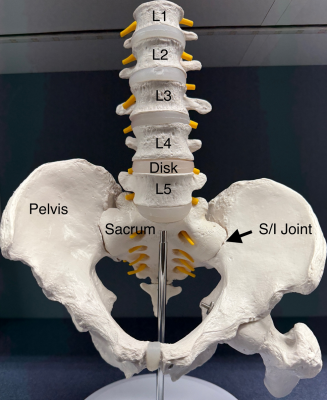
Figure 2. MRI of Lumbar Disk between L4-L5 with Bulge and Facet Joints
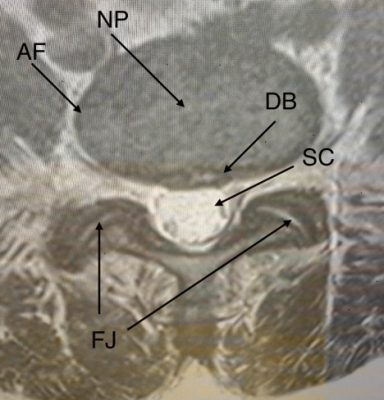
ABBREVIATIONS: NP: nucleus pulposus, AF: annulus fibrosus, SC: spinal cord, FJ: facet joint, DB: disk bulge
A bit of a showboat on the team, spinal arthritis, is a frequent contributor to LBP and regularly leads to chronic back pain.14 Risk factors include 14
- Age
- Obesity
- Comorbid diabetes, gout, psoriasis, tuberculosis, irritable bowel syndrome, or Lyme disease
The origins of spinal arthritis are related to wear and tear, autoimmune disorders, and infection.14,15 Osteoarthritis or degenerative arthritis is a noninflammatory breakdown of cartilage between the joints and frequently encountered in the neck and lumbar areas of the spine. Areas most impacted by osteoarthritis in the low back can occur in the sacroiliac joint which is located between the sacrum and pelvis. Another notable area, known as the “three-joint complex,” is contained in each individual spine segment. The segment is composed of an intervertebral disk and two posterior lumbar facet joints.15 If one of the joints in the complex is affected by degeneration, the remaining joints’ biomechanics are impacted, leading to pain and limitation of movement in the low back DDD and spinal arthritis typically play on the same team as they both lead to breakdown of the disk. As the disk thins due to cartilage damage, the facet joints experience increased pressure and produce LBP.14,15
Vertebrogenic back pain is another significant contributor to LBP but more closely associated with chronic LBP.16,17 A bilayer structure called the end plate is located between the disk and vertebrae. Made of cartilage and bone, end plates provide strength and help prevent vertebral fractures. End plates are also porous, allowing vertebral capillaries to connect to the disk nucleus. These porous pathways transport glucose, lactate, and oxygen to nourish the disk space and transport waste products out of the disk. Due to the conflicting demands of strength required for daily activity and porosity for nutrient passage, end plates are particularly vulnerable to damage. Once damaged, the end plate’s structure is altered and evidence suggests increased nerve proliferation, plus chemical sensitization and mechanical stimulation. The basivertebral nerve, which is located within the vertebrae, transports pain signals from the endplates to the brain. The pain that then results is termed vertebrogenic back pain.17,18
Hallmark signs of vertebrogenic pain are deep, burning, or aching pain and intensified pain during periods of prolonged sitting, when physically active, and when bending forward.5 Due to the similarities of symptoms between vertebrogenic and DDD, misdiagnosis is possible and some patients could have DDD and vertebrogenic LBP concurrently.5
Rheumatoid arthritis can also cause LBP.14 Considered inflammatory, rheumatoid arthritis attacks the immune system specifically at the lining of the joints or synovium. Another inflammatory arthritis that affects both the joints and the sites where ligaments and tendons attach to the bones and causes LBP is spondyloarthritis. Additional forms of spondyloarthritis that can cause LBP include ankylosing spondylitis, psoriatic arthritis, reactive arthritis, enteropathic arthritis, undifferentiated spondyloarthritis and juvenile spondyloarthritis.14
Researchers have identified multiple genetic variants associated with chronic LBP, but there is no single “back pain gene.” Instead, studies suggest that LBP is influenced by many genes, each contributing a small amount to risk. One of the largest studies so far, published in 2025 in Nature Communications, analyzed genetic data from more than 550,000 people and identified 67 new genetic loci linked to chronic back pain.19\
Some notable genes implicated include19,20,21
- FOXP2 — one of the strongest newly identified associations in the 2025 study. This gene is involved in brain and nervous system function.
- DRD2 — related to dopamine signaling and pain processing.
- SCN9A — encodes the NaV1.7 sodium channel involved in pain signaling. Certain variants are associated with altered pain sensitivity, but evidence linking SCN9A directly to common low back pain is limited.
- Genes involved in inflammation, disc degeneration, connective tissue maintenance, and nerve signaling have also been associated with chronic LBP.
Researchers estimate that genetics may account for roughly 40% to 60% of susceptibility to chronic back pain, depending on the population studied.20
TIMEOUT: PAIN REVIEW
“I honestly try not to let myself get there, just because, when you’re going through it every single day, you just try to make it day to day. I think people out there with chronic pain, you don’t want to think about so far in the future, because you’re trying to get through the day.”
-Kris Bryant, Major League Baseball player dealing with degenerative back pain.22
The International Association for the Study of Pain (IASP) first defined pain in 1979.23 Adopted globally by the World Health Organization (WHO), various health care professionals, and researchers in the field of pain, the definition of pain remained unaltered through the years. Motivated by advances in pain research and seeking to improve evaluation of patients in pain, several professionals working in the field asked IASP for reassessment and revision of the definition of pain.
After two years of deliberation, the IASP updated the definition of pain in 2020. Pain is currently defined as, “An unpleasant sensory and emotional experience associated with, or resembling that associated with, actual or potential tissue damage.” Knowing that a succinct definition of pain does not encompass the full complexity of the pain experience, a “Notes” section accompanies the definition to identify significant aspects of pain and are listed as follows 23:
- Pain is consistently an individual experience impacted by fluctuating biological, psychological, and social factors.
- Pain and nociception are different situations. Pain cannot be induced solely from activity in sensory neurons.
- Through their life events, individuals recognize the concept of pain.
- All clinicians must respect a person’s report of pain.
- Although pain ordinarily functions as an adaptive role, negative effects on function, social and psychological well-being are possible.
- Verbal description is only one of several behaviors to communicate pain; inability to convey does not negate the possibility that a human or a non-human animal experiences pain.
Developed in the last 30 years, pain phenotypes describe various types of pain. Researchers and clinicians use three phenotypes regularly 24:
- Nociceptive—pain that is diagnosable, localized and tissue damage
- Neuropathic—pain that is diagnosable, caused by nerve damage
- Nociplastic—pain that is poorly localized without clear tissue or nerve damage
Although these terms are used to describe LBP, correlating the specific phenotype to a specific treatment is not recommended at this time due to lack of evidence-based research.25
PAUSE AND PONDER: What symptoms would alert a technician to refer a patient to seek consultation with a pharmacist? What red flag warnings expressed by patients would prompt a pharmacist to recommend immediate medical evaluation?
OVER THE COUNTER and FOUL BALL TERRITORY
Going to bat, a ball hit outside the foul lines is out of play. Similarly, some symptoms fall outside the boundaries of self-care. Patients often ask pharmacy staff whether they can treat their symptoms with an OTC product or whether their symptoms have crossed into "foul ball territory" and require evaluation by a healthcare provider.
It’s important to realize that while much back pain is minor and will resolve within a few days or weeks, it can be serious. Pharmacists should be aware of red flag symptoms that require further medical evaluation to prevent further disabling injury, complications, and pain. Self-treatment is excluded and immediate medical consultation is advised if the following are present26,27:
- Severe pain (pain score of greater than 6)
- Pain that lasts 10 days or more
- Pain that continues more than seven days after treatment with topical analgesic
- Increased intensity or change in character of pain
- Accompanying nausea, vomiting, fever or other signs of systemic infection or disorder
- Visually deformed joint, abnormal movement, or suspected fracture
- Pregnancy
- Back pain increases with rest
- Back pain and loss of bowel and/or bladder control
- Pain spreads down one or both legs
- Pain causes weakness, tingling or numbness in one or both legs
- The pain is associated with abdominal pain (other than dysmenorrhea)
- LBP is the result of a fall or blow to the back (especially if older in age)
Initially, self-care efforts such as gentle activity, ice packs, heating pads, analgesics, and limited rest are primary treatments for dealing with LBP.26 Over-the-counter (OTC) medications used for pain include acetaminophen, nonsteroidal anti-inflammatory drugs (NSAIDs), magnesium, topical lidocaine or capsaicin creams. Some patients may use transcutaneous electrical nerve stimulation (TENS) units.28 (Mayo Clinic recommends that patients seek additional medical care within 4 weeks if pain does not resolve with self-care initiatives or if pain escalates .26)
FIRST BASE: MEDICATIONS
Analogous to hitting a single in baseball, OTC and prescription medication are treatments patients seek to relieve LBP. While these medications do not get the patient “to home base,” meaning relief without medication, they do offer temporary relief. Table 3 describes medications used to minimize suffering, improve function, and minimize adverse effects.29 After assessing the pain’s cause, prescribers should explain the anticipated treatment duration and what to expect during treatment. Pharmacists can confirm and support these recommendations, specifically when it comes to pharmaceutical products.
Table 3. Medication Treatments for Acute, Chronic, and Radicular LBP30
| Medication Class | Pain Level | Adverse Effects |
| Acetaminophen | Mild to moderate | Thrombocytopenia, hypoglycemia, hypothermia, pancreatitis, nephrotoxicity, hepatotoxicity(with overdose), hepatic necrosis, rash, hypersensitivity |
| NSAIDs | Mild to moderate | Abdominal pain or cramps, dyspepsia, diarrhea, gastrointestinal bleeding, gastrointestinal perforation, dizziness, headache, edema, rash, heartburn, tinnitus, pruritus |
| COX-2-Selective NSAIDs | Mild to moderate | Abdominal pain, dyspepsia, diarrhea, dizziness, headache, edema, rash, flatulence, nausea, upper respiratory tract infection, influenza-like illness, musculoskeletal and connective tissue signs and symptoms (back pain and muscle spasms and musculoskeletal pain) |
| Opioids | Persistent moderate to severe pain | Short-term use: Nausea, dizziness, constipation, vomiting, somnolence, dry mouth
Long-term use: Addiction, abuse, overdose, fractures, cardiovascular events, sexual dysfunction and motor vehicle accidents |
| SMRs | No data | Sedation, drowsiness, dizziness |
| Benzodiazepines | No data | Somnolence, fatigue, lightheadedness, addiction, abuse, overdose, fractures |
| Antidepressants | No data | Drowsiness, dizziness, dry mouth, constipation, sexual dysfunction, nausea |
| Systemic corticosteroids | No data | Facial flushing, infection, gastrointestinal bleeding, hyperglycemia requiring medical treatment |
| ABBREVIATIONS: COX-2: Cyclooxygenase-2, NSAID: Nonsteroidal anti-inflammatory drug, SMR: Skeletal muscle relaxant
|
||
In 2017, the American College of Physicians and the American Academy of Family Physicians
adopted treatment guidelines for acute, subacute and chronic LBP.31 (The WHO and the U.S. Veterans Administration also publish guidelines and have similar recommendations; they are located at https://www.ncbi.nlm.nih.gov/books/NBK599212/ and https://www.healthquality.va.gov/guidelines/pain/lbp/, respectively.) Primary treatments revolve around superficial heat, massage, acupuncture or spinal manipulation for acute or subacute LBP. When the clinicians deems pharmacologic treatment necessary, the guidelines recommend NSAIDs or skeletal muscle relaxants (SMR). When treating chronic LBP, primary treatments include exercise, acupuncture, mindfulness-based stress reduction, yoga, tai chi, cognitive behavioral therapy, or spinal manipulation. Pharmacologic treatments for chronic LBP list NSAIDs monotherapy to start. If patients don’t experience relief of LBP with an NSAID, then tramadol or duloxetine are acceptable options. Opioids are recommended only if other treatments are ineffective and when the benefits exceed the risks for the individual patient.31
When reviewing prescriptions, pharmacists should identify and counsel patients on the use of prescription medications used for LBP. Lack of adherence to guidelines when prescribing medications is known as nonconcordant prescribing. Nonconcordant prescribing is known to increase the risk of developing chronic LBP (as discussed above).6 Prescription use that might contribute to developing chronic LBP might include6
- Opioid prescribing as first-line therapy
- Benzodiazepines without an NSAID or SMR
- Prolonged use of SMRs
- Unnecessary oral corticosteroids, used alone or without an NSAID or SMR
- Prescribing antibiotics when no infection is present
- Continuing ineffective therapies long-term
- Prescribing medications despite contraindication or poor risk-benefit balance
SECOND BASE: FUNCTIONAL INTERVENTIONS
Did you know that second base is the most common stolen base during the game?32 Prompt decision making and movement help the player advance to home plate quicker. Hitting a double, which is combining medication with movement, improves the chances of reducing LBP. Incorporating movement and aerobic exercise into daily routines when a patient experiences LBP seems counterintuitive, however, evidence-based research supports physical movement and physical therapy sessions within the first ninety days of acute LBP onset.33
Physical Therapy
A randomized controlled clinical trial assessed whether physical therapy introduced within 90 days of sciatica onset lowered disability outcomes.33 Secondary outcomes were pain intensity, patient reported treatment success, health care use and workdays absent. Prior to enrollment, all 220 patients, aged 18 to 60 years old, received imaging (computed tomography or magnetic resonance imaging) and medication from the healthcare provider. The researchers randomized the participants to one of two groups:
- One educational session, standard care (SC)
- One educational session, four weeks of physical therapy including exercise and manual therapy
The researchers observed improved disability scores and back pain intensity at six months and one year after the trial. The physical therapy group had higher satisfaction with treatment after one year (45.2%) than the SC group (27.6%). Healthcare use and missed workdays were similar. Study limitations included unblinded patients and providers, and undetermined specific physical therapy interventions liable for the effects.33
Physical therapy helps provide pain relief by stretching and strengthening the muscles that support the back. Which type of physical intervention has the best long-term benefits? Healthcare providers may advise patients to consider using a pool for therapy rather than relying on other types of physical activity. In a randomized clinical trial, researchers compared physical therapy to aquatic exercise for 113 adults with chronic LBP.34 The three-month, single-blind randomized clinical trial with a 12-month follow-up was completed in March of 2020. Participants in the physical therapy group received 60 minutes of therapeutic aquatic exercise or TENS and infrared ray thermal therapy twice a week for three months. Researchers used a disability questionnaire to measure disability outcomes and secondary outcomes were reported as pain intensity, quality of life, anxiety, depression, sleep quality, fear avoidance, and minimal clinically important difference in pain and function. Therapeutic water exercise programs led to significant reductions in symptoms compared to the physical therapy group with lasting benefits of up to 12 months.34
Yoga
A slow exhalation. A shift in weight. Complete concentration on a sequence of practiced movements. Then—the crack of the bat echoes across the stadium, and the crowd erupts. Although yoga predates baseball by thousands of years, the two share important characteristics. Both require balance, flexibility, body awareness, and the ability to execute controlled movements with precision. Whether on the pitcher's mound or a yoga mat, success depends on controlled movement, balance, and body awareness.
Over the last 30 years, yoga has become increasingly popular among athletes, and many coaches and trainers incorporate it into conditioning programs to improve flexibility, balance, and core stability. Clinicians also recommend yoga for some patients with chronic LBP. Often considered comparable to a structured stretching program, yoga has been shown to reduce pain and improve mobility in many patients with chronic LBP.35
Questioning yoga’s effect on pain intensity, back function, sleep quality, and pain medication usage, researchers conducted a single-blind, two arm (“yoga now” [n = 71] and “yoga later” [n = 69]), randomized clinical trial from May 2022 until May 23, 2023.L15 Inclusion criteria were as follows: beneficiaries of the Cleveland Clinic Employee Health Plan, adults aged 18 to 64, ability to comprehend the English language, and nonspecific LBP for at least 12 weeks. It also required a pain intensity score of at least four on an 11-point pain rating scale. Participants in both arms of the study took part in once weekly, 60-minute, virtual, live-streamed therapeutic (hatha) yoga classes for 12 consecutive weeks. The researchers offered the first group, called yoga now, classes in the initial 12-week session with assessment for a total of 24 weeks. They advised the control group, called yoga later, to continue their existing medical treatments and prohibited them from starting a new yoga routine until after completion of the final assessment.36
All yoga instructors who taught the classes had at least 200 hours of training.36 Classes had two instructors, one to teach and the other to observe safety and advise correct alignment to reduce injury. Participants progressed through 12 to 15 different yoga poses with increasing level of difficulty at each session.36
Results from the study yielded improvements in the yoga now group for pain intensity, back-related function, and sleep quality at six, 12 and 24 weeks.36 Use of any analgesic decreased at 12 and 24 weeks, specifically by 21.2 absolute percentage points as compared to the yoga later group. Notably, participants in the yoga now group substantially reduced use of NSAID pain medication by 17.9 absolute percentage points at week 24 compared to the control group. Study limitations included poor class attendance and insufficient feedback of data from participants. Investigators explained that since there were no financial incentives to complete the study, an unidentified number of participants failed to complete the weekly class and assessment. Incomplete reporting of assessment and self-report bias factored into unreliable methods of measurement in both arms of the study. Last, the study’s short duration was noted as a limitation.36 The investigators concluded that a virtual yoga class is efficacious and safe for those who suffer from LBP. They also encourage future studies that are longer in duration, include the cost savings benefit, and develop better recruitment designs to boost the variety of participants.36
THIRD BASE: INTERVENTIONS
The most difficult run a baseball player must make is the distance from third base to home plate.
When LBP continues without improvement despite treatment, invasive procedures may be the only option. Several invasive treatment options are available; however, the outcomes have limited success and often include increased risk of additional surgeries. Lumbar spinal fusion is a common back surgery that removes a damaged disc(s) and fuses the adjacent vertebra in an effort to prevent motion-related pain.37 Disadvantages to lumbar spinal fusion are potential loss of motion and increasing wear and tear of the segments of the spine above and below the area of fusion. As a result, future surgical fusions in additional vertebral segments may become necessary.
An alternative to lumbar fusion, artificial disc replacement has been around since the 1950s.37 In this procedure, a surgeon removes the damaged disc and replaces it with an artificial implant. Results have generally been lackluster due to the breakdown of the material used to produce the implant. Recent advances in implant composition and design have improved stability and spinal movement as compared to spinal fusion. Lumbar artificial disc replacement is generally reserved for carefully selected patients with symptomatic degeneration involving one or two intervertebral discs.38
Surgical interventions should be considered the treatment of last resort. Newer minimally invasive treatments have emerged such as radiofrequency ablation (RFA).39 This minimally invasive procedure sends radio waves through a needle to heat an area on the nerve called the medial branch. Once the medial branch is ablated or burned, the pain signals sent from these joint area(s) to the brain decrease. RFA is used for patients who have axial LBP, pain that is confined to the back area, that does not radiate down the legs. Because identifying the pain generator can be challenging, patients typically undergo two diagnostic medial branch blocks using a local anesthetic before RFA is performed to confirm that the facet joints are the likely source of pain. Once RFA is completed, pain relief can last six to 10 months.39
OUTFIELD: ALTERNATIVE TREATMENTS AND RESOURCES
Outfielders adjust their positions to match each batter's tendencies, recognizing that no two hitters are exactly alike. Likewise, complementary therapies and other supportive resources can be tailored to an individual's symptoms, preferences, and response to treatment.
Frustrated and desperate for relief of LBP, some patients will seek alternative treatments to treat their LBP. Pharmacists are uniquely positioned to inquire about and educate patients on use of unconventional treatments in LBP.
PAUSE AND PONDER: Why is it important for healthcare providers to ask patients with LBP what treatments they have used or are currently using?
Cannabidiol
Legalized for use in some states and sold by dispensaries, pharmacies, or purchased online, cannabidiol (CBD) is available as capsules, gummies, oils, drinks, or tinctures.40 Recruited through social media, participants in an anonymous online survey in 2018 revealed that they used CBD to treat several medical conditions. Of the 2,409 participants, over 60% admitted to using CBD to treat pain, anxiety, depression, or sleep disorders.41
CBD is derived from either the hemp plant or cannabis (marijuana) plant.42 Although both plants contain the psychoactive compound delta-9-tetrahydrocannabinol (THC), hemp contains low amounts of THC and high amounts of CBD. Cannabis on the other hand, contains high amounts of THC and low amounts of CBD.42 Cannabis containing 0.3% or less of THC is considered hemp, and cannabis containing more than 0.3% of THC is marijuana. This reflects a recent change pursuant to the passage of the Agriculture Improvement Act of 2018 and has led to the rise in usage and production of CBD products. This classification also removed hemp from the Schedule 1 drug substance list. Alternately, cannabis is a Schedule 1 substance per the Drug Enforcement Administration with no currently accepted medical use and a high potential for abuse.43
Before 2018, federal law designated product that contained THC at any level as controlled substances.42 The government now requires more reliable testing techniques to determine actual levels of THC in products to identify the source as either hemp or marijuana. Therefore, the National Institute of Standards and Technology (NIST) developed extraction and analytical methods to confirm actual amounts of THC in plant materials. Researchers from the NIST screened 53 hemp samples in plant form from five separate commercial online vendors. Each vendor stated their product contained less than 0.3% THC or that products had been lab tested to validate the concentrations. Using peer-reviewed extraction methods with liquid chromatography, they analyzed the plant samples. Of the 53 samples, 49 were incorrectly labeled as hemp, having concentrations of THC above 0.3%. The researchers suggest that this data highlights the challenge for consumers who may be unaware of what they are actually ingesting.42 Some patients might work for a company or seek treatment from pain management providers that require periodic drug testing. Patients could potentially test positive for cannabis or marijuana due to the inaccuracy of reported THC on CBD products’ labels.44 Pharmacists are well positioned to remind patients that urinalysis drug screen testing could yield a positive result for cannabis or marijuana use when using CBD products.
Acupuncture
Acupuncture is another alternative treatment sought by patients to relieve LBP. The American College of Physicians lists acupuncture in their evidence-based clinical practice guideline as a treatment for acute or subacute LBP prior to pharmacologic treatment.30 Used alone or in combination with conventional therapy, acupuncture is thought to decrease pain by45:
- Affecting pain processing centers of the brain, specifically the human limbic and basal forebrain areas by prolonged skin stimulation with the needle
- Regulating the release of the neurotransmitter, adenosine, an inflammatory signaling molecule, that affects pain messaging to the spinal cord and periphery
Looking to understand if acupuncture is an effective and safe treatment option, researchers conducted a randomized clinical trial from August 2021 to November 2023. Aged 65 years or older, 800 participants with chronic LBP compared three different treatment arms46:
- Standard acupuncture (SA) treatment (8-15 sessions across 12 weeks plus usual medical care [UMC]).
- Enhance acupuncture (EA) treatment (SA plus 4-6 added sessions across 12 weeks).
- UMC alone.
Follow up assessment at three, six, and 12 months was measured by the 24-item Roland-Morris Disability Questionnaire.46 Scientists concluded the acupuncture needling group at the six and 12-month assessments improved chronic LBP dysfunction as compared to UMC alone. Acupuncture needling was also considered an effective and safe treatment option for older adults with chronic LBP. Study limitations included lack of a sham control, limited access to participants’ medication changes and dispensing data at two sites, and incomplete outcome data from some participants who did not complete follow-up assessments.46
THE SEVENTH INNING STRETCH: PREVENTION
If you haven’t already, let’s incorporate some movement into this lengthy CE. It would be a good time to stretch, take a short walk or take a drink of water.
Although there are reports of baseball’s inception prior to 1841 in America, the seventh-inning stretch didn’t evolve till around the late 1800’s.47 Brother Jasper FSC, an immigrant from Ireland, came to Manhattan University in New York in 1861. Tasked with helping students, he established extracurricular activities such as orchestra, glee club, and numerous literary societies. However, he was also the first athletic director and coach for the university’s first baseball team. At one particular game, noticing that the students watching the game were becoming agitated after sitting so long, he stopped the game and allowed people to stand, stretch and relax. This break helped ease the crowd and restored focus and order for the remainder of the game. This ritual spread to other professional baseball teams and now has become a cherished part of the game where people can take a break by singing, “take me out to the ball game” if one so prefers.47
The following suggestions can also help avoid LBP and be integrated into daily life:48, 49
- Lift correctly. When lifting an object or that heavy box of medications, patients should use their legs, bend at the knees, keep the back straight. They should hold the item close to the body while tightening their stomach muscles.
- Preserve good posture. People with LBP should take frequent breaks, avoid slouching over the pharmacy counter when standing or sitting. They need to work on standing tall with the head up and shoulders back. If they work at a desk, they should take frequent breaks to move around.
- Maintain a healthy weight. People with LBP should plan lunch and snacks that are nutritious, limit high fat, high caloric foods to special occasions. Less weight reduces stress and strain on the back.
- Remain active. Regular movement keeps muscles strong. Aiming for 150 minutes of activity per week is a good goal. Setting a phone alarm is a good way to incorporate movement and stretch breaks throughout the day.
- Consume enough calcium and vitamin D. Nutrients help maintain bone strength. Lack of these nutrients leads to osteoporosis which could lead to LBP if it affects the spine.
- Quit smoking. Research shows that nonsmokers have fewer frequent episodes of back pain than people who smoke.
- Meet a daily water intake goal based on a variety of factors (environment, physical activity, comorbidities, etc.; some references indicate 30 to 35 mL per kilogram of body weight per day, others say half the person’s body weight in ounces. Water helps lubricate and cushion joints. It also protects the spinal cord.
CONCLUSION
The diagnosis and treatment of LBP is astonishingly common. Frequent episodes of acute back pain can progress to chronic back pain and high rates of disability. LBP could be caused by a multitude of factors with a variety of treatment options. Informing patients of medication use and adverse effects is helpful for improving the patient’s quality of life. Although medications can provide pain relief for some, clinicians and patients can consider the addition of physical therapy, exercise, injections, and ablation interventions if pain persists. Surgical procedures should be considered a treatment of last resort due to risk of infection, possibility of failure and need for subsequent future back surgeries. Patients who experience LBP may also have depression and anxiety due to inability to work, socialize, and carry out daily tasks. Pharmacists can help patients by sharing the variety of treatment options available to those suffering with LBP.
In the game of baseball, many different coaches assist the athletes to advance to home plate and win the game. Pharmacists and technicians can contribute to helping those experiencing LBP advance to home plate which is pain reduction and get back to living life.