| The University of Connecticut School of Pharmacy and Pharmaceutical Sciences is accredited by the Accreditation Council for Pharmacy Education as a provider of continuing pharmacy education. Statements of credit for the online activity ACPE UAN 0009-0000-26-051-H07-P/T will be awarded when the post test and evaluation have been completed and passed with a 70% or better. Your CE credits will be uploaded to your CPE monitor profile within 2 weeks of completion of the program. |  |
Content
INTRODUCTION
Nora is an 8-year-old with refractory epilepsy. Her seizures have improved since she started a medically supervised ketogenic diet. Her neurologist prescribes valproic acid oral solution as adjunctive therapy, and her mother brings the prescription to the community pharmacy. At intake, pharmacist Elena Ruiz records that Nora cannot yet swallow pills. She reviews Nora’s prescription before dispensing it, but she finds that commercial pediatric valproic acid oral solutions contain sorbitol, sucrose, and glycerin. Because Nora’s ketogenic diet requires careful tracking of all carbohydrate sources, Elena contacts Nora’s neurologist to share her concerns.
BACKGROUND
Pharmaceutical compounding is the art of mixing and manipulating ingredients to create customized pharmaceutical formulations tailored to individual patient needs.1 The United States Pharmacopeia (USP) defines compounding as “the preparation, mixing, assembling, altering, packaging, and labeling of a drug … in accordance with a licensed practitioner’s prescription.”2 Patients require compounded medications when commercially available medications are inappropriate for safe and effective use or when the required medication is unavailable due to drug shortages. In these cases, compounding becomes essential to fill treatment gaps.
Many commercially available medicinal products are unapproved for pediatric use, as they are primarily tested in adult populations due to safety concerns, ethical barriers, and financial constraints.3 Consequently, many medications are unavailable in child-friendly dosage forms, flavors, or strengths. These treatment gaps in pediatric care prompted the European Medicines Agency, the United States Food and Drug Administration (FDA), and the World Health Organization to launch campaigns and research projects to develop pediatric-specific medications.3,4 The International Council for Harmonisation (ICH) developed the E11 guideline on pediatric clinical investigation in 2000.5 The European Union, the FDA, and government bodies in countries such as Canada, Australia, Switzerland, and Japan have implemented legal provisions to support the development of dosage forms appropriate for children for new drugs.6
Despite these global efforts, children still lack access to commercial products suitable for their developmental and disease statuses.4 Clinicians frequently prescribe commercial medications off-label for pediatric use, and about 40% to 50% of medications administered to hospitalized pediatric patients in the United States are unapproved for children.4,7 Caregivers often modify these medications to better suit pediatric use because the available dosage forms and strengths are unsuitable for children.4,7 A Norwegian study found that 17% of oral medications in hospital settings, especially tablets, were manipulated for pediatric administration.8
Pediatric patients differ from adults in their ability to use various dosage forms and in their pharmacodynamics and pharmacokinetics.9 Using adult-studied drugs in children is challenging due to fundamental differences in metabolism and organ maturity, and inappropriate drug manipulation by untrained personnel can lead to severe adverse events.10 For example, splitting and crushing pills for pediatric use results in medication loss and incomplete dosing.8 A United Kingdom case involved a young patient with a malignant brain tumor who, during a prochlorperazine mesylate oral liquid shortage, received crushed prochlorperazine maleate tablets. The patient subsequently experienced uncontrolled vomiting and hospitalization due to inadequate dosing caused by the tablet’s low solubility.4
Safe and effective compounding practices are essential for the pediatric population. Compounding pharmacists and pharmacy technicians must have in-depth knowledge of drug properties and carefully evaluate each patient's condition to formulate appropriate treatment options. By doing so, they address therapeutic gaps left by commercial products, thereby protecting pediatric health and improving treatment outcomes.
Reasons for Extemporaneous Compounding in Pediatric Care
Difficulty Swallowing Commercial Solid Dosage Forms
Approximately 70% of commercially available medications are tablets.11 Pharmaceutical companies prefer tablets and capsules for their shelf stability, flexible manufacturing, and cost-effective production.12 While tablets and capsules are common and convenient for most adults, they are often unsuitable for pediatric administration. In a survey completed by 304 parents or caregivers, more than half reported difficulty swallowing standard-sized tablets or capsules, and respondents did not support pill-swallowing training.13 A Swedish study applied in situ coating to placebo capsules to improve swallowing in 78 pediatric patients, but 14 still had difficulty despite the intervention.14 Another study assessed 6- to 11-year-olds for swallowing ability and tried to teach them to swallow pills, but 9% could not learn.15
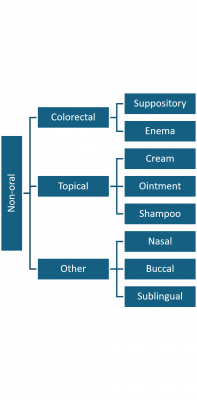
Difficulties swallowing solid dosage forms, especially tablets and capsules, are the main reason for compounding in pediatric care.8 This struggle is due to developmental immaturity or emotional and psychological factors causing fear and anxiety about solid medications.16 Some patients require enteral feeding tubes, further limiting the use of pills.9 Children with sensory disorders like autism or feeding disorders such as dysphagia also have trouble swallowing pills.17 Pill-swallowing difficulties can lead to nonadherence and reduced treatment effectiveness.16 Caregivers may manipulate medications (e.g., crushing or splitting tablets) without consulting a health care professional, increasing the risk of medication errors and adverse events.16 Compounding pharmacists formulate alternative dosage forms for children to address these challenges. Figure 1 illustrates commonly compounded alternative nonsterile dosage forms available for pediatric patients.
Figure 1. Compounded Nonsterile Dosage Forms for Pediatric Population
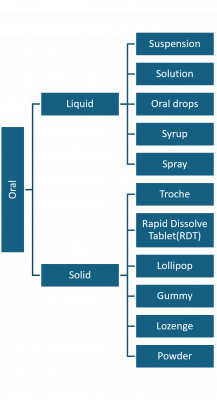
In a global pediatric compounding survey, more than 90% of respondents prepared oral liquids, making them the most commonly compounded oral dosage form for children.18 Prescribers and caregivers prefer oral liquids for children because they enable easier administration and precise, titratable dosing. A variety of other oral dosage forms are compoundable and suitable for specific medications or particular patient needs. These include lozenges and troches, rapid-dissolve tablets (RDTs), and more child-friendly options such as lollipops and gummies. Lozenges and troches, and lollipops, are held in the mouth to achieve local or systemic effects.11 Rapid-dissolve tablets disintegrate quickly in the mouth, offering an alternative for patients who have difficulty swallowing.3
If oral administration is clinically impractical or undesirable, practitioners may also prescribe compounded non-oral dosage forms for local or systemic delivery. These include topical formulations such as creams and ointments. Other compounded dosage forms include suppositories for rectal administration and enemas for colonic delivery. Rectal dosage forms are useful for children who vomit as a result of an illness, because they are at risk of losing doses when they vomit.9
Allergies or Intolerances to Inactive Ingredients
Commercially available medications contain various excipients that act as diluents, binders, stabilizers, fillers, buffers, preservatives, and more.19 Many children have allergies or intolerances to certain excipients, necessitating customized formulations that exclude these ingredients. Some patients have dietary restrictions that limit certain ingredients.
Some patients may require compounded medications because of the following allergies, metabolic disorders, or dietary restrictions20,21:
- Children with corn allergies must avoid formulations containing high-fructose corn syrup and sorbitol, requiring a compounded formulation with a solvent free of those substances.
- Patients with severe milk protein allergy should avoid medications containing lactose due to the risk of developing hypersensitivity reactions.
- Sorbitol, a sweetener commonly added to pediatric oral formulations to improve palatability, is metabolized to fructose. A child with fructose intolerance cannot take commercial medications containing sorbitol.
- Vegan patients who cannot ingest any animal byproducts cannot take many commercially available capsules that contain bovine- or porcine-derived gelatin.
Nora’s ketogenic diet is high in fat but strictly limits carbohydrate and protein intake.22 It induces ketosis, in which the body primarily uses ketone bodies derived from fats as an energy source.22 The mechanism by which ketosis controls seizures is unknown, but it is an effective nonpharmacological treatment for refractory seizures in children.22 Nora should avoid the commercial valproic acid liquid because its carbohydrate content from sucrose, sorbitol, and glycerin could compromise her ketosis.23 She also cannot use commercial valproic acid capsules because her exact dose is unavailable in pill form and she cannot swallow standard-size pills. Elena concludes that a sucrose-, sorbitol-, and glycerin-free valproic acid liquid best meets Nora’s needs and is not "essentially a copy” of a commercial drug under the FDA guidance.24 With Elena’s recommendation, Nora’s neurologist determines that making Nora’s medication swallowable and carbohydrate-free will make a significant clinical difference for Nora, documents the change, and updates the prescription accordingly.
Inappropriate Commercial Strengths for Pediatric Patients
Pediatric dosing requires precise calculations that account for the patient’s age and developmental factors. Clinicians calculate pediatric doses based on body weight (mg/kg) or body surface area (mg/m2). Because the resulting doses are highly patient-specific, using standard adult strengths safely in children is challenging. Caregivers of infants under the age of two often face issues with inappropriate (often too large) medication strengths.8 For children who can swallow pills, caregivers may cut them to reduce the dose strength, but many are enteric-coated or extended-release. A child’s dose requirement throughout childhood and adolescence can vary by up to 100-fold, requiring a wide range of strengths.9 Compounding medications into liquid dosage forms like solutions and suspensions in varying concentrations allows pediatric patients to safely receive their precise dose.
Importance of Oral Liquid Concentration Standardization
Concentrations of the same active ingredient in liquid form can vary across products from different pharmacies, increasing the risk of medication errors. Even within an organization, compounded oral liquids’ final concentrations can vary significantly, leading to dosing errors.25 For example, a mother accustomed to giving 5 mL of a 25 mg/mL medication might not realize that another pharmacy compounded a different concentration. If she gives the child 5 mL of a 50 mg/mL preparation of the same medication, the patient receives a double dose. This is especially dangerous in pediatric patients, who are more vulnerable to dosing errors than adults.
To reduce such errors, several organizations have standardized the concentrations of common children’s liquid medications. The University of Michigan Health System (UMHS), with the Michigan Pharmacists Association (MPA), surveyed 244 Michigan pharmacists. They found that of the 146 medications surveyed, more than half were compounded in three to nine different concentrations by different pharmacists across the state.26 To reduce dosing errors resulting from varying concentrations, the UMHS pharmacists compiled a standardized concentration list for commonly compounded medications in 2014.27 In 2016, the American Society of Health System Pharmacists (ASHP) and the FDA published a standardized oral liquid concentration list, as part of the Standardize 4 Safety (S4S) initiative.17,28 S4S is the first national interprofessional effort to standardize medication concentrations to reduce errors, especially during care transitions.25,29 The standardized concentration lists are important resources for compounding pharmacists to minimize dosing errors.
Upon receiving Nora's updated prescription, Elena realizes that she does not have a sugar-free Master Formulation Record (MFR) for valproic acid and searches her references for a proven and published formulation. After searching resources like the API manufacturer and reputable children’s hospital databases, she finds a validated MFR for a sugar-free valproic acid 100 mg/mL emulsion.30 Since sugar-free does not necessarily mean ketogenic-friendly, Elena confirms with Nora’s dietician that the formula’s ingredients will not affect Nora’s ketogenic diet. Because its concentration is twice that of the commercially available 50 mg/mL liquid, Elena confirms the prescribed dose and corresponding dose volume with Nora’s neurologist. The SIDEBAR describes the steps Elena would take if she could not find a suitable formulation.
SIDEBAR: What if Elena could not find a verified MFR?
In many cases, compounding pharmacists find suitable pediatric compound formulations with appropriate beyond-use dates (BUDs) and stability data from credible formula databases that are readily available online. For example, Nationwide Children’s Hospital in Columbus, Ohio, and the Hospital for Sick Children in Toronto, Ontario, Canada, have comprehensive pediatric compounding formula indexes accessible to external healthcare providers.31,32
If Elena cannot identify a suitable published formulation, she should first reconsider approved alternatives with the prescriber. If compounding remains necessary, the pharmacy may undertake formal formulation development only if it has the necessary expertise, facilities, quality systems, and access to appropriately designed stability testing. Otherwise, Elena should refer the prescription to a qualified compounding pharmacy. The steps may appear simple, but are time-consuming:
- Assess whether formulation development is scientifically and legally feasible. This includes the drug’s solubility, pH, chemical stability, vehicle compatibility, particle-size and dose-uniformity requirements, excipient safety, microbial risk, container compatibility, and ingredient eligibility under section 503A. Not every bulk substance may legally be used.33
- Develop and document an MFR. A qualified pharmacist could design a formula using established pharmaceutical principles, calculations, and compatible ingredients. The pharmacy would prepare a small test batch and evaluate its appearance, pH, redispersibility, uniformity, and other relevant quality attributes.
- Use an appropriately conservative BUD—but understand what it means. USP <795> provides maximum BUD limits when a USP monograph or preparation-specific stability information is unavailable. Those limits address general risk; they do not prove that a newly invented formulation retains its potency, remains physically uniform, or is bioavailable. Known or suspected instability requires a shorter BUD.2
- Obtain testing when the clinical risk warrants it. A qualified laboratory could conduct a stability study using a stability-indicating assay and, when appropriate, antimicrobial-effectiveness testing. A new dosage form might also raise bioavailability questions that a potency assay alone cannot answer. Testing requires a properly designed study using appropriate analytical methods, time points, storage conditions, and multiple batches. Because testing is time-consuming and costly, it may be impractical for a pharmacy to pursue this option, especially when the patient needs the medication promptly.
- Decline or refer the prescription if adequate quality cannot be supported. That is the crucial endpoint. The pharmacist should tell the prescriber, “I can’t identify or develop a formulation with adequate evidence of stability, uniformity, and safety. We need to select another product or refer the patient to a pharmacy with the necessary formulation-development and testing capabilities.”
Shortage or Discontinuation of Commercial Pediatric Medications
Drug shortages are another reason for extemporaneous compounding in pediatrics. Manufacturers adjust pediatric formulations’ concentrations and ingredients to account for pediatric patients’ vulnerabilities.34 When a pediatric formulation is unavailable with no safe alternatives, clinicians may delay or cancel important treatment plans, causing considerable stress for patients and their caregivers.34 Children’s hospitals spend 51 hours per week managing shortages, compared with 36 hours per week in other hospitals.34 This illustrates that drug shortages are particularly damaging to the pediatric population. In community settings, caregivers risk encountering substandard drug products from unregulated manufacturers and sellers.35 Pediatric compounding by trained professionals mitigates harm from drug shortages by providing safe alternatives. The FDA Drug Shortage Database provides information on resolved, active, and anticipated drug shortages.36 Pharmacists should consult the FDA’s Drug Shortage Database if they receive compounding requests for commercially available dosage forms and strengths.36
PAUSE and PONDER: Extemporaneous pediatric compounding requires sound clinical justification. What are some key clinical challenges that necessitate compounding for pediatric patients? How can pharmacy staff help identify the need for compounded preparations?
DOSAGE FORMS FOR PEDIATRIC POPULATIONS AND SAFETY CONCERNS
Throughout childhood, children’s bodies undergo constant growth and change.9 They may require varying dosages as their bodies and disease statuses change, but they may also need different dosage forms at various developmental stages.9 Pediatric patients, defined as children from birth to 18 years of age, are further classified into age groups based on their physical and psychological development.6 This classification helps inform many treatment decisions, including the appropriate dosage form selection. Table 1 presents the ICH pediatric population age classification.
Table 1. International Harmonisation Pediatric Age Classification9,37
| Classification | Age in completed days, months, or years |
| Preterm newborn infants* | N/A |
| Term newborn infants* | 0 to 27 days |
| Infants and Toddlers | 1 month to 23 months |
| Children† | 2 to 11 years |
| Adolescents | 12 to 16 or 18 years |
*Collectively called “neonates”
†May be subdivided into pre-school (2 to 5 years) and school-age (6 to 11 years) based on their ability to use different dosage forms.
Within the pediatric population, the ability to use different dosage forms varies widely due to physical differences and developmental stages.9 Neonates, or newborns, and infants are physically immature and fully dependent on caregivers for feeding, which influences dosage form selection for this age group.9 For older children, tolerance and preferences strongly influence dosage form selection.
Since choking incidents peak between 9 and 24 months, solid or semi-solid oral dosage forms like lozenges, troches, or gummies are not recommended for children younger than 2 years old.38 Chewable dosage forms like gummies improve palatability and ease of swallowing for patients 2 years or older depending on their developmental readiness and parental supervision, but children may mistake them for candy, leading to unintentional ingestion.9 Rapid-dissolve tablets have a low asphyxiation risk in pediatric patients, but they are technically challenging to produce in community settings (bitter APIs are difficult to mask in RDTs).3,12
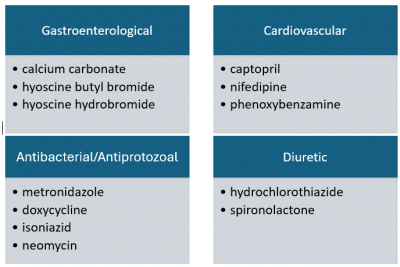
Liquid formulations are ideal for younger patients (i.e., birth to early school age) who cannot swallow solid dosage forms depending on the patient’s development, dose, drug properties, measurement accuracy, and caregiver capability.9 Caregivers prefer liquid formulations for younger children because of flexible dosing and easier swallowing, despite their storage and stability limitations.3 Oral liquid drops contain medication in minuscule volumes of liquid, making them suitable for medication delivery to neonates (but their high concentration can contribute to measurement errors).39 Figure 2 lists the most common APIs compounded into liquid formulations for the pediatric population.
Figure 2. Common APIs Compounded in Liquid Form for Varying Pediatric Populations40
Compounding pharmacists often prioritize using water-based or aqueous solvents when formulating oral liquids.41 Some APIs are more stable in oily bases, but oil suspensions pose a higher aspiration risk than aqueous suspensions in the pediatric population and may cause lipid pneumonia.42 When formulating liquid dosage forms for children, the compounding pharmacist must ensure that the concentration allows a dose volume that is neither too large nor too small.9 If the concentration is too high, measuring the required volume accurately is difficult, causing dosing errors. Conversely, if the medication is too dilute, the dose volume may be too large for the child to ingest comfortably, leading to poor adherence.9 For bitter APIs, compounding pharmacists support treatment adherence by optimizing the concentration to minimize dose volume. Typical tolerable dose volumes are up to 5 mL for children under 5 years old and up to 10 mL for older children.9 Suspensions allow higher drug loading than solutions, making them particularly useful for patients requiring a higher amount of drug per dose.9
In recent years, researchers have developed smaller tablets, or minitablets, as an alternative dosage form. Minitablets are a suitable alternative for pediatric patients who cannot swallow traditional pills or liquids.3 Children as young as 6 months old can swallow a single minitablet, but they are limited to extremely small doses.3 They may also be technically challenging to produce outside mass-production settings.
Compounders may prepare rectal suppositories in various sizes, and the appropriate size depends on the child’s age and size. For example, a typical suppository weight for infants is 1 g, which is half that of adult suppositories.9 Compounding pharmacists should also formulate each suppository as a single dose, and caregivers should administer them whole without cutting them.9 Prescribers need to exercise caution when choosing suppositories for young children, since premature expulsion from the administration site might lead to dose loss.9 Similarly, compounders should prepare liquid rectal enemas in single-dose volumes suitable for the child’s size. Typically, 1 to 5 mL per dose, depending on the patient’s age and size, is appropriate for enemas.9
Pediatric formulations contain sweeteners and flavoring agents to improve palatability and ensure patient acceptability. If stability data are unavailable for an aqueous preparation, the compounder may find a validated nonaqueous formulation or obtain stability data for the API in a nonaqueous vehicle. If compatible with the API, an oil-based vehicle may be more appropriate than an aqueous one for a formulation intended for long-term therapy due to its microbiological stability.41,43 Fixed oils, or non-volatile oils, such as almond, peanut, sesame, olive, and corn oil, are useful in compounding APIs that are highly susceptible to hydrolysis.44 Oil-based vehicles can also help mask bitter tastes of APIs by providing a coating over the taste buds.44 Compounders must exercise caution when selecting a fixed oil vehicle because almond, peanut, and sesame are common allergens in pediatric patients.
From Yucky to Yum: Improving the Medication Palatability
Palatability is an important factor in determining whether a child will take the medication. Flavor, smell, and texture are important palatability characteristics that may dictate treatment success.9 Pediatric patients strongly dislike bitter medications and even some flavors used to mask their bitterness. Taste aversion leads to skipped doses and, in turn, treatment failure.9 In 2025, the University of Maryland School of Pharmacy published an evidence-based guide to poor-tasting pediatric liquid medications, called the Ew Meds List.45 The list identified prednisone, penicillin VK, metronidazole, clindamycin, clarithromycin, and many others as the worst-tasting medications for children.45
Different API forms, such as salts, esters, or prodrugs, can vary in bitterness, and compounders can use the milder-tasting salt forms to mitigate bitterness, if available. For example, metronidazole base is extremely bitter and metallic, so compounders use its ester form, metronidazole benzoate, for pediatric suspensions because it is virtually tasteless.46 When switching the API form in a formulation, the compounding pharmacist needs to perform conversion calculations to ensure consistent dosing.
Compounding pharmacists often add flavors and sweeteners to pediatric formulations to improve the palatability of bitter medications. Compounders should discuss flavor preferences with the caregiver because age, gender, and sociocultural factors can strongly influence them. Certain flavors are particularly effective at masking specific unpleasant tastes, and Table 2 outlines the basic API taste categories and different flavors that help mask them.
Table 2. The Unpleasant Tastes of APIs and the Flavors to Mask Them9,44,45
| Taste | Flavor(s) used to mask |
| Bitterness
· associated with high-molecular weight drugs, or polyhydroxyl (containing many -OH groups) compounds · e.g., caffeine, quinine sulfate, promethazine chloride, basic amino acids, codeine, etc. |
In 1-3% concentration
· Chocolate · Cherry · Spearmint · Crème de menthe · Marshmallow · Caramel · Banana Crème · Orange · Tangerine
Plus sodium chloride (table salt) in 0.5-1% concentration for extremely bitter APIs* |
| Saltiness
· associated with inorganic compounds, low-molecular weight drugs, or presence of ions |
Fruit flavors in 1-4% concentration
· Strawberry · Raspberry · Orange · Cherry · Watermelon · Grapefruit · Lemon
Other flavors in 1-4% concentration · Butterscotch · Maple · marshmallow
Plus sweetener |
| Sourness/acidic
· associated with acidic drugs |
In 1-4% concentration
· Raspberry · Cherry · Tangerine · Orange · Pineapple · Mango · Lemon · Strawberry
Plus sweetness using syrup or syrup vehicle |
*Adding 0.5% to 1% sodium chloride to a flavored preparation can help mask extreme bitterness.47-49
Studies show that children strongly prefer sweet, fruit-flavored medications to those flavored with mint. For example, in a taste study of 110 children ages 5 to 11 comparing strawberry-flavored lansoprazole with peppermint-flavored ranitidine syrup, 95% preferred the strawberry formulation.50 In a similar study of children ages 6 to 11, more than 92% preferred strawberry-flavored lansoprazole to peppermint-flavored ranitidine.51
Compounders sometimes combine marshmallow, caramel, or vanilla with other flavors to mask bitter APIs because their mild creaminess and lingering scent enhance and complement the added pleasant flavors.44 Compounders may also use bitter-blockers to improve the taste of strongly unpleasant medications and reduce aversive aftertastes.52,53 Bitter-blockers are compounds that interfere with the molecular pathways responsible for sensing bitterness. Examples include sodium salts, adenosine 5′-monophosphate, and lipoprotein and phospholipid complexes.52,53 They may mitigate either the initial bitterness or the lingering aftertaste, or both.52,53 While bitter-blockers offer a solution for bitter medications, they may pose safety risks to developing bodies and require age-appropriate toxicological evaluation, as with other additives.52,53
“A Spoonful of Sugar Helps the Medicine Go Down”
Children exhibit a stronger aversion to the unpleasant taste of medicine and prefer a higher level of sweetness than adults.9 Consequently, sweeteners are commonly incorporated into pediatric oral preparations to improve acceptability. The sweeteners include, but are not limited to, sucrose, fructose, sorbitol, xylitol, mannitol, aspartame, sucralose, stevia, and acesulfame potassium.9,21,44 Sucrose, or table sugar, is the most common sweetener in pediatric preparations. Compounders should use sucrose only in short-term therapies to prevent dental issues in children. Sucrose is unsuitable for children with fructose intolerance and patients with diabetes because sucrose metabolizes into fructose and glucose.9 Monosaccharide-derived sugar alcohols such as sorbitol, mannitol, and xylitol are safer for patients with diabetes because of their incomplete intestinal absorption.54 Compounders should use them cautiously because they can cause osmotic diarrhea in high concentrations.9 Similar to sucrose, children with fructose intolerance cannot tolerate sorbitol, as it is also metabolized into fructose.9 Aspartame, an artificial sweetener 180 to 200 times sweeter than sucrose, is useful in preparations for patients who cannot tolerate natural sugars.55 Patients with phenylketonuria should avoid aspartame because its molecular structure contains phenylalanine, which they cannot metabolize.55 Compounders should use artificial sweeteners such as saccharin or aspartame at low concentrations because they can produce a bitter aftertaste at high concentrations.9 As a general rule of thumb, compounders should avoid using sweeteners at high concentrations for long-term use.9
PAUSE and PONDER: What are the key considerations for determining appropriate dosage forms for different pediatric subpopulations? How can pharmacists collaborate with prescribers to select the safest and most effective dosage form?
EXCIPIENT USE IN PEDIATRIC COMPOUNDING AND POTENTIAL RISKS
In pediatric compounding, compounding pharmacists strategically add excipients to formulations to improve the solubility, palatability, and stability of the API.55 The non-medicinal components ensure that the compounded medications are palatable and easy to administer to young patients.21 Ideally, excipients should be pharmacologically inactive, but studies report adverse events linked to certain excipients, highlighting their potential toxicity in pediatric populations. Neonates are particularly susceptible to excipient toxicity due to immature renal and hepatic function, underdeveloped metabolic pathways, and a less robust blood-brain barrier.55 Children absorb, distribute, metabolize, and eliminate APIs and excipients differently than adults, with substantial variability across age groups.55 Numerous excipients that are harmless in adults may cause severe adverse events in pediatric patients when used without proper precautions.21,41,55,56
In 2020, the Pediatric Pharmacy Association (PPA)’s 12-pharmacist panel analyzed literature and databases and compiled a Key Potentially Inappropriate Drugs for Pediatrics (KIDs List).7 The latest KIDs List, published in 2025, includes 10 excipients presented in Table 3 (derived from Table 2 of the 2025 KIDs List Report).7
Table 3. The KIDs List of Excipients with Known/Potential Harms in Pediatric Patients7
| Excipients* | Major toxic effects | Recommendation | Recommendation Strength | Quality of Evidence |
| Benzyl Alcohol, sodium benzoate, benzoic acid | Gasping syndrome | Avoid exposure of >99 mg/kg/day in < 1 mo | Strong | High |
| Ethanol/ethyl alcohol (excluding ethanol lock) | CNS depression, hypoglycemia | Caution in < 6 yr: max 0.5% v/v ethanol with clinician supervision
Caution in <12 yr: max 5% v/v ethanol with clinician supervision |
Strong | Moderate |
| Isopropyl alcohol (topical) | Chemical burn | Caution in patients weighing < 1500 g | Weak | Low |
| Methylparaben, propylparaben | Kernicterus | Caution in < 2 mo | Weak | Very Low |
| Phenylalanine | Cognitive and behavioral problems | Avoid in patients 18 years or younger with an unknown phenylketonuria test | Strong | High |
| Polysorbate 80 | Vasculopathic hepatotoxicity (E-Ferol syndrome) | Avoid exposure of ≥
72 mg/kg/day in < 1 mo
Caution exposure of > 1.4 mg/day in < 1 mo |
Strong | High |
| Propylene glycol | Lactic acidosis, CNS depression, hypoglycemia, hemolysis, seizure | Avoid > 1 mg/kg/day in < 1 mo
Avoid > 50 mg/kg/day 1 mo to 5 yr |
Strong | Moderate |
*Reviewed systemically absorbed excipients except for Isopropyl alcohol
Although color additives or dyes are not necessary excipients, compounders can add a color additive to match the medication's flavor if the patient or caregiver prefers a particular color. Hypersensitivity reactions to color additives are rare, but compounders should review documented allergies or previous reactions when selecting color excipients, as with other excipients.57 Many formulations need excipients for stability, uniformity, or administration; compounders should use only those necessary and appropriate for the individual child.9,21,55,56
Compounders looking for more information on pediatric safety on specific excipients may refer to the Safety and Toxicity of Excipients for Paediatrics (STEP) Database.58 It compiles safety and toxicity data on more than 75 excipients used in pediatric formulations.58 It is free but requires registration before access.
Before approving the formulation for Nora, Elena reviews each excipient and confirms its acceptability with Nora’s ketogenic-diet team. “Sugar-free” alone does not establish that a preparation is appropriate for a ketogenic diet.
PAUSE and PONDER: Which specific excipients pose severe toxicity risks for neonates and young infants? What safety checks can pharmacists and pharmacy technicians use to flag high-risk excipients before compounding a preparation?
BEYOND-USE DATING IN NONSTERILE COMPOUNDING: THE ROLE OF USP GENERAL CHAPTER <795>
Unlike drugs manufactured in outsourcing facilities under FDA section 503B, individually compounded medications prepared in accordance with FDA section 503A are generally not subject to routine FDA oversight.59 This does not imply that quality standards are unimportant. Instead, state pharmacy boards oversee the state-licensed compounding pharmacies’ quality and safety standards.60 Pharmacists rely on USP guidelines to ensure quality because compounded medications lack large-scale studies on safety, efficacy, and stability. The United States Pharmacopeia (USP) is an independent nonprofit organization that develops standards and guidelines for dietary supplements, food ingredients, and pharmaceuticals.2 As part of this role, it develops Compounded Preparation Monographs, which provide tested formulations and compounding procedures.61 USP General Chapter <795> outlines nonsterile compounding guidelines and standards that state boards may or may not enforce.2 It sets specific requirements for the management, testing, and storage of nonsterile compounded medications to uphold quality and patient safety.2 Individual compounders must ensure that the end product meets the standards outlined in USP Chapter <795>.
Beyond-use dating (BUD) is important for ensuring the safe use of compounded preparations. It refers to the “date after which a compounded preparation shall not be used.”2 The compounder calculates BUDs conservatively based on the following parameters2:
- API and excipients’ chemical and physical stability
- Container closure system’s compatibility with the finished preparation
- Container closure system’s degradation that can lead to the preparation’s integrity
- Potential for microbial growth in preparation
- Significant deviations from essential compounding steps and procedures that may impact the formulation’s stability
USP Chapter <795> defines aqueous and nonaqueous dosage forms based on their water activity ( w). Water activity measures the unbound water molecules in a preparation that are available to support microbial growth.2 The water activity of pure water is 1. Nonaqueous dosage forms have water activity less than 0.6, and aqueous dosage forms have water activity 0.6 or greater. Table 4 presents water activity for some common dosage forms in pediatric care. Because compounders typically do not measure water activity, the example data in Table 4 can assist with BUD calculation by dosage form.
Table 4. Water Activity ( w) of Common Compounded Nonsterile Dosage Forms in Pediatric Care2
| Nonaqueous ( w < 0.6) | Aqueous ( w ≥ 0.6) | ||||
| Dosage Form | Description | w | Dosage Form | Description | w |
| Oil based oral solution | Medium chain triglycerides oil | 0.338 | Water based oral solution | Low-sucrose syrup vehicle | 0.906 |
| Fixed oil with thickener | 0.403 | 90% Water and 10%
glycerin |
0.958 | ||
| Troche or lozenge | Gelatin base with £ 3% aqueous flavor | 0.332 | Water based suspension | Oral suspension base | 0.992 |
| Polyethylene glycol base with £ 3% aqueous flavor | 0.571 | Simple syrup | Simple syrup | 0.831 | |
| Lollipop | Sorbitol based | 0.460 | Cream | Cream vehicle (petrolatum free oil in water emulsion) | 0.968 |
| Suppository | Polyethylene glycol base | 0.374 | Gel | Alcohol-free aqueous gel | 0.990 |
When a compounder uses a commercially available product as the API source, the commercial product’s expiration date alone does not determine the compound’s BUD.2 The compounder should consult the API manufacturer’s stability information when available.2 Additionally, compounding pharmacists should review the literature to gather information on API stability, compatibility, and degradation, and interpret the findings in the context of the compound.2 In the absence of the API’s stability, compatibility, and degradation data, the recommended BUD limits for nonsterile compounds are outlined in Table 5. USP Chapter <795> recommends adding suitable antimicrobial agents to compounds with water activity greater than 0.6 to prevent microbial growth.2 Pediatric formulations that cannot contain antimicrobial preservatives should be refrigerated as long as refrigeration is physically and chemically compatible.2 If any ingredients’ expiration date is before the longest recommended BUD limit, then the preparation’s BUD is the earliest expiration date.
Table 5. BUD Limit in the Absence of Stability Information2
| Water Activity | Type of Preparation | BUD (days) | Storage Temperature |
| Aqueous ( w ≥ 0.6) | Nonpreserved | 14 | Refrigerator* |
| Preserved | 35 | Controlled room temperature or refrigerator† | |
| Nonaqueous ( w < 0.6) | Oral liquids | 90 | Controlled room temperature or refrigerator |
| Others | 180 | Controlled room temperature or refrigerator |
*2° to 8°C (36°F to 46°F)
†20° to 25°C (68°–77° F)
Importance of Documentation: Master Formulation Record (MFR) and Compounding Record
According to USP General Chapter <795>, compounding pharmacists must create an MFR for every new and unique formulation.2 Master Formulation Records are detailed compounding recipes that all compounders must follow. They outline the compounding process step by step to ensure consistent final product quality and reduce variability in the medication’s efficacy and safety. An MFR needs the following information:2
- Name, strength, dosage form
- Name and amount of all ingredients and their relevant characteristics
- Container closure system
- Equipment, supplies, and complete compounding steps
- Physical description of the final compounded product
- Beyond-use Date (BUD) and storage requirements
- Reference source to support assigned BUD
- Specific labeling requirements
- Quality control procedures and expected results
Compounding Records (CRs) document each compounded batch preparation according to the applicable MFR.2 Compounding pharmacists must generate, review, and date the CR before the pharmacy dispenses the compounded preparation to the patient.2 CRs allow pharmacists to track the compounded batch’s details in the event of ingredient recalls or quality issues.2 The compounding pharmacist should document the following information in the CR:2
- Name, strength, dosage form
- Date and time of compounding the preparation
- Assigned prescription/order/lot number
- Identification of personnel involved in compounding
- Name, manufacturer, lot number, and expiration date of each ingredient
- Weight/volume of each ingredient
- Total quantity of the compounded preparation
- Assigned BUD and storage requirements
- Physical description of the final product
- Quality control results
- MFR reference
Elena reviews the published formulation, stability data, ingredients, preparation method, storage conditions, and applicability to Nora. She uses that information to develop and have the designated person approve the pharmacy’s MFR and product labeling. After compounding Nora’s prescription, Elena completes the corresponding CR and assigns the preparation’s BUD and storage conditions according to the supporting stability data.
PAUSE and PONDER: Which compounded dosage forms fall under the nonaqueous ( w < 0.6) category? Which compounded dosage forms fall under the aqueous ( w ≥ 0.6) category?
PEDIATRIC COMPOUNDING RESOURCES
Compounding pharmacists and technicians need readily available resources. Before deciding to create a new formula for a patient, a compounding pharmacist should first consult credible references for existing MFRs. Many commonly prescribed pediatric compounds already have vetted, documented MFRs available online. Many of these published formulations have also undergone stability testing. Compounding pharmacists should review these resources before generating new formulations. Some are free online, while many others require a subscription fee.
- The United States Pharmacopeia Compounding Compendium is another resource that contains more than 170 compounding monographs.61
- Online electronic databases such as Micromedex and Lexicomp Online contain some monographs with compounding instructions.62
- Compounding suppliers such as Medisca, Fagron, and Professional Compounding Centers of America (PCCA) have their own formulation databases, with some having extended BUDs established through in-house testing.63-65
- Professional Compounding Centers of America (PCCA), which requires membership, is also an extensive network of compounding experts and resources, offering hands-on training, specialty symposia, seminars, and various continuing education opportunities.65
- S. Pharmacist, a monthly trade publication for pharmacists that provides up-to-date, peer-reviewed clinical articles, also has a database of compounding formulas that are free to access online.66
- Compounding Today, which is a subsidiary of the International Journal of Pharmaceutical Compounding, is an interactive website that has a variety of information, including formulations, comparisons of oral vehicles, and flavoring. Compounders should verify that information in this journal is peer-reviewed.67
- Nationwide Children’s Hospital and the Hospital for Sick Children have comprehensive databases of pediatric compounding formulas freely accessible to external providers.31,32
- For compounders who prefer hard copies:
- The Art, Science, and Technology of Pharmaceutical Compounding covers all aspects of compounding, including regulatory, technological, scientific, and clinical consulting on dosage forms. It provides sample formulas for various dosage forms and addresses flavoring, sweetening, preservation, compliance, quality control, and potential errors.68
- Extemporaneous Formulations for Pediatric, Geriatric, and Special Needs Patients is a book of compounding “recipes” that contains 312 easy-to-follow formulations.69
CONCLUSION
At pickup, Elena explains the new concentration and dose volume to Nora’s mother and asks her to demonstrate how she will measure the dose. By recognizing an unsuitable commercial formulation, collaborating with the prescriber, verifying an appropriate compound, and preventing a concentration-related dosing error, Elena helps Nora continue both her medication and ketogenic diet safely.
Pharmaceutical compounding optimizes therapeutic outcomes for pediatric patients. By addressing challenges such as difficulty administering medications, ingredient intolerances, and drug shortages, pediatric compounding provides safe treatment alternatives for optimal care. Compounding personnel should adhere to safe compounding practices by avoiding harmful excipients, selecting age-appropriate dosage forms and concentrations, and assigning correct BUDs. Such diligent safe practices, along with careful attention to individual preferences, reduce the risk of adverse events by ensuring quality compounded preparations, thereby supporting children’s well-being.