| The University of Connecticut School of Pharmacy and Pharmaceutical Sciences is accredited by the Accreditation Council for Pharmacy Education as a provider of continuing pharmacy education. Statements of credit for the online activity ACPE UAN 0009-0000-26-049-H06-P/T will be awarded when the post test and evaluation have been completed and passed with a 70% or better. Your CE credits will be uploaded to your CPE monitor profile within 2 weeks of completion of the program. |  |
Content
Pause & Ponder: Which strategies have you used in the past to address patients’ vaccine concerns and questions?
Introduction
Vaccines benefit both the individual and the public by preventing the spread and reducing the incidence of vaccine-preventable diseases within a population.1 In developed countries, vaccines are responsible for diminishing the threat of vaccine-preventable diseases,2,3 particularly vaccine-preventable diseases that once plagued infants and children.4,5 A successful vaccination program is contingent on the majority of the population receiving recommended vaccinations as scheduled to ensure both individual and community protection.1,6 This creates ‘herd immunity.’ The vaccination coverage needed for community protection varies by disease; for measles, approximately 95% two-dose coverage is needed to prevent outbreaks. To ensure community protection and patient safety, healthcare providers should see all visits that do not risk patient and provider exposure as opportunities for patients to catch up on missing or late vaccinations. Pharmacy teams should use every appropriate encounter to assess immunization status and provide needed catch-up vaccination.
Nonadherence to vaccine recommendations, such as vaccination delay or refusal, undermines individual and public health initiatives.2,7,8 Pharmacists and technicians must also be aware that researchers may not have tested the efficacy of alternative vaccine schedules; such schedules may not produce an adequate immune response. Vaccine-preventable disease outbreaks are a consequence of undervaccination and are a prevalent threat even in the United States.7,8,9 As of August 13, 2026, CDC reported 2,566 confirmed U.S. cases during 2026, with 94% associated with outbreaks.10 Although vaccine-related concerns are common even among vaccine acceptors,1,5,11 several factors still motivate a minority of the population to delay or decline vaccination.1,8,11
What is Vaccine Hesitancy?
A panel of World Health Organization (WHO) immunization experts describes vaccine hesitancy as the ‘delay in acceptance or refusal of vaccines despite availability of vaccination services. Vaccine hesitancy is complex and context-specific; that means it varies across time, place, and vaccines. It is influenced by factors such as complacency, convenience, and confidence.’12
It is important to understand that this definition recognizes only reluctant individuals’ possible decisions. In reality, hesitancy exists on a continuum.13 It ranges from complete refusal of all vaccines to complete acceptance without any concern; in between are intermediate decisions such as refusal of some vaccines and acceptance of others, and full acceptance although the individual is unsure.1 The spectrum of possible outcomes implies that the process of reaching a decision is complicated and guided by external and internal components.11 Identifying the factors that influence an individual’s behavior is essential to understanding the reasons for vaccine hesitancy. Knowing the specifics also helps determine the most appropriate intervention.8,11,13
Understanding Vaccine Hesitancy
The terms complacency, convenience, and confidence used in the WHO definition of vaccine hesitancy are the foundation of the ‘3 Cs’ model described in Table 1.14
Table 1. Definitions of the ‘3 Cs’15
| Confidence: Trust in vaccine effectiveness and safety; the system that delivers them, including the reliability and competence of health services and health professionals; and the motivations of policy makers who decide on the needed vaccines. |
| Complacency: The perceived risks of vaccine preventable diseases are low, and vaccination is not deemed a necessary preventive action. |
| Convenience: A significant factor when physical availability, affordability and willingness to pay, geographical accessibility, ability to understand (language and health literacy), and appeal of immunization services affect uptake. |
These components are interlinked and influenced by vaccine hesitancy’s determinants (e.g., specific factors that influence an individual’s behavior; see Table 2) to ultimately affect vaccine-related decisions.13 Clinicians can use the determinants of vaccine hesitancy to determine an individual’s beliefs and opinions regarding vaccines and vaccination.5
WHO’s Behavioral and Social Drivers (BeSD) framework identifies four domains that influence vaccine uptake: thinking and feeling, social processes, motivation, and practical issues. Beliefs, emotions, perceived risks, social norms, and recommendations influence a person’s motivation to receive a vaccine; however, practical barriers such as cost, convenience, and access may prevent vaccination even when motivation is strong. The framework encourages programs to measure these drivers and use the findings to design, implement, and evaluate interventions tailored to specific populations.16
Table 2. Determinants of Vaccine Hesitancy13
| Influence Category | Source of Influence | Determinants (factors that affect outcome) |
| Contextual influences | Influences arising due to historic, socio-cultural, environmental, health system/institutional, economic or political factors | § Communication and media environment
§ Influential leaders, immunization program gatekeepers and anti- or pro-vaccination lobbies § Historic influences § Religion/culture/gender/socio-economic § Politics/policies § Geographic barriers § Perception of the pharmaceutical industry |
| Individual and group influences | Influences arising from personal perception of the vaccine or influences of the social/peer environment | § Personal, family, and/or community members' experience with vaccination, including pain
§ Beliefs, attitudes about health and prevention § Knowledge/awareness § Health system and providers (trust and personal experience) § Risk/benefit (perceived, heuristic [meaning learned from one’s own experiences]) § Immunization as a social norm vs. not needed/harmful |
| Vaccine/vaccination-specific issues | Directly related to vaccine or vaccinations | § Risk/benefit (epidemiological and scientific evidence)
§ Introduction of a new vaccine , a new formulation, or a new recommendation for an existing vaccine § Mode of administration § Design of vaccination program/mode of delivery (e.g., routine program or mass vaccination campaign) § Reliability and/or source of supply of vaccine and/or vaccination equipment § Vaccination schedule § Costs § The strength of the recommendation and/or healthcare professionals’ knowledge base and/or attitudes |
Pause & Ponder: Which determinants have the most influence over an individual’s decisions? Which have the least?
Contextual Influences
Communication and Media Environment. The three most commonly referenced sources for vaccine-related information are healthcare providers, friends and family, and the media (primarily the Internet).5 Although healthcare providers encourage patients to seek knowledge about vaccines from reputable sources when making vaccine-related decisions, misinformation regarding vaccines is prevalent.17 Unfortunately, the widespread presence of incorrect information and universal use of the Internet and social media outlets can result in pervasive transmission of anti-vaccine messages.17 The pharmacy team also needs to repeat vaccine-promoting messages even if they perceive that the patient or parent is well educated; across the United States, areas of highly educated individuals include vaccine refusers.
Exposure to anti-vaccine ideals can contribute to vaccine hesitancy through confirmation bias.17,18 Confirmation bias occurs when individuals accept only information that supports and validates what they already believe, perpetuating underlying bias.17 For example, if a person believes that all vaccines contain mercury, the person will preferentially read or listen to messages that confirm that incorrect information. (Routine childhood vaccines do not contain thimerosal as a preservative, except for certain multidose influenza vaccine formulations that always list thimerosal on the label.). The consequences of misinformation are twofold: misinformation contributes to how individuals and groups make vaccine-related decisions11,17 and provokes distrust of healthcare providers.2,9,17
Religion. Faith and religion can have a profound impact on health-related behaviors, with pig (pork or porcine) consumption a particularly important consideration for people who are members of faiths that prohibit pork.19 (Some vegetarians and vegans also have concerns.) This belief does not impede many interventions, as pharmacists and other healthcare providers can recommend an alternative that does not contain porcine derivatives, and many individuals will accept it.19
A few manufacturers use porcine gelatin as a stabilizer in some vaccine formulations (listed in Table 3).20 Its presence may be the sole reason that members of some religions refuse certain vaccines.19 If an appropriate substitute vaccine is available, pharmacy immunizers should offer this option.
Table 3. US Vaccines Containing Porcine Gelatin20,21
| Porcine gelatin-containing vaccines | Protects against | Approximate gelatin per dose |
| FluMist* | Influenza | 2 mg |
| MMR-II** | Measles, mumps, rubella | 14.5 mg |
| ProQuad***
|
Measles, mumps, rubella, varicella | 11mg |
| Varivax**** | Varicella | 8.3–12 mg |
| YF-VAX**** | Yellow fever | Not specified in current U.S. information |
| Always check the current package insert/excipient information.
* Injectable influenza vaccines provide alternatives to FluMist. ** PRIORIX is a gelatin-free alternative to M-M-R II. *** The United States currently has no gelatin-free varicella vaccine, so replacing ProQuad with PRIORIX plus Varivax does not entirely avoid gelatin. **** No alternative yellow fever vaccine is currently licensed in the United States. |
||
Individual and Group Influences
Health system and providers: trust and personal experience. The patient-provider relationship is a central element of the vaccine decision-making process for many individuals.22,23 Patients hold healthcare providers—as educators and trusted health authorities—responsible for the outcomes of vaccine hesitancy and refusal-related conversations. The provider’s approach often influences the patient’s decision to vaccinate.
If the relationship between patient and provider is built on cooperation, trust, and respect, patients are more likely to consider the provider a dependable resource and consider the provider’s behavior an example of best health practices.11 This dynamic permits healthcare professionals to engage in constructive discussion when approached with concerns, or to clarify misinformation that may obstruct the patient’s perspective on vaccines.24 From this vantage point, providers can advocate for vaccination acceptance while maintaining a patient-centered dialogue.5,11
Conversely, an interaction’s outcome may instead be detrimental to the patient-provider relationship. Examples include when a provider assumes a patient’s reasons for hesitancy, or if a provider’s response does not meet the patient’s expectations.22 Misguided interventions often have the patient’s best interest in mind, yet neglecting a patient-centered approach will fall short of encouraging a reciprocal patient-provider relationship. Such an outcome can occur when a provider’s response to reluctance is providing information and education without first listening to the patient’s concerns (see the section on motivational interviewing below).22 For example, providers who do not ask patients why they refuse vaccines and simply present evidence-based information immediately come across as authoritarian and inflexible. Providers should not consider vaccine acceptance because the patient feels pressured or bullied to be a successful intervention. Other outcomes are also possible. The patient may misinterpret the provider’s efforts as patronizing and, in turn, dismiss the provider’s recommendations.25 Alternatively, patients may become distrustful. If they feel pressured by the provider to accept vaccination or believe the provider ignored or dismissed their concerns, they may consequently avoid future communication and possibly vaccination.22
Perceived risk/benefit. Vaccine hesitancy is not only specific to vaccines—it also includes disease-specific concerns.8 If individuals believe that they are at risk for contracting a disease, they are more likely to seek and accept a vaccine to prevent that disease.1,8,11 However, this same risk/benefit analysis can produce the opposite outcome if the perceived risk of vaccination is greater than that of disease. It is critical to explain how dangerous vaccine-preventable diseases are.
Vaccines are responsible for minimizing the incidence of many once-common vaccine-preventable diseases, which has altered many peoples’ perception of their disease susceptibility. That is, people think that now-rare diseases are unlikely to circulate.1,8 This unintended consequence has masked the risks and complications of many debilitating diseases, such as measles. In turn, some people have transferred the fears they previously held toward the disease to concerns regarding vaccine safety and the need for vaccines.1,2,8,9,22 A vaccine’s potential adverse health events may present a greater perceived risk than the disease, contributing to vaccine-hesitant beliefs and behaviors.1
Knowledge/awareness. Although research confirms that vaccines are safe and effective,26 anti-vaccine sentiments take a variety of forms, as described in Table 4.
Table 4. Common Anti-Vaccine Sentiments2,11,26,27
| Anti-vaccine claim | Pro-vaccine rebuttal |
| ‘Hot lots’ of vaccines are responsible for more serious adverse outcomes. Some people believe that some vaccine lots cause more side effects or vaccine injuries than other lots. People who perpetuate this myth apply data from the Vaccine Adverse Event Reporting System (VAERS) inappropriately.
|
Members of the pharmacy team should explain that expected vaccine side effects—such as injection-site pain, fatigue, or a mild fever—differ from adverse events reported after vaccination. An adverse event is any health problem occurring after vaccination, whether mild or serious and whether or not the vaccine caused it. A VAERS report alone cannot establish causation; CDC and FDA use reports to identify signals that require further investigation. |
| Antigenic overload occurs in children because their immune systems are unable to manage the number of antigens that vaccines introduce adequately, or antigenic overload causes a ‘cytokine storm’ that predisposes children to adverse events and vaccine-induced complications.
|
No scientific evidence supports this claim. Additionally, children are exposed to significantly more antigens at birth than through vaccines. In a 2017 CDC comparison, vaccines used approximately 305 antigens to protect children against 14 diseases by age 2, compared with approximately 3,000 antigens used to protect against eight diseases 30 years earlier. |
| Natural immunity from an infection is safer than immunity from a vaccine. | Infection-induced immunity may elicit a superior immune response. However, the risks and complications associated with infection are significantly greater than those of vaccines. Vaccine-induced immunity is able to prevent infection successfully. Measles can cause immune amnesia, reducing previously acquired immune protection for months to years. |
| Vaccines are responsible for the development of autoimmune diseases such as type 1 diabetes mellitus, multiple sclerosis, and Guillain-Barre syndrome.
· This argument is based on the theory that the immune system is unable to discriminate between intrinsic antigens and the vaccine’s antigens, causing antibodies to bind the intrinsic antigens selectively, eliciting an autoimmune response. |
Multiple efforts have reviewed this claim. A panel of experts from the Institute of Medicine reviewed more than 12,000 published reports and several high-quality studies; none established a connection between vaccines and autoimmune diseases. |
Pause & Ponder: How do misinformation and anti-vaccine sentiments circulate widely when the correct recommendations and evidence supporting vaccination are just as accessible?
Intervention Strategies: A Personalized Approach
Patients and healthcare professionals need to work together—that is, collaborate and share decision-making—to adhere to vaccination programs and can do so after they take certain steps13:
- Understand the risks and benefits of vaccination
- Explain the vaccine-preventable disease and the consequences of contracting it. Make evidence-based decisions (such as adhering to recommended vaccine schedules) for patients. This means accessing CDC patient websites if patients need more information than the healthcare provider can provide.
- Accept accountability for the health and safety of individuals who are unable to be vaccinated; patients who are healthy and robust need to understand that their failure to ‘join the herd’ of vaccinated people puts others at risk.
- Advocate for health equity (the concept that everyone should have a fair opportunity to attain their full health potential and that no one should be disadvantaged from achieving this potential) regarding access to vaccine-related resources and the elimination of barriers.
Efforts that involve patients and providers working collaboratively—sharing evidence, understanding each other’s points of view, and working toward good health for our entire society, not just the individual—depend on two things. First, providers must consider vaccine-hesitant patients’ needs and how they affect public health and safety needs. Second, providers need to consider their other patients; some practices will not see patients who refuse vaccines because they would potentially expose other patients to vaccine-preventable disease.22 Although the laws surrounding patient dismissal in this situation are not straightforward, ethical concerns such as negligence can manifest as legal troubles or disciplinary actions from the provider’s regulatory authority.28
Beliefs and behaviors that relate to vaccine hesitancy vary at an individual level; clinicians must individualize strategies to address these concerns and ideally increase vaccine acceptance.1,9,11,19 Interventions should prioritize the patient’s autonomy,29 recognize the influence of specific determinants (particularly context and individual determinants),9,13 and ameliorate any barriers that may be present.11
Identify Questions And Concerns: Motivational Interviewing
Immunizers should begin the vaccine discussion with a strong recommendation presented in a presumptive format; that means speaking as though vaccination is the expected, routine next step—not presenting it initially as an open-ended decision. If the patient or parent expresses hesitancy, immunizers can then use motivational interviewing to explore and address the person’s concerns.30 Motivational interviewing is a communication technique that directs constructive conversations between patient and provider. This approach gives patients the opportunity to address their concerns consciously while actively informing the patient’s decision-making process, which promotes behavioral change through self-realized motivation.22,31 Motivational interviewing is not intuitive, and pharmacists and technicians sometimes need help identifying the questions to ask. The process itself has five steps:
- Listen to the patient’s concerns and any possibility that the patient may change
- Reflect back your understanding
- Identify missing or incorrect information
- Invite the patient to reconsider
- Summarize and reiterate the next steps
Motivational interviewing (and open-ended questions) can help patients resolve their hesitancy.32,33 Immunizers need to listen to patients’ thoughts about change and what they think change will require. Reflect your understanding (‘I know that you have many vaccine-related concerns.’) Then, identify missing or incorrect information, but do not do it in a confrontational or scolding manner. Ask if you can address an issue directly and do so only if the patient agrees. (‘May I tell you something about vaccination that I learned in a continuing education class recently?’) Invite patients to reconsider, then summarize and reiterate next steps. (‘You said that needle-induced pain is a concern, and we talked about two things that might help—breathing exercises and topical spray that numbs the area. Which of those approaches might you be able to try before giving up?’)34,35 Some parents refuse the HPV vaccine for their teens, and after discussion, you might say, ‘You said that vaccination for HPV would encourage your son to engage in unprotected sexual activity. We agreed that it would be even MORE dangerous if he has unprotected sex without being vaccinated. And we agreed that kids often make risky decisions, and we identified two possible courses of action. You might talk to him about the risks of unprotected sex and ask him what he has heard about HPV vaccination in health class. Which of those approaches might you be able to try before giving up?’
Providers must maintain a welcoming and patient-centered environment by remaining attentive and empathetic to the patient’s concerns and questions.31 To ensure this dynamic and encourage a cooperative and honest patient-provider relationship, providers should ask for the patient’s permission before dispensing advice or information if possible.25,31 This helps providers direct their input toward specific issues and prevents overwhelming the patient with unsolicited information.31
Confront misinformation: Debiasing
If a patient expresses concerns that refer to vaccine misinformation, debiasing may help correct the misconception.36 (These techniques come from social sciences journals and are not terms with which most pharmacists or technicians are familiar; they are included because they help address misinformation.) Providers must first gain an accurate understanding of the patient’s beliefs, as they can use debiasing techniques only if the patient is receptive to the proposed correction.36 Table 5 defines the potential impact of misinformation and associated intervention strategies. Debiasing requires everyone who counsels vaccine-hesitant patients to be on the same page. Healthcare organizations should establish and consistently enforce evidence-based employee immunization policies that protect patients. Regardless of their personal beliefs, employees who counsel patients must provide accurate, evidence-based vaccine information and must not undermine recommended immunization practices.36
Table 5. Misinformation Debiasing Strategies 36,37,38,39,40
| Effect of misinformation | Debiasing techniques |
| Misinformation, regardless of a correction, has continued influence over beliefs and behaviors. | Clinicians create an information gap when they simply correct a misconception; provide an alternative evidence-based explanation to fill the gap.
|
| Familiarity backfire occurs when repetition strengthens a false belief. In some cases, patients later remember the myth rather than the evidence that disproves it—meaning the provider’s efforts backfired. | Start with the facts and introduce the misinformation only afterward. Before mentioning misinformation, explicitly state that it is false. Explain why it is misleading and why people may believe it. Correct misinformation immediately after mentioning it and provide a reasonable explanation to replace the myth. Avoid repeating misinformation and then merely saying it is not true; focus on the correct explanation instead.
|
| Overkill backfire occurs when misinformation is easier to understand than a complicated correction, making the truth seem unrealistic. Corrections can occasionally strengthen a mistaken belief, but recent research suggests that these backfire effects are uncommon and should not discourage healthcare professionals from correcting misinformation. | Keep corrections straightforward and short—less is more. For example, if a patient believes childhood vaccination causes type 1 diabetes, an elaborate explanation of disease pathology may overcomplicate the correction. A short, clear statement that evidence has not established such a connection is more useful.
|
| Worldview backfire occurs when a personal belief is threatened by the truth and misinformation is reinforced | Affirm worldview with corrections that support the individual’s values and concentrate on positive facts, such as benefits and opportunities. |
Persistent refusal: Standby Strategies. Patients and parents may be unresponsive to vaccine-promoting interventions. If an individual continues to refuse vaccination, it is most important to acknowledge and honor the right to decline.17,25 Immunizers should not discount these interactions or label them as failures, but instead consider them an opportunity to try again later. Providers should encourage future contact if the patient has more questions or changes their mind regarding vaccination.25,41
Healthcare providers must maintain respect and provide direct clinical recommendations for vaccinations.25 Finally, healthcare providers should inform patients of their responsibilities and vaccine refusal’s potential consequences (see Resources for Pharmacy Staff below for the CDC document, ‘If You Choose Not to Vaccinate Your Child, Understand the Risks and Responsibilities,’ and links to vaccine refusal documentation forms).41
Conclusion
Vaccine hesitancy is a complicated and often emotional issue. Pharmacists and pharmacy staff can identify obstacles and barriers to vaccination and acceptance through education and support while also offering reliable access to vaccines.4 Pharmacies eliminate barriers that prevent access to vaccine delivery services and increase vaccination rates through pharmacist-driven interventions.4,42,43 This presence and resultant impact on public health testifies to the importance of pharmacists as trained and certified immunizers.4 To maintain the success of pharmacy-based vaccination services, pharmacists and pharmacy staff should have a comprehensive and functional understanding of vaccine hesitancy and the skills to confront it appropriately.
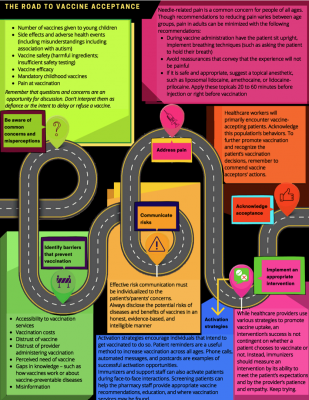
Be aware of common patient/parental concerns/misperceptions1,5,18,7:
- Number of vaccines given to young children
- Side effects and adverse health events (including misunderstandings including associations with autism)
- Vaccine safety (harmful ingredients; insufficient safety testing)
- Vaccine efficacy
- Mandatory childhood vaccines1
- Pain at vaccination
Remember that questions and concerns offer the opportunity for discussion and should not be interpreted as defiance or the intent to delay or refuse a vaccine.5
Identify barriers that prevent vaccination38,9:
- Accessibility to vaccination services
- Vaccination costs
- Distrust of vaccine
- Distrust of provider administering vaccination
- Perceived need of vaccine
- Gaps in knowledge – such as how vaccines work or about VPDs
- Misinformation
Implement an appropriate intervention: While various strategies may be employed to promote vaccine uptake, an intervention’s success is not contingent on its outcome – whether a patient chooses to vaccinate or not. Instead, immunizers should measure an intervention by its ability to meet the patient’s expectations and by the provider’s patience and empathy.
Communicate risks: Effective risk communication is dependent on the patient and must be individualized to the patient’s or parents concerns.22,34,35 Risk discussion should disclose the potential risks of diseases and benefits of vaccines, in an honest, evidence-based, and intelligible manner.34,35
Activation Strategies: Activation strategies encourage individuals that intend to get vaccinated to do so.41 Patient reminders are a useful method to increase vaccination across all ages.42 Phone calls, automated messages, and postcards are examples of successful activation opportunities.44 Immunizers and support staff can also activate patients during face-to-face interactions. Screening patients can help the pharmacy staff provide appropriate vaccine recommendations, education, and where vaccination services may be found.4
Address pain: Needle-related pain is a common concern for people of all ages.5,7 Though recommendations to reducing pain vary between age groups, pain in adults can be minimized with the following recommendations7:
- During vaccine administration have the patient sit upright, implement breathing techniques (such as asking the patient to hold their breath)
- Avoid reassurances that convey that the experience will not be painful
- Suggest a topical anesthetic - liposomal lidocaine, amethocaine, or lidocaine-prilocaine are agents that may be applied 20 to 60 minutes before injection, or a topical vapocoolant may be used right before vaccination
Road_to_Vaccine_Acceptance_REVISED