Archives

Equipment to Make Non-Sterile Compounding A Breeze

Learning Objectives

After completing this continuing education activity, pharmacists and pharmacy technicians will be able to

  • LIST the reasons why a compounding lab might consider purchasing machinery and the steps in the evaluation process
  • IDENTIFY the purpose and function of common compounding equipment (e.g., balances, mixers, mortars and pestles, capsule fillers, ointment mills)
  • DESCRIBE the principles of accuracy, precision, and calibration as they relate to compounding tools
  • EXPLAIN regulatory expectations for equipment use, cleaning, and maintenance (USP <795>)
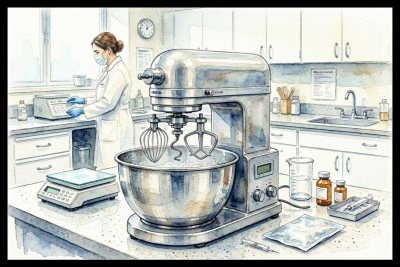
      a masked woman in a lab coat is measuring with gloved hands in the background with a shiny chrome kitchen mixer in the foreground.

       Release Date

      Release Date: June 10, 2026

      Expiration Date: June 10, 2029

      Course Fee

      Pharmacists   $7

      Pharmacy Technicians   $4

      There is no funding for this CE.

      ACPE UANs

      Pharmacist: 0009-0000-26-033-H07-P

      Pharmacy Technician: 0009-0000-26-033-H07-T

      Session Codes

      Pharmacist: 26YC33-CNS97

      Pharmacy Technician: 26YC33-NSC79

      Accreditation Hours

      2 hours of CE    (or 0.2 CEU's)

      Accreditation Statements

      The University of Connecticut School of Pharmacy and Pharmaceutical Sciences is accredited by the Accreditation Council for Pharmacy Education as a provider of continuing pharmacy education.  Statements of credit for the online activity ACPE UAN 0009-0000-26-033-H07-P/T will be awarded when the post test and evaluation have been completed and passed with a 70% or better. Your CE credits will be uploaded to your CPE monitor profile within 2 weeks of completion of the program.


      Disclosure of Discussions of Off-label and Investigational Drug Use

      The material presented here does not necessarily reflect the views of The University of Connecticut School of Pharmacy and Pharmaceutical Sciences or its co-sponsor affiliates. These materials may discuss uses and dosages for therapeutic products, processes, procedures and inferred diagnoses that have not been approved by the United States Food and Drug Administration. A qualified health care professional should be consulted before using any therapeutic product discussed. All readers and continuing education participants should verify all information and data before treating patients or employing any therapies described in this continuing education activity.

      Faculty

      Laura Nolan M.Ed., CPhT, CSPT

      Clinical Instructor

      University of Connecticut School of Pharmacy and Pharmaceutical Sciences

      Storrs, CT

      Faculty Disclosure

      In accordance with the Accreditation Council for Pharmacy Education (ACPE) Criteria for Quality and Interpretive Guidelines, The University of Connecticut School of Pharmacy and Pharmaceutical Sciences requires that faculty disclose any relationship that the faculty may have with commercial entities whose products or services may be mentioned in the activity.

      Laura Nolan has no relationships with ineligible companies.


      ABSTRACT

      As interest in specialized compounding, veterinary preparations, and cannabidiol (CBD)-related products grows, pharmacy compounding laboratories increasingly face decisions regarding automation and equipment acquisition. Although compounding equipment can improve efficiency, reduce repetitive manual labor, enhance dosing accuracy, and potentially decrease contamination risk, selecting appropriate equipment requires a structured and data-driven needs assessment. This continuing education activity reviews the major considerations involved in choosing compounding equipment. Decision makers must evaluate the pharmacy’s scope of services, compounding volume, formulation complexity, regulatory obligations, facility limitations, staff training needs, ergonomic concerns, and financial constraints before investing in equipment. They must consider the United States Pharmacopeia chapters <795>, <797>, and <800>, workflow integration, maintenance requirements, and vendor support. Ergonomics and repetitive strain prevention are also critical factors, noting that automation may be justified even when time savings are modest if employee injury risk can be reduced. This CE covers commonly used compounding equipment categories. For each category, it summarizes mechanisms of action, advantages, limitations, regulatory implications, and practical considerations affecting equipment selection. Ultimately, successful equipment selection depends on aligning technology with the pharmacy’s actual compounding needs rather than purchasing equipment based solely on novelty or perceived efficiency. A thoughtful needs analysis can help pharmacies avoid costly purchasing errors while improving product quality, workflow efficiency, and employee safety.

      CONTENT

      Content

      INTRODUCTION

      With the increased interest in specialized, veterinary, and cannabidiol (CBD) compounds, pharmacy staff who work in academia and specialize in compounding occasionally field questions from start-up companies that need help selecting the best equipment for their needs. Most compounders who have these questions are aware of compounding equipment’s advantages; the machines are semi-automatic or automatic, streamlined, safe, and more efficient and faster than humans.1,2 Saving time means saving money! When used according to the directions, they also produce products with accurate dosing.1,2


      Pharmacy compounders who are considering the purchase of machines always have additional questions. They want to know if specific equipment will decrease human exposure to medications and decrease the likelihood of human error. They also ask if machines can decrease repetitive motions. What is the likelihood of cross contamination? And will the finished products be pharmaceutically elegant? Unfortunately, compounding experts will not have a one-size-fits-all answer. Each compounding lab will need to conduct a needs analysis before considering new equipment. Choosing compounding equipment without a needs analysis is how pharmacies end up with very expensive dust collectors.


      CONSIDERATIONS FOR SELECTION

      Before purchasing any machine, decision makers need to ask, “What specific problem does this solve, and how often will we have that problem?” The answer to that question must be data driven.


      First, decision makers need to define the scope of services the pharmacy provides.3 It’s critical to choose equipment based on type of medications being compounded now (see Table 1), and to also consider how the business may grow in the next few years.  When looking at the compounded product types, the employee or employees doing the analysis need to augment the data with the volume or frequency that the pharmacy compounds each type of product.3 Things to think about include peak and average workload, batch compounding as opposed to one-off prescriptions, and the patient’s or customer’s typical turn-around expectations. The goal is to determine which compounds the staff makes often enough and in large enough quantities that automation would be a reasonable consideration.


      Table 1. Types of Compounded Products
      Nonsterile
      • Capsules
      • Creams
      • Gels
      • Gummies
      • Ointments
      • Solutions
      • Suspensions
      • Troches
      Sterile
      • Intravenous
      • Ophthalmics
      Hazardous drugs (e.g., oncology)


      Second, decision makers need to look at the various formulations they compound and assess their complexity. They need to look at each formulation and determine if it requires some kind of special approach. It might be high shear mixing, precise particle size reduction, or homogeneity testing.  The high-shear mixing process involves using shear to emulsify, homogenize, disperse, or reduce particle size. This shear force occurs when part of the mixture is pushed in one direction, while the other part is pushed in the opposite direction simultaneously. If the shear force is higher, the particles mix more evenly due to the particle size reduction outcomes, which assists in homogenization.  An example of this would be creating a cream or lotion with an oil and water base.4 These compounds tend to be more complex than other compounds, and if they are produced in large enough batches, the decision makers may need to look at mixers, electronic mortars and pestles, or homogenizers. Concurrently, they need to look at each compound and ask, “What level of dosing accuracy is required?” If any of these products include drugs with narrow therapeutic indexes or are destined for pediatric or neonatal patients, it's possible that automated dispensing systems, precision balances, or capsule filling machines could be helpful.


      Third, it's always important to look at regulatory and compliance considerations.5 People who make these decisions need to be fully educated about the United States (U.S.) Pharmacopeia chapters <795>, <797>, and <800>.6-8 In addition, they need to be aware of their State Board of Pharmacy rules. This means that they should determine if any environmental monitoring, documentation systems, or closed system transfer devices are needed. (A closed system transfer device is a drug transfer system designed to prevent hazardous drugs from escaping into the environment and to block contaminants from entering the system during preparation and administration.) Any equipment that they purchase must be in compliance with the rules and not purchased just to improve production. This is also the time to also ask if the specific piece of equipment will provide traceable documentation. If batch-to-batch consistency is imperative, documentation is an indispensable element of the pharmacy’s quality assurance program. 6-8


      Fourth, space and facility constraints are very important.3,5 Before purchasing any machine, pharmacy staff should look at their available square footage and cleanroom requirements to determine if the machine will even fit.5 A good way to do this is to determine the equipment’s size and construct a dummy out of cardboard. Placing it in the workflow will help determine if the machine will work for the specific pharmacy. Many machines are large and will require dedicated space or specific ventilation. A PRO TIP is to ask, “Does it integrate with your existing equipment?”5 Integration means that the new machine may need to be able to “talk” to the pharmacy’s software, labeling systems, and barcoding.5


      Fifth, decision makers need to assess the pharmacy team's current skill levels and determine if the staff will need additional or extensive training.3,5 If the team's skill level is only basic, or if the pharmacy experiences high employee turnover, it might be important to look for simpler equipment rather than fancier equipment. While conducting this part of the needs assessment, decision makers also need to determine if manufacturer support and training is available and included in the purchase price. If it is not included in the purchase price, the budgeting process will need to reflect the additional cost.


      A related concern is how the physical work of compounding affects employees’ bodies over time, referred to as ergonomics. Many compounding tasks—grinding powders with a mortar and pestle, mixing thick creams by hand, filling capsules, drawing up liquids into syringes by the hundreds, and even keyboard strokes—are very repetitive.9 Small, precise motions repeated hundreds of times can be more damaging than heavy lifting—because they never give muscles a break.10,11 Over time, drawing 0.5 mL 300 times is more straining than lifting a heavy box 10 times. Employees may develop wrist pain, hand fatigue, shoulder or neck strain, or long-term injuries that require workman’s compensation.9,10 A PRO TIP is to replace the question, “Can an employee do this task?” with, “Can an employee do this task all day, every day, without risk of injury?” If a machine can save employees from strain or injury, it might be worth it—even if it doesn’t save much time.


      PAUSE AND PONDER: A technician draws up small volumes (0.5–1 mL) into syringes for 2–3 hours straight. Why is this more tiring than it sounds? What small muscles are being overused? What could reduce strain without full automation?


      Repetitive hand motions could cause carpal tunnel syndrome, which is caused by compression of the median nerve. This causes pain, numbness, and tingling in the hand.12


      Sixth, developing a budget isn’t as simple as just determining how much money is available.3  Two questions should drive budgeting:

      • “Will this machine pay for itself?”
      • “What happens if it breaks?”


      The answers to these questions emanate from an analysis of upfront costs and the long-term anticipated return on investment.3 Sometimes, decision makers overlook hidden costs like maintenance and calibration costs, consumables and proprietary supplies (supplies that are only available from the manufacturer), and service contracts.5


      During the budgeting process, decision makers should delve into some additional concerns listed in Table 2.  A snazzy machine with poor vendor support becomes useless quickly.


      Table 2. Vendor Support & Reliability5
      • Is technical support readily available? What is the typical or guaranteed response time?
      • What is the process for machine cleaning and calibration?
      • Does the vendor supply replacement parts or can they be purchased elsewhere?
      • Does the vendor provide training? If so, is it free or associated with a charge?
      • What happens if the machine fails? What is the backup plan or work-around process?
      • What is the cost of the service contract and does it include replacement parts?


        A final and seventh step is to ask, “What specific problem does this solve, and how often will we have that problem?”


        SIDEBAR: Stop Calling It Personal Protective Equipment!6-8

        Experts now discourage the term “personal protective equipment” (PPE) in cleanroom settings because it implies protection of the worker, while the primary goal is protection of the product from contamination. Cleanroom standards (e.g., United States Pharmacopeia <797>) emphasize garbing to maintain aseptic conditions. Using “PPE” can lead to incorrect practices, such as prioritizing self-protection over sterility, potentially increasing the risk of microbial contamination in compounded sterile preparations.

        And the USP documents themselves are confusing! USP <800> uses PPE but <795> and <797> used the preferred term “garb”!

        So say it! In compounding we garb!


        Heads = Machine, Tails = Employee

        After completing the seven steps described above, it may be clear that the pharmacy has the volume, money, and justification to purchase a machine.3 However, it's a good idea to play devil's advocate and think about ways to reduce strain without full automation. This is a good brainstorming activity for the entire staff.


        Some ways to reduce strain include rotating tasks every 30 to 60 minutes, so that staff members alternate fine motor tasks and non-fine motor tasks, and scheduling micro breaks.9 It's also possible to tweak equipment so that there's less strain on employees. Using larger syringes when possible uses less force per draw. Choosing low resistance syringes can decrease strain because they have smoother plunger actions. Employees can also use a syringe holder, or a stabilizing device and training should emphasize ensuring proper hand positioning.9


        Regardless of the type of equipment being used, compounders should use disposable products when applicable (i.e. weigh boats [a small, shallow, disposable container used in laboratories to hold solids while they are being weighed on a balance], or single use oral syringes) in conjunction with their equipment. They increase infection prevention and patient safety by avoiding cross contamination; they save time and labor by not having to clean and sanitize in between compounds; and there is no maintenance involved. There may also be potential for bulk buying discounts.


        Decision makers need to keep one more thing in mind when they select equipment. USP <795> requires compounding pharmacies to clean and maintain the equipment according to written procedures. The PRO TIP here is that as soon as equipment is purchased, the pharmacy needs to establish and follow such procedures.


        Let's look at the types of available equipment.


        EQUIPMENT TYPES AND PURPOSES

        Weighing and measuring equipment in compounding ensures accurate quantities, which are critical for safety and effectiveness. This includes balances for weighing powders and volumetric measuring devices (e.g., graduated cylinders, syringes) for liquids. Selection depends on the required precision—small volumes or potent drugs demand higher accuracy. Employees must calibrate equipment and use it properly to avoid dosing errors. Inaccurate measurement can lead to subpotent or toxic preparations, making proper technique and maintenance essential in both sterile and nonsterile compounding.


        Choosing the right scale depends on the pharmacy’s specific compounding needs. Most quality scales range from $500 to $2,000. Scales come in two types: analogue and digital.


        The USP discusses and requires Class A prescription scales on compounding pharmacies.13 All state laws require a Class A scale or a scale that is more sensitive in licensed pharmacies, too. This level of mechanical balance is sensitive enough to detect small weight changes, with a sensitivity requirement of 6 mg or less and a minimum weighable quantity of 120 mg (to ensure error will be 5% or less). This means adding 6 mg will move the pointer one division on the scale. Because of this level of precision, Class A balances are considered appropriate for accurately weighing ingredients used in compounded preparations. A Class A balance is defined by how little weight it can detect (again, 6 mg or less)13; in case you are wondering, there are no official Class B or C balances in USP compounding—just balances that either meet the standard or don’t.


        An analogue scale is a mechanical device that uses physical weights, springs, or balance beams and does not need electricity. It uses the principle of equilibrium, comparing the unknown weight with standard weights.14 Analogue scales are less costly than digital scales. All older pharmacies had torsion balances, which are a form of analogue scale, which did not require electricity. They were extremely durable and highly accurate when used correctly. In the “old days,” schools of pharmacy taught students how to use these scales. Many schools no longer teach this, considering these scales old-fashioned. Yet a survey that received 372 responses from pharmacies in Missouri found that almost half of those pharmacies (46.8%) owned a torsion balance.15 Almost 60% of pharmacists-in-charge recommended continuing to teach how to use torsion balances.15  Do you still have a torsion balance in your practice?


        Over time, mechanical parts may loosen and analogue scales will need recalibration using certified weights. Ideally, a compounder should test the balance with a standard weight set before the scale is used each time and should arrange to have the scale calibrated professionally every one to two years, depending on its amount of use. In addition, parallax error—error that occurs when someone reads a scale or measurement from the wrong angle, rather than looking at it straight on—is possible. The compounder must look at the measurement mark at eye level. Because analogue scales are slow to use and require manual skill and calibration, human reading errors are possible, and today’s compounding pharmacies tend to use digital scales.14 (But having an analogue scale is handy if the power goes out or a digital scale breaks.)


        Digital scales use electronic sensors to measure weight and display the result numerically.16,17 Usually, these scales use a load cell to convert force (weight) into an electrical signal. A highly sensitive analog-to-digital converter changes the load cell’s electrical signal into a digital value. Next, a microcontroller is a calculator of sorts, changing the signal into an LCD display and telling the user what the item’s weight is. They are fast and easy to read, highly precise (often to milligrams or better), and sometimes include features like taring (resetting the scale to zero after placing a container on it, so employees only measure the substance they add—not the container), calibration alerts, and unit conversion. These features reduce human error. More costly than analogue scales, digital scales need a power source and can be sensitive to environment (vibration, airflow, static).16,17 However, most new balances have a battery backup so they can still be used in case of a power outage.


        When choosing scales, pharmacy staff should start by considering how precise their measurements must be (e.g., 1 mg vs. 1.001 g) and the typical quantity—small amounts or several kilograms. Space may matter, so a compact design can help. Many modern scales offer digital features like battery backup, USB, or Ethernet connectivity for data recording, and automatic internal calibration. Analog scales are more affordable and suitable for basic tasks, while digital scales provide greater precision and reliability, making them ideal for more demanding environments.10,11,14,16


        Other types of weighing scales include bench scales, truck scales, pallet scales, floor scales, and dynamic weighing systems.


        Mixing and blending equipment ensures ingredients are evenly distributed so each dose is consistent and effective. This includes manual mortar and pestles, electronic mortar and pestles (EMPs), ointment slabs, electronic mixers, and homogenizers. The choice depends on the formulation—thick creams may require more force, while suspensions need uniform particle distribution. Proper mixing prevents “hot spots” (too much drug in one area), “cold spots” (areas with little to no drug), or separation.18 Equipment should be easy to clean and appropriate for the product to maintain quality and avoid contamination.


        Using the traditional mortar and pestle, compounders crush and mix various ingredients to create a fine mixture by hand.19 They place the ingredients in the mortar (the sturdy bowl made of hard materials) and rub it with the pestle (the club-shaped implement used to pound or grind substances). The process can be time-consuming, and the final product may differ in consistency depending on who wields the mortar! Proper hand positioning in holding the pestle will reveal how skilled the compounder is.19


        EMPs generally retail at about $2,000 to $4,000 each. They increase the potential output of topical compounds.20 Employees can use them to make multiple compounds in small, personalized batches using single use plastic jars and small plastic mixing discs, which remain in the final product jar. Often, topical compounds produced using EMPs have better product quality than those produced by hand.19 Considered a closed system, these machines also prevent cross contamination. EMPs use a circular or S-shaped blade that spins inside the jar, pushing the cream outwards (toward the jar’s wall). The paddle on each end of the blade creates a forceful, shearing effect and delivers a homogenous and smooth mixture as the process is repeated.20  One limitation to EMPs is they may generate heat during the process, which introduces the possibility that the heat will degrade the active pharmaceutical ingredient.19 This outcome is highly unlikely because these machines are FAST—they can mix in three to five minutes depending on the product.


        A planetary mixer is a closed mechanical mixing device used to blend creams, ointments, gels, and viscous formulations.19 They produce less heat than EMPs. The name comes from the motion of the mixing blade, which rotates on its own axis while traveling around the bowl, similar to a planet orbiting while spinning. Its dual movement provides thorough, uniform mixing and reduces unmixed areas. These mixers are also very fast. Planetary mixers are especially useful for thicker preparations and larger batches, improving consistency and reducing manual effort.19 However, they require cleaning between batches and may be less practical for very small quantities.


        In the compounding lab, student Carli is watching a demonstration of the planetary mixer. Several of her classmates are bored and visibly distracted, but she is intrigued. At the end of the demonstration, she stays behind and tells her instructor that she found the whole concept interesting. She says that her classmates often make cupcakes for a fundraising event, and when they make buttercream frosting, the powdered sugar goes everywhere. She likes the idea of a closed system that would incorporate butter, sugar, flavoring, and milk with no mess. She says, “Too bad these are so expensive. They’d be great for frosting!” The instructor asks her to think about it and identify the reason why the planetary mixer would make terrible frosting. It takes a minute, but Carli says, “Ah! It’s because when making buttercream frosting, you need to whip air into it. Planetary mixers press all the air out.” The instructor says, “Correct.” Carli’s friend Sydney is nearby and says, “I guess you can’t make meringue from egg whites in a planetary mixer either!” The instructor nods.


        An ointment mill is a device used to mix and finely grind ingredients, especially incorporating powders into ointment bases.22 Its main purpose is to reduce particle size and evenly distribute the drug throughout the preparation, producing a smooth, uniform product free of grittiness—that’s called pharmaceutical elegance. This improves both patient comfort and the consistency of dosing.22 Ointment mills reduce particle sizes better than EMPs and compounders who make topicals that contain more than 10% active pharmaceutical ingredient will usually need to use an ointment mill rather than an EMP.20 (If you are wondering, “Why?” see the SIDEBAR.)


        SIDEBAR: The EMP to Ointment Mill Switcheroo!

        Kyle is a pharmacy student taking an advanced compounding class. A proctologist has ordered a 20% benzocaine ointment for a patient who has anorectal pain. He has laid out his components and has the EMP ready to mix the ointment. He asks the instructor to check his work. She approves his calculations, but says, “You would be better off using the ointment mill. He says, “Why? I didn’t see anything about this in the USP. Is this some kind of FDA regulation?”


        She replies, “No universal USP or FDA rule dictates using an ointment mill instead of an EMP if a topical contains more than 10% active pharmaceutical ingredient (API).  Compounders often switch to an ointment mill at higher API loads to improve pharmaceutical quality and address rheology issue. (Rheology is the science of how materials flow, spread, deform, or resist movement under force.)”


        She goes on to summarize this way:

        • At low API concentrations, an EMP can usually generate enough shear and mixing energy to disperse powder uniformly.
        • At higher concentrations (especially insoluble powders such as urea, salicylic acid, ketoprofen, zinc oxide, etc.), the formulation behaves more like a dense suspension than a simple cream.
        • High solids loading increases
          • agglomeration (the situation in which mall powder particles stick together and form clumps)
          • grittiness
          • poor wetting
          • nonuniform particle distribution
          • risk of dose variability,
          • instability/separation


        An ointment mill produces much higher and more controlled shear forces than an EMP. The rollers physically reduce particle size and break agglomerates, improving

        • content uniformity
        • smoothness/elegance
        • skin feel
        • reproducibility
        • and potentially, drug release characteristics.


        An EMP mainly homogenizes and mixes; an ointment mill both mixes and reduces particle-size.


        Most ointment mills use three rollers that rotate in different directions and at different speeds, creating shear forces that break down particles and blend them thoroughly.22 This process, related to particle size reduction, enhances drug absorption and ensures stable, professional-quality ointment. Using an ointment mill is definitely faster them mixing an ointment by hand.22


        Homogenizers create a uniform mixture by reducing particle or droplet size and evenly dispersing ingredients throughout a preparation.23 They are especially useful for emulsions, suspensions, and creams, where consistent distribution of components is critical for accurate dosing and stability.23


        Homogenizers work by applying intense mechanical forces—such as pressure, turbulence, or shear—to break down particles and droplets.23 By forcing mixtures through narrow channels at high pressure, homogenizers decrease particle size and increase uniformity, leading to better bioavailability. This process improves texture, enhances absorption, and prevents separation over time. The result is a smooth, stable product with consistent therapeutic properties, achieved through principles related to homogenization.23


        Capsule filling machines efficiently fill empty capsules with precise amounts of powdered or granulated medication.24 They help ensure consistent dosing and uniformity across multiple capsules, which is especially important when preparing individualized prescriptions.24 Capsule filling machines may be manual, semi-automatic, or fully automatic.25


        These machines typically align empty capsules, separate the caps from the bodies, fill the bodies with the prepared formulation, and then reassemble the capsules.24 By improving speed and accuracy compared to manual filling, they reduce variability and enhance workflow efficiency. Proper use supports uniform drug distribution and dose accuracy, key aspects of content uniformity. Traditionally, compounders use hard or soft gelatin capsules, which remain widely available and inexpensive. They are not vegetarian, however, as gelatin is a meat byproduct, but there are vegetable-based capsules available. In addition, some gelatin capsules are kosher, but some are not. To be kosher, the gelatin capsules must be made from a kosher source and in a supervised, certified process. Capsules that meet vegetarians’ needs and the needs of people who keep kosher are available and made of cellulose. They tend to be more costly than gelatin capsules.24


        Of note, 21 U.S.C. § 830 (Controlled Substances Act [CSA] – recordkeeping & reporting) and 21 CFR Part 1310 (DEA regulations on “regulated transactions”) require reporting of certain transactions involving encapsulating machines. These laws define an encapsulating machine as any equipment that will be used to fill capsules with powder, liquid, and others, regardless of the alleged purpose. The CSA legally classifies anyone who sells or distributes these machines as a regulated person and any sale of an encapsulating machine—domestic, import, or export—triggers the requirement to file Form 452 and keep sales records. The purpose of these laws is to scrutinize sales that may be linked to illicit drug production. Note that owning such machines is not illegal; selling them is if the seller does not file a Form 452.


        Infuser machines ($100 to $400) extract active ingredients from raw materials into a liquid or oil base.26,27 The term “infuser machine” is colloquial, meaning that’s what just about everyone calls them, mainly because they have been used heavily by the emerging cannabis industry. The scientific names for these machines include27

        • solid–liquid extractors
        • botanical extraction systems
        • maceration/percolation systems
        • dynamic extraction devices


        The infusing procedure extracts compounds from the solid material to the outlet (the liquid in which it is infused), creating a solution that contain colorants, bioactive compounds, and/or fragrances.27 Compounders use these machines to prepare infused oils or solutions by combining heat, time, and controlled mixing to transfer desirable compounds into the final product.26


        These machines work by maintaining consistent temperatures and agitation, which helps improve extraction efficiency and uniformity.26 This process relies on principles of solid-liquid extraction, including diffusion and osmosis, ensuring that the active components are evenly distributed throughout the preparation for consistent potency and quality. They can infuse a variety of flavors and aromas like milk, honey, butter, oil, or glycerin. They are popular with herbalists and THC/CBD manufacturers.26


        Interestingly, infusion techniques have become a mainstay of valorization—taking something that would otherwise be considered waste, low-value, or underused and turning it into something more useful or economically valuable.27 In doing so, the process must extract the desirable component while discarding the constituents that are less desirable.28 Some examples include extracting antioxidants from orange peels that would otherwise be discarded; converting agricultural waste into biofuels; using spent grain from breweries to make protein ingredients; and the ever-popular recovering cannabinoids, terpenes, or polyphenols from plant material. Infusion techniques are also very often used in herbal medicine.28


        Compounders need to appreciate that extraction efficiency increases as particle size decreases because surface area increases.27 That principle is exactly why many infusion machines grind material finely, heat the oil, stir continuously, or cycle between pressure and vacuum.27


        Molds and presses constructed of silicone or stainless steel ensure uniform shape and size. Many are available in standard sizes, but some can be custom-made. They are employed in both manual and automated compounding. They enhance efficiency with regulated compression force-dosage uniformity. They must be cleaned regularly and thoroughly to meet quality assurance standards.


        Magnetic stirrers mix liquids using a rotating magnetic field.29-31 The compounder places a small, coated magnet (“stir bar” or “flea”) in the liquid and then places the container on a plate that has a magnet below it. The stir bar is polytetrafluoroethylene-coated (PTFE which means it is coated in the chemically inert substance we usually know as Teflon). A motor rotates the magnet. The stir bar spins as the field rotates, creating a vortex that mixes the solution uniformly. Some units also include a hot plate for simultaneous heating and mixing. These devices mix the solution consistently, so the final product has uniform dosing and the results are reproducible. Adding heat can make solids dissolve faster and reduce the likelihood of hot spots.29,30


        Magnetic stirrers work best with low- to moderate-viscosity liquids.30 They mix creams, ointments, gels, and high-solid suspensions poorly, so for these, a planetary mixer or overhead mixer (a motorized mixer much like a stand mixer in a home kitchen) are better choices. They are also limited to batches of 2 to 4 liters. In addition, if used improperly (at high speeds or improper conditions) they are prone to stir bar decoupling, meaning the stir bar may fail to respond to the magnet completely.32 In addition, compounders need to be certain that their containers are not too narrow or irregularly shaped.33  And, magnetic stirriers do not reduce particle size.30 Finally, the PTFE coating can chip or degrade over time and the magnet may weaken, potentially compromising mixing and introducing contamination.31-34


        Filling machines accurately dispense a defined volume or mass of a preparation into containers (bottles, jars, tubes, syringes).35 Compounders usually use them for oral liquids (solutions, suspensions), topical products (creams, gels, lotions), and occasionally syringes or unit-dose containers. Table 3 lists the several types of filling machines.


        Table 3. Types of Filling Machines35,36
        • Volumetric liquid fillers would be best for low- to moderate-viscosity liquids or well-mixed suspensions; they deliver a fixed volume per cycle. These may be piston fillers—which are very accurate and widely used—or peristaltic pump fillers when sterile or clean products are needed.
        • Peristaltic fillers move fluid through a tub using rollers that compress the product. The fluid has contact with the tubing only so contamination is unlikely and cleaning is simple—just replace the tubing. These are less precise if the product is viscous, and the tubs may show wear and tear with use.
        • Auger fillers are used for creams, ointments, and gels. In these devices, a rotating auger screw displaces a controlled amount of the product. These are able to handle higher viscosities than liquid fillers, and they're good for use with jars or wide mouth containers.
        • Some piston fillers are used for viscous products, especially topicals, and in these machines, a high force piston pushes the product through a nozzle. Piston fillers have better control than augers for some formulations.
        • Tube filling machines are used for ointments or creams, and they push the product into an aluminum or a plastic tube. The process is to fill, crimp or seal, and then trim the tube.


          When using any type of filling machine, compounders need to be aware of some limitations. Filling machines can be influenced by the product’s viscosity, air bubbles, or equipment calibration.35,37 Of these factors, viscosity is the single most important driver of equipment choice.37 Some machines may develop calibration drift that leads to dosing errors. A PRO TIP is to use gravimetric checks (weight verification) to ensure that their filling machines are accurate.


          Compounders need to realize that they need to continuously stir suspensions when using filling machines to ensure that the product is evenly distributed. They must also premix creams in an appropriate mixer like a planetary mixer before using the machine. Another limitation is air incorporation. If for some reason the filling machine is incorporating air into the product, the fills will be inaccurate and the product’s stability uncertain; air incorporation is most likely to occur with foaming liquids, gels, or creams. Finally, each of those machines needs to be cleaned thoroughly in accordance with the device’s manual directions between all formulations.


          Some ophthalmic preparations, oral solutions, and suspensions are only stable within a narrow pH range (see the SIDEBAR).37,38 pH meters are electronic instruments that measure the acidity or alkalinity of a solution by detecting hydrogen ion activity. The typical device has a glass electrode (sensing element), a reference electrode, and a digital meter that converts voltage into pH units. The measurement the device produces uses electrochemical principles described by the Nernst equation, which relates voltage to ion concentration. Compounders need to know that with some devices, pH readings can change with temperature. (Those that have automatic temperature compensation are less likely to have this problem, but the manual will describe the temperature excursions window in which the device is reliable.) Most machines require thorough cleaning and electrode storage in a potassium chloride solution. They are less reliable in viscous solution, non-aqueous, or solution of low-ionic strength. An example of a low-ionic strength solution is preservative-free artificial tears. They have few dissolved ions (like sodium, chloride, potassium) compared with normal saline or buffered IV fluids, which makes them low ionic strength.


          SIDEBAR: What is pH? The pHacts!37,38

          pHunny you should ask! pH is a way to describe how acidic or basic (alkaline) a pHluid is.

          • It is measured on a scale from 0 to 14
          • A pH of 7 is neutral (like pure water)
          • A pH below 7 means the substance is acidic (like lemon juice or stomach acid)
          • A pH above 7 means it is basic or alkaline (like soap or baking soda solution)
          • The pH of most body fluids is 7.4


          A straightforward way to think about it is this: pH tells you how “sour” or “soapy” a liquid would be if you could taste or touch it safely. And not all flavoring can affect pH. Most flavors are acidic and contain citric acid (i.e., lemon or orange), malic acid (apple), or tartaric acid (grape). So flavoring is an active excipient, not just a good taste. Compounders should remember that pharmaceutical-grade flavoring systems are often buffered and standardized.


          Slight changes in pH can have remarkable effects on drug dissolution, stability, and propensity to be irritating or gentle.


          CONCLUSION

          Overall, an efficient compounding company needs well-organized workspaces with designated zones for weighing, mixing, and packaging. Its work areas should be streamlined and well thought out to decrease excess motions and to reduce cross contamination. It is important to follow USP standards closely, and to conduct performance testing.  Use best practices with quality assurance checks and regular sanitization and perform maintenance checks regularly and don’t forget to fill out those training, cleaning, and maintenance logs.


          When considering a certain machine, managers should ask the manufacturer of the machine for names of companies who have recently purchased the product. Reach out to those companies for feedback on the device. It is also important to let the compounders who are going to use the machine in your compounding company have an opinion.


          Automated machines eliminate human error and can reduce cross contamination. They can produce compounds which have better consistencies that can increase absorption and enhance comfort. Most importantly, they allow the compounder to create specialized/customized vehicles with adjusted strengths, which opens up more treatment options for our patients.


          Pharmacist Post Test (for viewing only)

          Equipment to Make Non-Sterile Compounding A Breeze
          26-033 P
          Posttest

          Learning Objectives
          After completing this continuing education activity, pharmacists and pharmacy technicians will be able to
          1. LIST the reasons why a compounding lab might consider purchasing machinery and the steps in the evaluation process
          2. IDENTIFY the purpose and function of common compounding equipment (e.g., balances, mixers, mortars and pestles, capsule fillers, ointment mills)
          3. DESCRIBE the principles of accuracy, precision, and calibration as they relate to compounding tools
          4. EXPLAIN regulatory expectations for equipment use, cleaning, and maintenance (USP <795>)

          1. The staff at a busy compounding lab has analyzed the type and quantities of creams and ointments they make. They have also examined state and federal regulations to ensure they know any limitations on the purchase of new equipment. They are looking at various machines. What is the next question they should ask?
          A. Does it integrate with your existing equipment and fit in the available space?
          B. Will staff need additional or extensive training to operate these machines?
          C. Can an employee do this task all day, every day, without risk of injury?

          *

          2. Which of the following is a reason to use disposable supplies in conjunction with compounding machinery?
          A. The USP and FDA require the use of disposable supplies when compounding.
          B. Disposable supplies prevent cross contamination and increase patient safety.
          C. Disposable supplies are less expensive than washing reusable items.

          *

          3. What is the main purpose of calibrating a balance before compounding?
          A. To ensure the balance is clean
          B. To verify accuracy and precision
          C. To comply with labeling requirements

          *

          4. Which equipment is most appropriate for preparing a homogeneous cream-based ointment?
          A. Capsule-filling machine
          B. Electronic mortar and pestle
          C. Ointment slab

          *

          5. Which of the following is a USP <795> requirement for compounding equipment?
          A. Replaced the machinery’s moving parts annually
          B. Clean and maintain it according to written procedures
          C. Use machinery only for large volume sterile preparations

          *

          6. Which piece of equipment is primarily used to reduce particle size and achieve uniform mixing in ointments?
          A. Class A balance
          B. Ointment mill
          C. Magnetic stirrer

          *

          7. What three elements are essential when using a dynamic extraction device?
          A. S-shaped blades, ice, and time
          B. Staff skill, herbal API, and heat
          C. Heat, time, and controlled mixing

          *

          8. Why is it essential to look at marks on a graduated cylinder at eye level?
          A. It prevents parallax
          B. It eliminates reflection
          C. The numbers are small

          *

          9. What is the MOST IMPORTANT reason equipment should be easy to clean and appropriate for the product being compounded?
          A. To save staff time and costs of cleaning supplies
          B. To ensure faster turnaround time between preparations
          C. To maintain quality and avoid contamination

          *

          10. Your boss is planning to upgrade a certain machine and asks you to list the old one on Facebook Marketplace and craigslist for sale. You immediately think about 21 U.S.C. § 830 and 21 CFR Part 1310. What machine is he going to upgrade and what will you need to file at sale?
          A. An old capsule filling machine; Form 452
          B. An old planetary mixer; Form DEA 222
          C. An old ointment mill; Forms DEA 222 and 106

          Pharmacy Technician Post Test (for viewing only)

          Equipment to Make Non-Sterile Compounding A Breeze
          26-033 T
          Posttest

          Learning Objectives
          After completing this continuing education activity, pharmacists and pharmacy technicians will be able to
          1. LIST the reasons why a compounding lab might consider purchasing machinery and the steps in the evaluation process
          2. IDENTIFY the purpose and function of common compounding equipment (e.g., balances, mixers, mortars and pestles, capsule fillers, ointment mills)
          3. DESCRIBE the principles of accuracy, precision, and calibration as they relate to compounding tools
          4. EXPLAIN regulatory expectations for equipment use, cleaning, and maintenance (USP <795>)

          1. The staff at a busy compounding lab has analyzed the type and quantities of creams and ointments they make. They have also examined state and federal regulations to ensure they know any limitations on the purchase of new equipment. They are looking at various machines. What is the next question they should ask?
          A. Does it integrate with your existing equipment and fit in the available space?
          B. Will staff need additional or extensive training to operate these machines?
          C. Can an employee do this task all day, every day, without risk of injury?

          *

          2. Which of the following is a reason to use disposable supplies in conjunction with compounding machinery?
          A. The USP and FDA require the use of disposable supplies when compounding.
          B. Disposable supplies prevent cross contamination and increase patient safety.
          C. Disposable supplies are less expensive than washing reusable items.

          *

          3. What is the main purpose of calibrating a balance before compounding?
          A. To ensure the balance is clean
          B. To verify accuracy and precision
          C. To comply with labeling requirements

          *

          4. Which equipment is most appropriate for preparing a homogeneous cream-based ointment?
          A. Capsule-filling machine
          B. Electronic mortar and pestle
          C. Ointment slab

          *

          5. Which of the following is a USP <795> requirement for compounding equipment?
          A. Replaced the machinery’s moving parts annually
          B. Clean and maintain it according to written procedures
          C. Use machinery only for large volume sterile preparations

          *

          6. Which piece of equipment is primarily used to reduce particle size and achieve uniform mixing in ointments?
          A. Class A balance
          B. Ointment mill
          C. Magnetic stirrer

          *

          7. What three elements are essential when using a dynamic extraction device?
          A. S-shaped blades, ice, and time
          B. Staff skill, herbal API, and heat
          C. Heat, time, and controlled mixing

          *

          8. Why is it essential to look at marks on a graduated cylinder at eye level?
          A. It prevents parallax
          B. It eliminates reflection
          C. The numbers are small

          *

          9. What is the MOST IMPORTANT reason equipment should be easy to clean and appropriate for the product being compounded?
          A. To save staff time and costs of cleaning supplies
          B. To ensure faster turnaround time between preparations
          C. To maintain quality and avoid contamination

          *

          10. Your boss is planning to upgrade a certain machine and asks you to list the old one on Facebook Marketplace and craigslist for sale. You immediately think about 21 U.S.C. § 830 and 21 CFR Part 1310. What machine is he going to upgrade and what will you need to file at sale?
          A. An old capsule filling machine; Form 452
          B. An old planetary mixer; Form DEA 222
          C. An old ointment mill; Forms DEA 222 and 106

          References

          Full List of References

          1. Bauman I. Solid-solid mixing with static mixers. Chem Biochem Eng Q. 2001;15:159–165.
          2. Bauman I, Ćurić D, Boban M. Mixing of solids in different mixing devices. Acad Proc Eng Sci. 2008;33:721–731. doi: 10.1007/s12046-008-0030-5.
          3. Automation or Human Labor? Here’s What to Consider. September 2, 2021. Accessed April 3, 2026. https://arnoldmachine.com/resources/automation-or-human-labor-here-s-what-to-consider/
          4. The Basics of High-Shear Mixing: A Complete Guide. MDX Process. February 3, 2026. Accessed May 7, 2026. www.mdxprocess.com/blog/high-shear-mixing-tips-tricks
          5. What to prioritise when evaluating and comparing machines in the pharmaceutical packaging industry. Manufacturing Chemist. June 17, 2024. Accessed April 3, 2026. https://manufacturingchemist.com/what-to-prioritise-when-evaluating-and-comparing-machines
          6. United States Pharmacopeia. General Chapter <797> Pharmaceutical Compounding—Sterile Preparations. In: USP–NF. Rockville, MD: United States Pharmacopeial Convention; 2023.
          7. United States Pharmacopeia. General Chapter <800> Hazardous Drugs—Handling in Healthcare Settings. In: USP–NF. Rockville, MD: United States Pharmacopeial Convention; 2023.
          8. United States Pharmacopeia. General Chapter <795> Pharmaceutical Compounding—Nonsterile Preparations. In: USP–NF. Rockville, MD: United States Pharmacopeial Convention; 2023
          9. Zamani M, Chan K, Wilcox J. Pharmacy Technicians' Perceptions of Risk Reduction Strategies Implemented in Response to the Repetitive Strain Injury Associated with Sterile Compounding. Int J Pharm Compd. 2021;25(3):182-186.
          10. Ergonomic Program. Occupational Safety and Health Administration, Department of Labor. Accessed April 4, 2026. https://www.osha.gov/laws-regs/federalregister/1999-11-23?utm_source=chatgpt.com
          11. Winiarski S, Molek-Winiarski, Chomatowska B. From Motion to Prevention: Evaluating Ergonomic Risks of Asymmetrical Movements and Worker Well-Being in an Assembly Line Work. Appl. Sci. 2025;15(2): 560. https://doi.org/10.3390/app15020560
          12. Ramsey JG, Musolin K. Ergonomic Evaluation of Pharmacy Tasks. Centers for Disease Control and Prevention. March 2025. Accessed May 7, 2026. file:///C:/Users/Jeannette/Downloads/cdc_53113_DS1.pdf
          13. Pharmaceutical Measurement: Sensitivity Requirement, UH PHAR 4330.Accessed April 5, 2026. https://uhphar-4330.herokuapp.com/module/pharmaceutical_measurement/topics/sensitivity_requirement
          14. [No author.] Are Analog Scales Accurate? | Precision Weighing Uncovered. Accessed April 4, 2026. https://snuggymom.com/are-analog-scales-accurate/?utm_source=chatgpt.com
          15. Bilger R, Chereson R, Salama NN. Should Torsion Balance Technique Continue to be Taught to Pharmacy Students?. Am J Pharm Educ. 2017;81(5):85. doi:10.5688/ajpe81585
          16. How Does a Digital Scale Work: Science of Accurate Weighing. Dwinley. Accessed April 4, 2026. https://www.develoscale.com/how-does-a-digital-scale-work/?utm_source=chatgpt.com
          17. How Digital Scales Work. transcell. Accessed April 4, 2026. https://transcell.com/how-digital-scales-work/?utm_source=chatgpt.comC1
          18. Geometric Dilution and Mixing Accuracy; The “Folding” Technique: Mastering the Science of Uniformity. Council Pharmacy Standards. Accessed April 5, 2026. https://pharmacystandards.org/chpop/section-6-2-geometric-dilution-and-mixing-accuracy/
          19. How Compounding Pharmacies Mix Compounds. August 21, 2020. Accessed April 3, 2026. https://blog.bigcountry.pharmacy/how-compounding-pharmacies-mix-compounds
          20. Tompson E/ Battle of the Mixers: Unguator® vs Ointment Mill. Total Pharmacy Supply. September 1, 2020. Accessed April 3, 2026. https://totalpharmacysupply.com/blog/battle-of-the-mixers-unguator-vs-ointment-mill?srsltid=AfmBOooAssIl2pWSwGujJukQDV0ttxCidauImm9YbX5rrmXDwrj63QX8
          21. McElhiney LF. Equipment, supplies, and facilities required for hospital compounding. Int J Pharm Compd. 2006;10(6):436-441.
          22. The Ointment Mill Process. EXAKTUSA. Accessed April 3, 2026. https://exaktusa.com/the-ointment-mill-process/?srsltid=AfmBOoqKC6w7VJeJP08YNZz378oMvJYfFMIX_q5UlZ7g87SGJA8CHtkw
          23. What is a Homogenizer and How Does It Work? Maxwell Machine. October 18, 2024. Accessed April 3, 2026. https://www.maxwell-machine.com/what-is-a-homogenizer-and-how-does-it-work
          24. How a Capsule Filling Machine Works? URBAN, April 9, 2024. Accessed April 3, 2026. https://www.urbanpackline.com/blog/how-a-capsule-filling-machine-works.html
          25. Types of Capsule Filling Machines – Design, Process, and Working Principle.Adinath International. Accessed April 3, 2026. https://www.adinathmachines.com/blog/types-of-capsule-filling-machines-design-process-and-working-principle/
          26. 10 Best infuser machines of 2026. Best Product Reviews. May 7, 2026, Accessed May 7, 2026. https://www.bestproductsreviews.com/infuser-machine?msockid=3df02430d43f62fd03fa32e1d580631e
          27. Naviglio D, Scarano P, Ciaravolo M, Gallo M. Rapid Solid-Liquid Dynamic Extraction (RSLDE): A Powerful and Greener Alternative to the Latest Solid-Liquid Extraction Techniques. Foods. 2019;8(7):245. Published 2019 Jul 5. doi:10.3390/foods8070245
          28. Ahmed S, Alsharif KF, Aschner M, et al. A deep dive into herbal extraction: Techniques, trends, and technological advancements. S Afr J Bot. 2026;188:9-37. doi:10.1016/j.sajb.2025.11.005
          29. Magnetic stirrer. In: ScienceDirect Topics. Elsevier. Accessed April 10, 2026. https://www.sciencedirect.com/topics/engineering/magnetic-stirrer
          31. Hotplate stirrers: performance and safety considerations. Thermo Fisher Scientific. Accessed April 10, 2026. https://www.thermofisher.com
          30. USP General Chapter <795> Nonsterile Compounding. U.S. Pharmacopeia; current revision. Accessed April 10, 2026. https://www.usp.org
          32. Stirring and mixing basics. Cole-Parmer. Accessed April 10, 2026. https://www.coleparmer.com
          33. Mixing technology: theory and applications. IKA Works, Inc. Accessed April 10, 2026. https://www.ika.com
          34. Hotplate Maintenance: Tips and Troubleshooting. Camlab. Stir bar inspection and replacement guidance. VWR International. Accessed April 10, 2026. https://www.camlab.co.uk/blog/how-to-clean-a-hotplate-stirrer
          35. Sterile drug products produced by aseptic processing—current good manufacturing practice guidance for industry. FDA; 2004. Accessed April 10, 2026. https://www.fda.gov
          36. Peristaltic pump filling systems: principles and applications. Watson-Marlow Fluid Technology Solutions. Accessed April 10, 2026. https://www.wmfts.com/en-us/support/pump-principles/peristaltic-pumps-how-they-work/
          37. Holdich RG. Fundamentals of particle technology and liquid handling. AIChE J. 2002;48(1):15-28. doi:10.1002/aic.690480103
          38. Marriott JF, Wilson KA, Langley CA, Belcher D. Pharmaceutical Compounding and Dispensing. 2nd ed. Pharmaceutical Press; 2010.
          Compounding: Go Hog Wild: Creative (and Informed) Veterinary Compounding – RECORDED WEBINAR

          The Arthur E. Schwarting Symposium is an educational conference focused on pharmacy practice for pharmacists in many settings.

          This year's sympoisum had an overall topic of Veterinary Medicines.

          Learning Objectives

          • Examine veterinary pharmacy challenges, including species-specific pharmacokinetics, patient adherence, drug availability, and contraindications


          • Discuss key compounding principles, including the benefits and risks of different routes of administration, excipients, and flavoring agents.
          • List labeling requirements for veterinary compounds

          Activity Release Dates

          Released:  April 25, 2024
          Expires:  April 25, 2027

          Course Fee

          $10 Pharmacist

          ACPE UAN Codes

           0009-0000-24-019-H07-P

          Session Code

          24RS19-CBA96

          Accreditation Hours

          1.0 hours of CE

          Accreditation Statement

          The University of Connecticut School of Pharmacy is accredited by the Accreditation Council for Pharmacy Education as a provider of continuing pharmacy education.

          Pharmacists and Pharmacy Technicians are eligible to participate in this application-based activity and will receive 1.0 CE Hour  for completing the activity  (ACPE UAN 0009-0000-24-019-H07-P), passing the quiz with a grade of 70% or better, and completing an online evaluation. Statements of credit are available via the CPE Monitor online system and your participation will be recorded with CPE Monitor within 72 hours of submission.

          Grant Funding

          There is no grant funding for this activity.

          Faculty

          Laura Nolan, CPhT, CSPT
          Pharmacy Lab Coordinator
          University of Connecticut School of Pharmacy
          Storrs, CT     

          Faculty Disclosure

          • Laura Nolan doesn't have any relationships with ineligible companies.


          Disclaimer

          The material presented here does not necessarily reflect the views of The University of Connecticut School of Pharmacy or its co-sponsor affiliates. These materials may discuss uses and dosages for therapeutic products, processes, procedures and inferred diagnoses that have not been approved by the United States Food and Drug Administration. A qualified health care professional should be consulted before using any therapeutic product discussed. All readers and continuing education participants should verify all information and data before treating patients or employing any therapies described in this continuing education activity.

          Content

          Post Test Pharmacist

            1. Farmer Brown's large Maine Coon cat needs fluoxetine. Considering size, anatomy, and skin absorption, which animal would require a similar dose of fluoxetine transdermal gel?
            A . A small terrier dog
            B. A medium sized sphinx (hairless) cat
            C. A large barn owl

            2. Meow-Meow is a domestic American cat. She weighs 6.3 pounds, although she needs to gain at least 3 pounds. She needs medication for her heart condition, and the veterinarian wants to prescribe lisinopril 0.25 mg/kg once daily. YIKES! You calculate that Meow-Meow weighs 2.9 kg and needs a dose of 0.725 mg of lisinopril. Can you compound this dose?
            A. No, the veterinarian needs to find a different medication
            B. Yes, but it would be easier to give 1.5 mg every other day
            C. Yes, because a commercial product is unavailable in this strength

            3. Your 30-pound hound, Bosco, is begging to eat the food you left on your plate after dinner. In keeping with your house rule never to feed the dog from the table, you take your plate to the sink and get Bosco’s bowl. Which of the following things should you throw in the trash rather than feed to Bosco?
            A. The piece of grilled, boned ribeye steak
            B. The grapes and raisins on the salad
            C. The plain baked potato with yogurt

            4. Your client, Venice Marriot, needs to have a medication compounded for her teacup chihuahua Tokyo. She indicates that she and Tokyo prefer medications that are pink. After discussing the pros and cons of compounding with color, which food coloring should you use to make a pink oral solution?
            A. Natural beet extract
            B. FD&C Red No. 3
            C. Neither

            5. Which of these basic oral paste formulas would be best to use for Farmer Brown’s cat?
            Ingredient Formula 1 Formula 2 Formula 3
            Polyethylene glycol 300 65 grams 25 grams
            Polyethylene glycol 3350 35 grams 25 grams 25 grams
            Propylene glycol 50 grams 25 grams
            Molasses (for horses) 50 grams

            A. Formula 1
            B. Formula 2
            C. Formula 3

            6. Which flavoring would be best suited for a picky Emperor penguin at Mystic Aquarium?
            A. Orange or mango flavoring
            B. Sardine or tuna flavors
            C. Beef or liver flavoring

            7. What Is the BEST way to improve pharmacy personnel’s knowledge of veterinary medications?
            A. Pharmacies can be sure to have a veterinary drug handbook at the pharmacy and that the computer system flags veterinary precautions.
            B. Pharmacists can complete a continuing education activity on veterinary pharmacy and require all other staff members to take it also.
            C. Pharmacy owners and systems can take out extra liability insurance and pray that nothing happens to any animal that receives a prescription from their pharmacies.

            Considerations in Veterinary Compounding

            Learning Objectives


            After completing this application-based continuing education activity, pharmacists and pharmacy technicians will be able to

            1.     List food items which may be harmful to certain pets
            2.     Identify additives which should not be used in veterinary compounding
            3.     Discover when veterinary compounding is acceptable
            4.     Recognize federal laws pertaining to veterinary compounding
            5.     Investigate labeling requirements for veterinary compounds


              Watercolor cat veterinarian treating smaller cat.


              Release Date: October 15, 2023

              Expiration Date: October 15, 2026

              Course Fee

              Pharmacists: $7

              Pharmacy Technicians: $4

              There is no funding for this CE.

              ACPE UANs

              Pharmacist: 0009-0000-23-046-H07-P

              Pharmacy Technician: 0009-0000-23-046-H07-T

              Session Codes

              Pharmacist:  23YC46-BMX34

              Pharmacy Technician:  23YC46-XBM78

              Accreditation Hours

              2.0 hours of CE

              Accreditation Statements

              The University of Connecticut School of Pharmacy is accredited by the Accreditation Council for Pharmacy Education as a provider of continuing pharmacy education.  Statements of credit for the online activity ACPE UAN 0009-0000-23-047-H07-P/T  will be awarded when the post test and evaluation have been completed and passed with a 70% or better. Your CE credits will be uploaded to your CPE monitor profile within 2 weeks of completion of the program.


              Disclosure of Discussions of Off-label and Investigational Drug Use

              The material presented here does not necessarily reflect the views of The University of Connecticut School of Pharmacy or its co-sponsor affiliates. These materials may discuss uses and dosages for therapeutic products, processes, procedures and inferred diagnoses that have not been approved by the United States Food and Drug Administration. A qualified health care professional should be consulted before using any therapeutic product discussed. All readers and continuing education participants should verify all information and data before treating patients or employing any therapies described in this continuing education activity.

              Faculty

              Laura Nolan, CPhT, CSPT
              Academic Assistant
              UConn School of Pharmacy
              Storrs, CT

              Faculty Disclosure

              In accordance with the Accreditation Council for Pharmacy Education (ACPE) Criteria for Quality and Interpretive Guidelines, The University of Connecticut School of Pharmacy requires that faculty disclose any relationship that the faculty may have with commercial entities whose products or services may be mentioned in the activity.

              Laura Nolan does not have any relationships with ineligible companies.


              ABSTRACT

              With an estimated 65.1 million households with dogs and another 46.5 million households with cats in the U.S., veterinary practices are booming with business. Knowing what to feed them and how to keep them well is becoming increasingly important in compounding pharmacies.

              CONTENT

              Content

              Introduction:

              For many people, pets are a major part of everyday life. They become part of their households and are like family, but like children, none of them come with true owner’s manuals. Sure, there are many books on the subject, but who do you trust? And who has the time to read all that stuff? What happens if or when they become sick or injured and need medication?

              As a somewhat reticent parent of a very large Weimaraner (OK, my husband and daughter bought him without my knowledge), I was forced to learn rather quickly about the ins and outs of pet ownership. Still, he arrived, and we needed to determine what’s best for this 99-pound dufus, who amazingly survived eating an entire box of oatmeal raisin cookies. It wasn’t pretty, but that story is reserved for an antidote CE.

              At the University of Connecticut School of Pharmacy, advanced compounding students are trained in some veterinary compounding, but most pharmacy schools do not teach it. This is a bit upsetting since people spend millions of dollars on pets every year. An estimated 65.1 million households are home to dogs and another 46.5 million households have cats in the U.S. With pet ownership comes the responsibility of caring for them. The average cost of veterinary care for a dog is $730 per year, with cats averaging $253 per year. In 2022, Americans spent $136.8 billion dollars on their pets.1

              Increasingly, pharmacy staff need to know some basics about companion animals and their health issues. Pet owners can request a paper prescription from the veterinarian and fill it at community pharmacies. The American Veterinary Medical Association (AVMA) incorporated prescription guidelines into their 1991 bylaws. It states that “a veterinarian shall honor a client's request for a prescription or veterinary feed directive in lieu of dispensing but may charge a fee for this service.”2 What do you do when a pet owner brings a prescription to your pharmacy?

              People’s perceptions about feeding human food to dogs and cats are surprising. An old wives’ tale, passed from generation to generation, tells us that dogs can eat just about anything, including bones. Most of us now know that sharp bone shards can penetrate the soft tissues at the back of the throat, they can lodge in the esophagus, or they can pierce the intestines. It is also possible for a piece of bone to lodge in the trachea (windpipe), interfering with a dog’s ability to breathe.3 The controversy still continues today, but no pet owner wants their pet to have broken teeth, mouth injuries, or intestinal blockages if they can avoid it. If cooked bones are out, what else is bad for them? Certain foods create a risk for most pets, so compounders must not use these items as ingredients in their compounds. Table 1 contains a list of some human foods that should be avoided in pets.

              Table 1. Human Foods That Should Not Be Given to Pets4


              Food Item Type of Pet Toxicity/Reasoning
              Alcohol Dogs, cats, chickens, rabbits Alcohol poisoning
              Tobacco Dogs, cats Nicotine
              Onions, chives, garlic (Allium family) Dogs, cats, chickens,  rabbits Sulfates, disulfides
              Avocado Dogs, cats, chickens, horses, cows, pet birds Persin
              Salt Dogs, cats, chickens Fluid imbalance
              Spicy foods Dogs G.I. upset
              Grapes, raisins Dogs, cats, rabbits Kidney failure
              Caffeine Dogs, cats, rabbits Methylxanthines
              Chocolate Dogs, cats, horses, rabbits Theobromine and caffeine
              Citrus fruits Cats, chickens Citric Acid, essential oils
              Cinnamon Dogs, cats Mouth and throat irritant
              Nutmeg Dogs, cats Myristicin
              Macadamia nuts Dogs, cats Toxicity unknown
              Mushrooms Dogs, cats Mycotoxins
              Green tomatoes, raw potatoes Dogs, cats, chickens, horses, rabbits Solanine
              Raw bread dough, raw yeast, bread Dogs, cats, horses, rabbits G.I. upset, bloating, empty calories
              Rhubarb Chickens, rabbits
              Dairy items, ice cream Dogs, cats, chickens, horses, rabbits High sugar, high fat, lactose intolerance. Adult cats become lactose intolerant
              Sugar free gum and sugar free candy Dogs, cats Xylitol
              Seeds and Pits Dogs, cats, chickens, horses, rabbits Cyanide
              Turkey skin, chicken skin, ham Dogs, cats, rabbits High fat content, can cause acute pancreatitis
              Marijuana Dogs, cats, horses, rabbits Tetrahydrocannabinol (THC)


              Items like alcohol, tobacco, caffeine, and chocolate make sense. Alcohol and tobacco affect dogs and cats as they do humans, but our pets are much smaller, so it takes significantly less alcohol or tobacco to cause catastrophic events such as breathing problems, vomiting, diarrhea, coma, or even death. Dogs are curious, and a tobacco or marijuana “cigarette” on the ground might be pretty tasty. The average tobacco cigarette contains 10 to 12 milligrams of nicotine. A toxic dose of nicotine for a pet is 0.5 to 1 milligram per pound, and a 4-milligram dose per pound can be lethal.5 Doing some quick math, consuming as little as three or four cigarettes could be fatal to a 10-pound dog.

              Vaping has become extremely popular, which has caused an increase in nicotine poisonings. An average 6 mL, 5% nicotine e-cigarette can contain up to 300 mg of nicotine. Pets can be subjected to nicotine poisoning by secondhand smoke, through spillage on skin, and by drinking the vaping liquid. Consider this: a 40-pound dog would only need to be exposed to a 1 mL dose for it to become poisoned.5 Nicotine is not the only toxin in e-cigarettes. They also contain volatile organic compounds, heavy metals (e.g., cadmium, copper, lead, nickel, tin) and they contain propylene glycol. All of these components are harmful to pets.

              Those other “cigarettes” can be pretty tasty too. Marijuana use is on the rise in the U.S. since it is now legal in more than 21 states, and for the first time, it has now made its way onto the list of the top 10 items that cause pet poisonings. The two major components of marijuana are cannabidiol (CBD) and delta-9-tetrahydrocannabinol (THC). CBD is nontoxic to animals, whereas THC is the psychoactive ingredient that is extremely toxic. CBD is widely advertised for human and pet use, but consumers must read labels carefully. Most CBD products are not entirely pure. They contain small amounts of THC.6

              Although secondhand smoke and consuming raw marijuana leaves can be toxic, the most reported intoxications come from pets eating infused edibles. Edibles like brownies, cookies or gummies are made with concentrated THC infused oils or THC-infused butter. They tend to be a more significant threat since most edibles also contain chocolate or xylitol.7  If pets exhibit any symptoms, they should be taken to a veterinarian. THC poisoning closely mimics the signs of antifreeze poisoning which is fatal and an antidote needs to be given as quickly as possible.6,7

              Symptoms of marijuana intoxication can become visible within 30 to 60 minutes after ingestion. Pets may stumble and cross their feet, walking as if they were drunk, they may have enlarged pupils, become lethargic and flinch in reaction to sudden movements. Pets with severe cases of intoxication may vomit, have tremors, shake uncontrollably and in extreme cases become comatose. Roughly 50% of dogs develop urinary incontinence and dribble urine uncontrollably (which might make the drug less popular if this happened in humans).7

              Some medications contain significant amounts of alcohol. If unsecured, a dog or cat could consume them. Certain formulations of diphenhydramine (Benadryl, Sominex), guaifenesin with codeine (Cheracol Plus), dextromethorphan, guaifenesin, pseudoephedrine combinations (Dimetane, Robitussin, Triaminic, Vicks), hydrocodone and pseudoephedrine combinations (Novahistine), and certain multivitamin liquids (Geritol) contain alcohol. Some remedies can contain up to 25% alcohol, which can harm pets (and children).8  Alcohol is sweet tasting to dogs, so they will not stop drinking it until it is all gone.

              Caffeine and chocolate ingestion should also be taken seriously. Caffeine contains methylxanthines, which can cause bronchodilatory and stimulatory effects in humans. In animals, they can also cause vomiting, diarrhea, hyperactivity, seizures, and cardiac arrhythmias. Chocolate, derived from the roasted seeds of Theobroma cacao, contains methylxanthine, theobromine, and caffeine. The theobromine content in chocolate is three to ten times that of caffeine. Cats do not have taste buds that can detect sweetness, but dogs do have a sweet tooth and love the taste of chocolate. One ounce (28 grams) of chocolate could be a lethal dose in a small dog. Theobromine has a half-life of two to three hours in humans, but it is longer in dogs. The half-life of theobromine in dogs is 17.5 hours.9,10 The SIDEBAR provides more information about chocolate toxicity in dogs.


              How Much Chocolate is Too Much?10,11

              Different cocoa beans and chocolate products contain various amounts of methylxanthines. Compounders and veterinary care providers must consider the dog or cat’s weight and the amount of chocolate consumed.

              Methylxanthine doses of 15 mg/kg (7.5 mg per pound) or less should not harm a dog. This is equivalent to one square of dark chocolate for a 3 kg (6 lb.) dog or seven squares of chocolate for a 15 kg (33lb.) dog. One square of chocolate is approximately 6 grams (0.21 oz). This formula calculates the dose consumed:

              Theobromine dose = concentration in type of chocolate x amount eaten/weight

              Caffeine dose = concentration in type of chocolate x amount eaten/weight

              Theobromine + caffeine = Total methylxanthines

              The caffeine and theobromine amounts in the specific type of chocolate may be on the label, and the Table10 below provides some information about common products. However, in emergencies, healthcare providers can use calculators on the Internet that performs this calculation quickly and efficiently. This is not to say that cats never get into chocolate and get sick. There are also cat chocolate toxicity calculators online in case of emergency.

              Methylxanthines in Chocolate 10

              Product Methylxanthines per 1 gram chocolate mg methylxanthines /ounce of chocolate
              Dry cocoa powder 28.5 mg 800 mg
              Unsweetened bakers chocolate 16 mg 450 mg
              Milk Chocolate bar 2.3 mg 64 mg
              Dark Chocolate bar 5.7 mg 150- 160 mg
              Cocoa bean hulls (mulch) 9.1 mg 225 mg
              White chocolate Negligible


              Excess salt (sodium chloride) can cause fluid imbalances which could lead to seizures and spicy foods can cause painful vomiting, diarrhea, or stomach ulcers. Dogs, cats, and even birds are very sensitive to salt, so pet owners and compounders should be aware of common items that contain large amounts of salt. For example, sea water, baking soda, homemade play dough, and driveway deicer all contain high concentrations of salt. Sodium chloride poisonings in dogs are most often caused by pet owners who use salt to induce vomiting after the dog has ingested a different toxin. It is important to consult with a veterinarian or pet helpline before administering any type of antidote.12

              Even seemingly harmless spices can be harmful. Cinnamon can cause mouth irritations and nutmeg, which contains myristicin, can cause hallucinations in smaller animals. Mushrooms contain mycotoxins which can also cause hallucinations, diarrhea, vomiting, or kidney failure and in extreme cases, liver failure.4

              Although more toxic to cats than dogs, onions, chives, garlic,  and all members of the allium family of herbs contain sulfoxides and disulfides, and an oxidant called n-propyl disulfide. These can cause a fatal anemia, called oxidative hemolysis, which affects dogs, cats, rabbits and chicken. Signs of anemia may take several days to appear.4,17,18  If a dog is fed a little garlic once in a while it should not be a problem but avoid giving pets garlic supplements. It was once believed that garlic supplements given to dogs could help to repel fleas and ticks, but this has now been proven to be ineffective.13

              Other problematic vegetables include green tomatoes, raw potatoes, and avocado. The tomato plant’s green parts, its stems and leaves, and raw potatoes contain solanine. Solanine is poisonous, even to humans. It has pesticide-like properties and is part of the plant’s natural defenses. Solanine can be found in green potatoes and potato tubers (eyes).14 It is also found in other members of the nightshade family (e.g., eggplant skin).

              Avocado is only slightly dangerous to dogs and cats, but extremely dangerous to birds and large animals such as cows, goats, sheep and horses. The bark, leaves, skin, pits and fruit of the avocado contain persin, which is a fungicidal toxin. Persin is an oil soluble compound that seeps into the fruit from the large seed inside. It is similar in structure to a fatty acid, and is harmless to humans, but toxic to most animals. Symptoms of persin toxicity range from edema and mastitis to respiratory distress and heart failure.15,16

              Chickens, which are increasingly popular in back yards, are sensitive to many food items. They should not be fed most human foods, but especially avoid feeding them citrus fruits, uncooked rice and uncooked dried beans, fruit seeds and pits, tomato leaves, green potatoes, and rhubarb.17 Rhubarb’s high oxalic acid content binds to minerals and can form kidney stones. Although high in calcium and phosphorus, certain dried beans are acidic and contain hemagglutinin. Hemagglutinins bind to receptors on red blood cells to initiate viral attachment and infection.

              Rabbits, guinea pigs, and most herbivores have similar dietary restrictions. Fruit seeds and pits contain small amounts of cyanide, which can be a concern to smaller animals. Cabbage, cauliflower, other gassy vegetables and iceberg lettuce must be avoided. Iceberg lettuce contains lactucarium. Lactucarium (also called lettuce opium), a milky fluid excreted near the base of the lettuce plant, has sedative properties. Rabbits and other herbivores should stick to darker greens.18

              Factors That Influence Toxicity

              Each species of animal reacts to toxins differently due to variations in absorption, metabolism, or elimination. The dose of toxin per body weight is a major concern. Other factors include the animal’s age, size, nutritional status, stress level, and overall health. For example, most young animals do not have a fully developed system of metabolism, which may cause a toxin to remain in their system longer, causing more harm. Horses, rabbits, and small rodents do not have the ability to vomit, which means that they may be poisoned at a lower dose.19

              One must also consider the chemical nature of a food, drug or poison that is consumed. If the drug or toxin dissolves in water easily, it will spread throughout the body easier. If there are substances added to an active ingredient, such as a binding agent or outer coating, or if it is a sustained release product, it will affect absorption.19 Overall, pharmacists should become familiar with species specific toxins and the factors that affect the risk of toxicity. Animals absorb, distribute, metabolize, and eliminate medications and toxins differently from humans, and the interspecies differences are also notable. See the SIDEBAR for a list of the top ten toxic items.


              ASPCA: The Official Top 10 Toxins of 202220

              Each year, the Animal Poison Control Center of America (ASPCA) compiles a yearly list of toxic items. They received 335,136 pet poisoning calls in 2022 and have tabulated the results as follows:

              1. Over the Counter Medications. Ibuprofen and acetaminophen are the most common.
              2. Food items. Protein bars, xylitol, grapes and raisins top the list.
              3. Human prescription medications
              4. ASPCA received approximately five calls per hour regarding chocolate.
              5. Plants
              6. Household chemicals. Disinfecting wipes top the list.
              7. Veterinary products
              8. Rodenticides
              9. Insecticides. Ant baits are an example.
              10. Recreational drugs. Edible THC products are the most common.


              Evolution has influenced species-specific diets. Dogs have evolved to become opportunistic gorgers, while cats are very picky. A dog will eat every bit of chocolate once he starts, which is the reason why dog poisonings are more common. Cat poisonings are less common and are usually the result of intentional harm by human beings.

              Pause and Ponder: Have you tried to give a dog a tablet or capsule? Did you wrap it in some meat or cheese? How did you get a cat to take his dose?

              When to Compound

              Pharmacists should consider compounding veterinary products under three conditions:

              1. When a commercial product is unavailable. This could be due to drug recalls, drug shortages, or because a commercial product has yet to be developed. In some cases, rapid changes in disease state management create an urgent need for medication.
              2. When an approved drug needs to be modified. This would include an increase or decrease in dosage due to a lack of appropriate dosage size, or a lack of formulation for a desired route, for example, making a dilution, adding flavoring, or changing the form of the drug. A popular compounding task is changing a tablet into a suspension.
              3. When the likelihood of nonadherence is high. Owners’ adherence is greater when they can administer one combination product instead of two or three. For example, combining two injectable vaccines or allergy medications into one syringe for ease of use would be helpful to the pet owner. Of course, it is also more beneficial to the animal, since it will minimize harm and stress, which will lead to a better prognosis. Our students have recently formulated a compound of ketoconazole, gentamicin sulfate, and mometasone furoate all in one for a dog with an external ear bacterial yeast infection.

              Dogs and cats can be very particular, and their sense of smell will give that medication away every time. This means that compounding must be creative. The most popular forms of medications for veterinary consideration include capsules, transdermal medications, flavored liquids, tablets, chews, or treats. Oral formulations can be difficult to give, but devices such as droppers, mechanical pill injectors, oral syringes, and oral pastes and gels can mask medications. Pill pockets—soft, flexible treats—can be molded around a tablet or capsule. Medicated oral pastes and gels, when placed on a cat’s paw, are an ingenious way for the cat to lick his medicine up. Compounders make a variety of products from hairball pastes and pectin gels, used for diarrhea, to dental licks and probiotic powders which are placed on a cat’s fur.

              Human compounding caters to the customer, and the same is true for pets. Tuna or salmon flavoring attracts cats; beef or chicken flavoring may fool dogs; and birds love seeds. Other ingredients can be rather generic. Compounders can choose from a myriad of thickeners, sweeteners, and preservatives. Choosing the correct excipient could be crucial.

              Pause and Ponder: Take another look at the list of forbidden foods. Which items on your pharmacy compounding shelf could be harmful to pets?

              Ingredients for veterinary compounding

              In human compounding we tend to lean toward avocado or grapeseed oil to soothe and treat the skin, which are lighter than other oils. We use alcohol, propylene glycol, polysorbate 80 (Tween 80), and essential oils in compounds and peanut butter quite often for dog treats. These may not be the best choices in some veterinary situations. Let’s look at what is safe and what should not be used for pets.

              Sweeteners

              Sugar substitutes are game changers for people who have diabetes or are on low calorie diets. Xylitol is a current human favorite, occuring naturally in small amounts in berries, cauliflower, corn, mushrooms, oats, plums, and pumpkins. In industrial production, the purest form is extracted from raw biomass materials such as hard and soft wood, and especially from the birch tree. More economical processing uses hydrolyzed, purified agricultural corn, wheat, and rice waste. Economists expect xylitol production to become a $1.4 billion industry by 2025.21 Why the increase in popularity? Xylitol contains two-thirds of the calories of sucrose and has a mild increased saliva effect. Unfortunately, xylitol is extremely toxic to dogs.

              When dogs consume xylitol, it is quickly released into the bloodstream, causing an immediate and potent release of insulin from the pancreas. This leads to severe hypoglycemia, with onset that can occur anywhere from 10 to 60 minutes after ingestion. Without treatment, the dog may develop liver failure, have seizures, or become comatose.22

              Products that contain xylitol are ubiquitous. It’s found in foods such as barbeque sauce, candy, gum, jam, ketchup, low calorie maple syrup, and peanut butter (meaning that compounders who use peanut butter need to check labels carefully; xylitol may be listed as 1,4-anhydro-d-xylitol, anhydroxylitol, birch bark extract, birch sugar, D-xylitol, Xylite, xylitylglucoside, or zylatol). In fact, sugar-free gum is the most common source of xylitol poisoning in dogs. For example, one piece of gum or one breath mint can be fatal to a 10-pound dog. The Pet Poison Helpline responded to 5,846 xylitol poisoning cases in 2020.22

              Xylitol can also be found in many pharmaceuticals and personal care products: cough syrup, deodorant, digestive aids, gummy vitamins, laxatives, mouthwash, nasal sprays, shampoo, skin care products, sleep supplements, toothpaste, and especially orally dissolving tablets. Small traces of xylitol can even be found in prescription medications.22 Gabapentin tablets and capsules do not contain xylitol, but gabapentin oral solution contains xylitol. The side bar discusses one xylitol poisoning case.


              SIDE BAR: POOR MIMI23

              In 2020, Mimi, a pet poodle passed away after receiving gabapentin. The veterinarian prescribed gabapentin oral solution, for ease of use and medication adherence for Mimi’s seizures. The owner administered the dose and Mimi’s seizures increased, so the owner called the veterinarian, who increased the dose of medication to be given. Within 24 hours Mimi was gone.

              How could this happen?

              Many veterinarians are unfamiliar with the added ingredients in human formulations. Also, drug manufacturers may change sweeteners without notice. A retail pharmacist filled her prescription for gabapentin oral solution with the commercially available product, which contained xylitol.  When the dogs owners went to the pharmacy to investigate, they found several factors which caused the problem.

              • They were told that the pharmacist did not know that the solution contained xylitol and he was also unaware that xylitol was harmful to dogs.
              • The pharmacy had no drug utilization reviews processes in place for veterinary drugs.
              • The existing built-in computer software was not programmed to issue alerts for xylitol or other veterinary toxins.
              • The pharmacy did not have a veterinary drug reference book, for example, Plumbs Veterinary Medicine, or a veterinary drug formulary. Unfortunately, the majority of state boards of pharmacy do not require pharmacies to carry a veterinary drug reference book.

              Pharmacists and pharmacy technicians need to be aware of additives in human drug formulations that can be harmful to pets. Mimi’s death could have been avoided.23


              Many other sugar substitutes are considered safe to use in veterinary compounding. Erythritol, a sugar used mainly in keto desserts and baked goods, is safe in small amounts. Stevia and aspartame are also considered safe to use, although pets may experience stomach aches or slight diarrhea. Saccharin (Sweet-n-Low), sucralose (Splenda), or monk fruit, a newer sweetener, are all considered safe in pets.24 Dogs have more of a sweet tooth than cats, but in general, sweeteners should be kept to a minimum.

              Flavors

              Using an optimal flavor profile helps mask the active ingredient’s taste and will promote animal adherence. Compounders should use only flavorings that are intended for compounding use. They shouldn’t use meat-flavored bouillon cubes or bouillon powders for compounding since they contain high amounts of salt, onion powder, and other harmful spices. Table 2 lists common flavorings and the species that find them enjoyable.


              Table 2. Common Flavorings for Pets25

              Animal Flavor Reasoning
              Birds Banana, grape, orange, raspberry, tangerine, tutti-fruiti, piña colada Birds prefer sweet and fruity flavors
              Dogs Bacon, beef, liver, chicken, turkey, cheese, peanut butter, molasses, caramel, anise, marshmallow, raspberry, strawberry, honey Dogs prefer meats and sweets
              Cats Fish, liver, tuna, cod liver oil, sardines, mackerel, salmon, beef, chicken, cheese, bacon, molasses, peanut butter, butterscotch, marshmallow Cats do not like very much sweetness but hate bitterness
              Gerbil Banana cream, orange, peach, tangerine, tutti-fruiti Gerbils like sweet and fruity flavors
              Iguana Banana, cantaloupe, kiwi, orange, tangerine, watermelon, other melons Iguanas and most reptiles rely on their sense of smell more than taste, so it must smell good
              Rabbits Banana cream, carrot, celery, lettuce, parsley, pineapple, vanilla, butternut Find their favorite vegetable or fruit and use it
              Poultry Cantaloupe, corn, meal, milk, vanilla, butternut, watermelon Research is ongoing to determine the sense of taste in chickens.


              Preservatives and Additives

              The Food and Drug Administration (FDA) maintains a list of additives generally recognized as safe (GRAS) for use in pet foods. Manufacturers must submit food additives used in their pet foods for FDA review, which if approved, are added to the GRAS list.26

              Still, many excipients should not be used for veterinary compounding 27,28,31

              • Butylated hydroxyanisole (BHA)
              • Butylated hydroxytoluene (BHT)
              • Ethoxyquin
              • Propylene glycol
              • Polysorbate 80 (Tween 80)

              BHA and BHT are preservatives that are added to oils and rendered fats in certain pet foods and treats. They have been found to be carcinogens and can cause liver and kidney damage in rats, but the FDA has cleared them for use in small amounts in pet foods and treats. Ethoxyquin, a preservative, is used as a hardening agent. It is also used in pesticides and rubber and is illegal for human use, yet the FDA has ruled the additive “may be safely used in animal feeds” when used according to regulations.27 Which is the best preservative to use? The answer is to stick to more natural preservatives. Vitamin C and E are great choices, as are lemon, except for use in cats and chickens, and honey. Honey is packed with vitamins A, B, C, D, E, and K and also contains potassium, calcium, magnesium, copper, and antioxidants. Giving a pet a small amount of honey can even help to build immunity from some allergens, such as pollen.29

              Propylene glycol is a controversial excipient used as a humectant, or moisturizing agent, in many pharmaceutical formulations. Propylene glycol is derived from ethylene glycol, which is antifreeze’s main component. Small amounts may be used in dog formulations, but it is extremely toxic to cats. Extended exposure to propylene glycol over several years has been shown to cause seizures and possible blood disorders in both dogs and cats.28 Cats may develop Heinz body hemolytic anemia, which can lead to death.

              Cats and dogs are also extremely reactive to essential oils. Popular essential oils (e.g., eucalyptus oil, peppermint oil, tea tree oil) can be found in some natural flea repellents, perfumes, and aromatherapy products. These are safe to use in humans and can be found in many topical preparations; using these oils in topical preparations for dogs or especially cats (since they are continual groomers), can be harmful. Signs of toxicity are lethargy, depression, ataxia, tremors, seizures, or death.30

              Polysorbate 80 (Tween 80) is a surfactant used in soaps and as a lubricant in eye drops. It is also used as an excipient quite often to stabilize aqueous formulations of lipophilic drugs for vaccines and for parenteral administration. Many Chinese herbal injectable medications contain high amounts of polysorbate 80. When dogs are given intravenous (IV) medications that contain high levels of polysorbate 80, for example vitamin K, it causes systemic histamine release, which causes allergic reactions and tachycardia and may lead to an anaphylactic reaction.31

              Corn syrup is a cheap humectant, sweetener, and flavoring agent all-in-one, but it can be addictive to dogs and can increase blood sugar significantly. A vegetable-based glycerin, such as coconut glycerin is a better choice.32

              Food dyes and colorants should be used sparingly when compounding. Blue dye #2, red #40, yellow #5 and #6 can cause hypersensitivity or allergic reactions in some pets. Also, caramel color 4-methylimidazole (4-MIE) is under investigation as a possible carcinogen in pets.32 In actuality, pets do not care about the color of the compound. Artificial coloring only appeals to the pet owner.


              When to Call a Professional

              When should pet owners or concerned pharmacy staff call a professional for a suspected pet poisoning? The sooner the better. The first call should be to the pet’s veterinarian, but national hotlines are also available for emergencies 24/7 for a fee.

              • ASPCA Animal Poison Control

              https://www.aspca.org/pet-care/animal-poison-control

              888-426-4435

              Free access to website

              $95.00 fee for hotline service

              *90% of the fee is covered with ASPCA insurance


              • Pet Poison Helpline

              http://www.petpoisonhelpline.com

              855-746-7661

              Free access to website. $85.00 fee for hotline service


              General Recommendations for Compounding

              Under the Federal Food, Drug, and Cosmetic Act (FD&C Act), the FDA permits compounding of animal drugs when the source of the active ingredient is a finished FDA-approved drug, and not a bulk drug substance (BDS), unless certain exceptions, described below, are followed. A “bulk drug substance” is a substance used to make a drug that becomes an active ingredient in the drug’s finished dosage form.33 Most pharmacists would recognize that as an active pharmaceutical ingredient (API).

              A commercially available drug may not always be available or appropriate for veterinary use. For example, an FDA-approved drug may have excipients or preservatives that are unsuitable for pets, the dose may be too large, or the flavoring may be unacceptable. In this case, the FDA has acknowledged the need for certain bulk drug substances. On April 14, 2022, the FDA released the Guidance for Industry (GFI #256), entitled “Compounding Animal Drugs from Bulk Drug Substances” which became effective in April 2023.The FDA has also created approved BDS lists for use in veterinary preparations.35  Separate BDS lists exist for non-food producing animals, for food producing animals, for veterinary office stock drugs, and certain wildlife species.36 GFI #256 allows pharmacies to purchase and use bulk drug substances from FDA-registered suppliers if a certificate of analysis (COA) is included with the compounding record. The FDA also requires compounders to report any adverse reactions to the FDA within 15 days. Veterinarians must also provide more patient specific detailed clinical information explaining why a pet cannot use an FDA approved manufactured product.

              The FDA has composed a check list for pharmacists regarding veterinary compounding.34

              1. Confirm whether patient(s) is a nonfood-producing animal or a food-producing animal. Make sure that chicken is just a pet! Food-production animals (cattle, chickens, etc.) have an additional set of rules (not discussed here). Check the FDA guidelines for more information.33
              2. Follow all state laws and regulations that apply to compounding animal drugs. Compounders need to check their state regulations. It appears that most states tend to merely restate FDA animal compounding guidance.
              3. Meet USP standards and FD&C Act requirements. Use FDA-approved drugs or FDA-approved BDS, follow USP guidelines and monographs, if they exist, and follow FD&C act requirements.
              4. Include all labeling information. See below.
              5. Dispense the compounded drug(s) to the patient’s owner or caretaker or the veterinarian who prescribed or ordered it. A valid veterinarian-client relationship must exist, and a veterinarian must provide a valid prescription.
              6. Report adverse events and product defects associated with the compounded drug to the FDA on Form FDA 1932a.
              7. Consider other FDA-approved options first. Check to see if alternative options are available. Compounding is permitted if the active ingredient is a different salt, ester, or other derivative.
              8. Determine if you are compounding a copy of an FDA-approved product. If the exact form of medication is commercially available, it cannot be compounded.
              9. Obtain a medical rationale and retain it in your records if a copy is needed. The rationale for the compound must be documented on the prescription.

              Other considerations include determining the physical and chemical compatibility of the drugs, the drugs’ solubility and stability, and the active ingredients’ pharmacodynamics.

              Labeling

              In addition to including the client's name on the label, the American Veterinary Medical Association (AVMA) recommends veterinarians and compounders in veterinary offices convey the following information to animal owners when prescribing all compounded preparations37:

              • Name, address, and telephone number of veterinarian
              • Identification of animal(s) treated, species, and number of animals treated, when possible
              • Date of treatment, prescribing, or dispensing of drug
              • Name, active ingredient, and quantity of the drug (or drug preparation) to be prescribed or dispensed
              • Drug strength (if more than one strength available)
              • Dosage and duration
              • Route of administration
              • Number of refills
              • Cautionary statements, as needed
              • Beyond-use date (BUD)
              • Slaughter withdrawal and/or milk withholding times, if applicable

              Per FDA regulations, pharmacies must include the following on the compounded drug’s labeling: name and strength or concentration of drug; species and name or identifier of patient(s); name, address, and contact information for the compounding pharmacy and name of the prescribing veterinarian; a beyond use date; the withdrawal time as determined by the prescribing veterinarian; and the following statements must be included33:

              • “Report suspected adverse reactions to the pharmacist who compounded the drug and to FDA using online Form FDA 1932a.”
              • “This is a compounded drug. Not an FDA approved or indexed drug.”
              • “Caution: Federal law restricts this drug to use by or on the order of a licensed veterinarian.”

              CONCLUSION

              On June 10, 2021, the FDA finalized Guidance for Industry (GFI) # 263, (not to be confused with GFI #256 which was mentioned previously) requesting that participating animal drug companies voluntarily transition certain antimicrobials from over-the-counter availability to veterinary prescription within two years. The aim of this guidance is to decrease antibiotic resistance in animals, and the target date to introduce new prescription labels onto the market was June 11, 2023.38 These include well known antibiotics such as erythromycin, gentamicin, penicillin, sulfamethoxazole, and tetracycline. This FDA requirement is now in effect for food-production animals and pets, and it may be one reason why many pharmacies have seen an increase in pet prescriptions. Another reason may be that more pet owners trust their local pharmacy to prepare the correct formula for their furry family members.

              The field of veterinary medicine is expanding seemingly daily, and it is a field where compounding pharmacies can be instrumental. Veterinary compounding has its challenges, but when collaborating with a veterinarian, the compounder can impart professional judgment to ensure that the compound is safe, effective, and therapeutic. That’s a rewarding practice in the end.


              Pharmacist Post Test (for viewing only)

              Considerations in Veterinary Compounding
              Post-test
              Learning Objectives: After completing this continuing education activity, pharmacists and pharmacy technicians will be able to
              1. List food items which may be harmful to certain pets
              2. Identify additives which should not be used in veterinary compounding
              3. Discover when veterinary compounding is acceptable
              4. Recognize federal laws pertaining to veterinary compounding
              5. Investigate labeling requirements for veterinary compounds

              1. Which of the following is a major source of poisoning in dogs?
              a. Turkey skin
              b. Chocolate
              c. Bones

              2. A client asks if she can feed her chickens dried corn, table scraps, or dried beans. Which of those foods would be inappropriate?
              a. Dried corn
              b. Table scraps
              c. Dried beans

              3. Which is not considered a factor when evaluating the toxicity of a drug or food item?
              a. The age or maturity of an animal
              b. The weight and size of an animal
              c. Whether it is a food-producing animal

              4. A compounder receives a prescription for a feline. This cat is picky, and the final product needs a humectant and flavoring. Which ingredient is contraindicated?
              a. Propylene glycol
              b. Glycerin
              c. Salmon flavoring

              5. When a sweetener is required, what is a good choice for veterinary compounding?
              a. Xylitol
              b. Sucralose
              c. Corn syrup

              6. Select the safe preservative to use when compounding for dogs.
              a. Vitamin C and E
              b. Ethoxyquin
              c. Propylene glycol

              7. Which of the following is an appropriate flavoring agent for dogs?
              a. Chicken bouillon cubes
              b. Bacon flavoring
              c. Grape flavoring

              8. Mrs. MacDonald, wife of Old MacDonald, brings you a prescription for her favorite chicken. She confirms that all of the following facts (answers a, b, and c) are true. Which fact forces you to tell her you cannot compound the medication?
              a. The chicken needs a small dose of medication
              b. The owner has a valid prescription from a veterinarian
              c. The chicken is food producing

              9. Under what condition can a pharmacist compound a veterinary prescription?
              a. The drug is on the FDA list of approved drugs
              b. The drug is cheaper to make than the available product
              c. There is no USP monograph for this drug

              10. According to GFI 256, a compounder must not
              a. Use a product on the FDA bulk drug substance list
              b. Attach the COA to the compounding record
              c. Purchase BDS from a non-FDA approved supplier

              11. What should a compounder do before mixing a prescription?
              a. Confirm that the patient is a pet
              b. Inform the FDA
              c. Call the veterinarian

              12. How soon should compounders report adverse events in veterinary compounding to the FDA?
              a. Within 7 days
              b. Within 15 days
              c. Within 30 days

              13. As you prepare a prescription label for a compounded product for a pet hamster, what must you include on the label?
              a. Not for use in food producing animals
              b. For office use only, not for resale
              c. This is a compounded drug. Not an FDA approved or indexed drug

              14. The compounding technician has prepared a label for a compounded veterinary product. The label is terribly crowded and hard to read. Which of the following can you tell the technician to remove?
              a. Species of pet
              b. Name of active ingredient
              c. Veterinary phone number

              15. Which FDA Guidance for Industry mandates the transition of certain antibiotics from OTC to prescription?
              a. 256
              b. 263
              c. 265

              Pharmacy Technician Post Test (for viewing only)

              Considerations in Veterinary Compounding
              Post-test
              Learning Objectives: After completing this continuing education activity, pharmacists and pharmacy technicians will be able to
              1. List food items which may be harmful to certain pets
              2. Identify additives which should not be used in veterinary compounding
              3. Discover when veterinary compounding is acceptable
              4. Recognize federal laws pertaining to veterinary compounding
              5. Investigate labeling requirements for veterinary compounds

              1. Which of the following is a major source of poisoning in dogs?
              a. Turkey skin
              b. Chocolate
              c. Bones

              2. A client asks if she can feed her chickens dried corn, table scraps, or dried beans. Which of those foods would be inappropriate?
              a. Dried corn
              b. Table scraps
              c. Dried beans

              3. Which is not considered a factor when evaluating the toxicity of a drug or food item?
              a. The age or maturity of an animal
              b. The weight and size of an animal
              c. Whether it is a food-producing animal

              4. A compounder receives a prescription for a feline. This cat is picky, and the final product needs a humectant and flavoring. Which ingredient is contraindicated?
              a. Propylene glycol
              b. Glycerin
              c. Salmon flavoring

              5. When a sweetener is required, what is a good choice for veterinary compounding?
              a. Xylitol
              b. Sucralose
              c. Corn syrup

              6. Select the safe preservative to use when compounding for dogs.
              a. Vitamin C and E
              b. Ethoxyquin
              c. Propylene glycol

              7. Which of the following is an appropriate flavoring agent for dogs?
              a. Chicken bouillon cubes
              b. Bacon flavoring
              c. Grape flavoring

              8. Mrs. MacDonald, wife of Old MacDonald, brings you a prescription for her favorite chicken. She confirms that all of the following facts (answers a, b, and c) are true. Which fact forces you to tell her you cannot compound the medication?
              a. The chicken needs a small dose of medication
              b. The owner has a valid prescription from a veterinarian
              c. The chicken is food producing

              9. Under what condition can a pharmacist compound a veterinary prescription?
              a. The drug is on the FDA list of approved drugs
              b. The drug is cheaper to make than the available product
              c. There is no USP monograph for this drug

              10. According to GFI 256, a compounder must not
              a. Use a product on the FDA bulk drug substance list
              b. Attach the COA to the compounding record
              c. Purchase BDS from a non-FDA approved supplier

              11. What should a compounder do before mixing a prescription?
              a. Confirm that the patient is a pet
              b. Inform the FDA
              c. Call the veterinarian

              12. How soon should compounders report adverse events in veterinary compounding to the FDA?
              a. Within 7 days
              b. Within 15 days
              c. Within 30 days

              13. As you prepare a prescription label for a compounded product for a pet hamster, what must you include on the label?
              a. Not for use in food producing animals
              b. For office use only, not for resale
              c. This is a compounded drug. Not an FDA approved or indexed drug

              14. The compounding technician has prepared a label for a compounded veterinary product. The label is terribly crowded and hard to read. Which of the following can you tell the technician to remove?
              a. Species of pet
              b. Name of active ingredient
              c. Veterinary phone number

              15. Which FDA Guidance for Industry mandates the transition of certain antibiotics from OTC to prescription?
              a. 256
              b. 263
              c. 265

              References

              Full List of References

              References

                 
                REFERENCES
                1. Megna M. Pet Ownership Statistics, June 21.2023. Forbes Magazine. Accessed August 5, 2023. https://www.forbes.com/advisor/pet-insurance/pet-ownership-statistics/#
                2.Principles of Veterinary Medical Ethics of the AVMA. American Veterinary Association. August 2019. Accessed July 6, 2023 https://www.avma.org/resources-tools/avma-policies/principles-veterinary-medical-ethics-avma
                3.Veterinary Centers of America (VCA) Animal Hospitals: Why Bones are not Safe for dogs. By Ryan Llera, BSc, DVM; Robin Downing, DVM, CVPP, CCRP, DAAPM. Accessed 07/04/2023. https://vcahospitals.com/know-your-pet/why-bones-are-not-safe-for-dogs#:~:text=Dogs%20can%20choke.,your%20dog's%20ability%2
                4. 20 Foods Dogs Can’t Eat, and 13 Foods Safe for your Pup! Dr. Chris Roth DVM, July 21, 2022. Accessed August 5, 2023. https://www.petsbest.com/blog/20-foods-dogs-shouldnt-eat/?utm_source=nmpi&utm_medium=pmax&utm_campaign=max&utm_term=p
                5. Brooks, Wendy, DVM,DABVP. Nicotine Poisoning in Pets. Revised January 23, 2023. Accessed August 5, 2023. https://veterinarypartner.vin.com/default.aspx?pid=19239&id=4952080#
                6. Chapin. Pets On Pot, Just High or Highly Dangerous? Michigan State College of Veterinary Medicine, Decenber 4, 2018. Accessed August 5, 2023. https://cvm.msu.edu/vetschool-tails/pets-on-pot-just-high-or-highly-dangerous#
                7. Johnstone, Gemma, American Kennel Club. Marijuana Poisoning in Dogs. April 10, 2023. Accessed August 5, 2023. https://www.akc.org/expert-advice/health/marijuana-poisoning-in-dogs/.
                8. Liquid medicine may contain a high level of alcohol. Use with caution when administering to a child. Consumer Med Safety.org. Accessed August 5, 2023. https://www.consumermedsafety.org/safety-articles/liquid-medicine-may-contain-a-high-level-of-alcohol-use-with-caution-when#:~
                9. Myers J. Chocolate toxicosis (Methylxanthine Toxicosis) in Dogs. September 9, 2022. Accessed August 5, 2023. https://vetster.com/en/conditions/dog/chocolate-toxicosis-methylxanthine-toxicosis-in-dogs
                10. Gwaltney-Brant SM. Chocolate Toxicosis in Animals. Accessed August 5, 2023. https://www.merckvetmanual.com/toxicology/food-hazards/chocolate-toxicosis-in-animals#:~:text=DVM%2C%20PhD%2C%20DABVT,Modified%20Nov%202022
                11. Zaborowska, Ł. Dog Chocolate Toxicity Calculator. Accessed August 5, 2023. https://www.omnicalculator.com/biology/dog-chocolate-toxicity.
                12. American College of Veterinary Pharmacists. Salt. Accessed August 5, 2023. https://vetmeds.org/pet-poison-control-list/salt/#!form/PPCDonations.
                13. Burle A. Can Dogs Eat Garlic? August 4,2022. Accessed August 5, 2023.. https://www.akc.org/expert-advice/nutrition/can-dogs-eat-garlic/
                14. Medline plus, National Library of Medicine. Potato plant poisoning. Accessed August 5, 2023. https://medlineplus.gov/ency/article/002875.htm
                15. Oelrichs PB, Ng JC, Seawright AA, Ward A, Schäffeler L, MacLeod JK. Isolation and identification of a compound from avocado (Persea americana) leaves which causes necrosis of the acinar epithelium of the lactating mammary gland and the myocardium. Nat Toxins. 1995;3(5):344-349. doi:10.1002/nt.2620030504
                16. Avocado. Pet Poison Helpline. Accessed August 5, 2023. https://www.petpoisonhelpline.com/poison/avocado/#
                Reviewed/Revised Jun 2021 | Modified Nov 20
                17. What not to feed chickens, 33 Foods to Avoid. Backyard chicken project.com. Accessed August 5, 2023. https://backyardchickenproject.com/what-not-to-feed-chickens/
                18. Foods Rabbits should never eat. February 15, 2021. Oxbow Animal Health. Accessed August 5, 2023. https://oxbowanimalhealth.com/blog/foods-rabbits-should-never-eat/
                19. Factors Affecting the Activity of Poisons. Merck Veterinary Manual. Accessed August 5, 2023.https://www.merckvetmanual.com/special-pet-topics/poisoning/factors-affecting-the-activity-of-poisons#
                20. The Official Top 10 Toxins of 2022. March 23,2023. ASPCA. Accessed August 5, 2023. https://www.aspca.org/news/official-top-10-pet-toxins-2022
                21. Xylitol, Drugs.com. Accessed August 5, 2023. https://www.drugs.com/npp/xylitol.html
                22. Xylitol Poisoning in Dogs. VCA. Accessed August 5, 2023. https://vcahospitals.com/know-your-pet/xylitol-toxicity-in dogs#:~:text=What%20is%20xylitol%3F,corn%20fiber%20or%20birch%20trees.
                23. Dog Dies After Being Treated with Gabapentin Exposing Flaws in the Divide Between Human and Animal Drugs. Pet Food Safety News and Information. Accessed August 5, 2023. https://www.poisonedpets.com/dog-dies-after-being-treated-with-gabapentin-exposing-flaws-in-the-divide-between-human-and-animal-drugs/.
                24. Brahlek A. Not-So Sweet Toxic Sweeteners for Dogs: Xylitol and Others. November 21, 2022, Accessed August 5, 2023. https://grubblyfarms.com/blogs/the-flyer/toxic-for-dogs-xylitol
                25. Allen, LV Chapter 29, Veterinary Pharmaceuticals. The Art, Science, and Technology of Pharmacy Compounding. 6th edition, American Pharmacists Association, 2020.
                26. Current Animal Food GRAS Notices Inventory. U.S. Food and Drug Administration. Accessed August 5, 2023. https://www.fda.gov/animal-veterinary/generally-recognized-safe-gras-notification-program/current-animal-food-gras-notices-inventory
                27. Mahaney P. Pet Food: The Good, the Bad, and the Healthy. Accessed August 5, 2023. https://www.petsafe.net/learn/pet-food-the-good-the-bad-and-the-healthy
                28. Dog Food Advisor. These 6 Dog Food Preservatives Could Be Toxic to Your Pet. Accessed August 5, 2023. https://www.dogfoodadvisor.com/red-flag-ingredients/dog-food-preservatives/
                29. People Foods Dogs Can and Can’t Eat. AKC staff. April 3, 2022. Accessed August 5, 2023. https://www.akc.org/expert-advice/nutrition/human-foods-dogs-can-and-cant-eat/
                30. Schmid R, Brutlag A. Flint C. DVM Essential Oil and Liquid Potpourri Poisoning in Cats. Accessed August 5, 2023. https://vcahospitals.com/know-your-pet/essential-oil-and-liquid-potpourri-poisoning-in-cats#
                31. Qiu S, Liu Z, Hou L, et al. Complement activation associated with polysorbate 80 in beagle dogs. Int Immunopharmacol. 2013;15(1):144-149. doi:10.1016/j.intimp.2012.10.021
                32. 10 Ingredients to avoid in dog food. TPLO info. November 12, 2021. Accessed August 5, 2023. https://tploinfo.com/blog/10-ingredients-to-avoid-in-dog-food/
                33. Animal Drug Compounding. U.S. Food and Drug Administration. Accessed August 5, 2023. https://www.fda.gov/animal-veterinary/unapproved-animal-drugs/animal-drug-compounding
                34. Check List for Pharmacists: Compounding Animal Drugs. U.S. Food and Drug Administration. Accessed August 5, 2023. https://www.fda.gov/media/157331/download
                35. GFI # 256- Compounding Animal Drugs from Bulk Drug Substances. August 2022. U.S. Food and Drug Administration Center for Veterinary Medicine. Accessed August 5, 2023. https://www.fda.gov/regulatory-information/search-fda-guidance-documents/cvm-gfi-256-compounding-animal-drugs-bulk-drug-substances
                36. FDA list of Bulk Drug Substances for compounding office stock drugs for Non-food producing animals. Accessed August 5, 2023. https://www.fda.gov/animal-veterinary/animal-drug-compounding/list-bulk-drug-substances-compounding-office-stock-drugs-use-nonfood-producing-animals
                37. Compounding: Facts for Veterinarians. American Veterinary Medicine Association. Accessed August 5, 2023. https://www.avma.org/resources-tools/animal-health-and-welfare/animal-health/compounding/compounding-faq-veterinarians
                38. Over-the-counter antimicrobials changing to prescription-only . American Veterinary Medicine Association. Accessed August 5, 2023. https://www.avma.org/resources-tools/one-health/antimicrobial-use-and-antimicrobial-resistance/over-counter-antimicrobials-changin

                The upcoming USP changes and its impact on immediate use medications

                Learning Objectives


                After completing this application-based continuing education activity, pharmacists and pharmacy technicians will be able to

                  1. Point out an immediate use medication
                  2. Recognize locations where immediate use medications may be compounded
                  3. Investigate the designated person’s responsibilities
                  4. Identify core competencies required for immediate use compounding

                  Image of person with syringe between their teeth.


                  Release Date: September 1, 2023

                  Expiration Date: September 1, 2026

                  Course Fee

                  Pharmacists: $5

                  Pharmacy Technicians: $2

                  There is no grant funding for this CE activity

                  ACPE UANs

                  Pharmacist: 0009-0000-23-031-H07-P

                  Pharmacy Technician: 0009-0000-23-031-H07-T

                  Session Codes

                  Pharmacist:  23YC31-ABC28

                  Pharmacy Technician:  23YC31-BCA82

                  Accreditation Hours

                  1.5 hours of CE

                  Accreditation Statements

                  The University of Connecticut School of Pharmacy is accredited by the Accreditation Council for Pharmacy Education as a provider of continuing pharmacy education.  Statements of credit for the online activity ACPE UAN 0009-0000-23-031-H07-P/T  will be awarded when the post test and evaluation have been completed and passed with a 70% or better. Your CE credits will be uploaded to your CPE monitor profile within 2 weeks of completion of the program.


                  Disclosure of Discussions of Off-label and Investigational Drug Use

                  The material presented here does not necessarily reflect the views of The University of Connecticut School of Pharmacy or its co-sponsor affiliates. These materials may discuss uses and dosages for therapeutic products, processes, procedures and inferred diagnoses that have not been approved by the United States Food and Drug Administration. A qualified health care professional should be consulted before using any therapeutic product discussed. All readers and continuing education participants should verify all information and data before treating patients or employing any therapies described in this continuing education activity.

                  Faculty

                  Laura Nolan, CPhT, CSPT
                  Pharmacy Lab Coordinator
                  UConn School of Pharmacy
                  Storrs, CT


                  Faculty Disclosure

                  In accordance with the Accreditation Council for Pharmacy Education (ACPE) Criteria for Quality and Interpretive Guidelines, The University of Connecticut School of Pharmacy requires that faculty disclose any relationship that the faculty may have with commercial entities whose products or services may be mentioned in the activity.

                  Laura Nolan does not have any financial relationships with ineligibile companies.


                  ABSTRACT

                  The United States Pharmacopeia (USP) recently published updated guidelines on sterile compounding that become effective on November 1, 2023. These guidelines affect not only sterile medications compounded in pharmacy clean rooms, but also injectable medications that may be compounded in healthcare institutions, medical and surgical treatment sites, infusion facilities, pharmacies, and physician and veterinarian practice sites. This affects personnel such as chiropractors, dentists, naturopaths, nurses, pharmacists, pharmacy technicians, physicians, veterinarians, and any other medical professional who compounds sterile products. The USP made these changes to minimize harm, including death, to human and animal patients. By reviewing these updates, and by making changes, medical professionals will be able to comply with state and federal regulations and prevent harm to their patients.

                  CONTENT

                  Content

                  INTRODUCTION

                  In 1905, a person in excruciating pain in a dentist’s office would have been thrilled to receive an injection of procaine (Novocain) delivered in a reusable glass hypodermic syringe. Besides the dentist’s white coat, it’s likely nothing else used in the procedure was clean or remotely sterile. Today, given what we know about sterile products, an educated patient would have turned and run in the opposite direction.

                  Yet, according to the U.S. Food and Drug Administration (FDA), the number of trendy med spas and intravenous (IV) hydration clinics, some mobile, that treat patients with medications such as injectable vitamin infusions, have exploded. Many operate under the FDA’s radar. The FDA may not be aware of which compounders are making such drugs, and some states may have insufficient resources to adequately oversee them. The FDA has recently documented varying offenses from personnel  wearing street clothing and not wearing gloves while preparing injections to using toaster ovens for sterilization.2


                  Human drug compounding is a practice in which ingredients are combined, mixed, or altered to create a medication tailored to an individual patient’s medical needs. The Federal Food, Drug and Cosmetic Act (FD&C Act) governs human compounding. Section 503A describes the conditions under which compounded human drug products are exempt from its regulations2:

                  • Section 505 concerning approval prior to marketing
                  • Section 501(a)(2)(B) concerning current good manufacturing practice (CGMP) requirements
                  • Section 502(f)(1) concerning labeling with adequate directions for use

                  The FDA act exempts one condition—compounds are exempt when a licensed pharmacist or physician prepares the medication in a licensed facility based on a valid patient specific prescription. An explosion of naturopathic clinics, which often use unapproved nutritional, herbal, and homeopathic products and administer them by injection, have become a growing concern for the FDA. A brief Internet search revealed that nurses run many clinics with a physician consulting offsite. The FDA has become increasingly aware of drug products compounded at medical offices and clinics that may be prepared under unsanitary conditions. The FDA has also become aware of business models, such as IV hydration clinics, medical spas, and mobile IV infusion services, that are compounding drugs that may not meet the conditions of the FD&C Act’s section 503A or comply with state regulations.2

                  Unsanitary conditions are more common than one would think. The FDA cites a recent example (February 2021) wherein a 50-year-old patient was hospitalized and treated for suspected septic shock with multi-organ failure after receiving an IV vitamin infusion in her home.2 The patient’s blood cultures grew Pseudomonas fluorescens, which is a gram-negative bacterium of emerging concern.3 A California medical clinic that specialized in services including IV therapies and vitamin injectables, sexual health products, hormone replacement therapy, weight loss/management products, and diagnostic laboratory assays prepared and dispensed the contaminated bag.2 When state and federal agents inspected the facility, they observed several deficiencies2:

                  • Lack of an International Organization for Standardization (ISO) air quality classification of ISO-5; in other words, a clean room which is certified to contain a particle count of less than 3,520 particles per cubic meter in the air, required for sterile compounding
                  • Contamination in compounding areas including peeling paint, stained work surfaces, visibly dirty equipment, and air vents with dust and grime
                  • Difficult-to-clean equipment and surfaces (e.g., carpeting in the IV storage and mixing room)
                  • Standing water in a refrigerated storage area used to store sterile vials
                  • Use of expired active pharmaceutical ingredients to prepare drug products intended to be sterile

                  The full extent of this nationwide problem is unknown since many practitioners operating in medical offices or clinics do not register with the FDA. The FDA encourages all patients who experience adverse effects to report them to the FDA MedWatch Adverse Event Reporting program (www.fda.gov/medwatch/report.htm).2 

                  Defining Immediate Use Medication

                  According to the proposed USP<797> Pharmaceutical Compounding-Sterile Preparations, sterile compounding is defined as combining, admixing, diluting, pooling, reconstituting, repackaging, or otherwise altering a drug product or bulk drug substance to create a sterile preparation. Compounding personnel must follow aseptic techniques, processes, and procedures for preparing any sterile medication.1

                  Within a hospital setting, urgent situations may arise where compounding cannot occur in a USP<797> compliant area. Often, acute care situations require STAT (meaning with no delay; at once) doses for critical patients, or medication for an unanticipated procedure.4 Compounders do not necessarily need to comply with all requirements detailed in USP<797> to make these immediate use medications. These frequently asked questions can help clarify when an immediate use medication may be needed and who can compound it.1,4

                  • Can nurses mix compounded sterile preparations (CSPs) for immediate use? Any qualified health professional can prepare an immediate use preparation as long as (1) it is within their scope of practice, (2) the facility’s policies allow it, and (3) the designated person (defined and discussed below) has documented the health care professional’s competency.
                  • Is docking a vial onto a proprietary bag system considered an immediate use medication? Yes and no. Docking a vial onto a proprietary bag for future activation and use is considered compounding and must be performed in an ISO class 5 environment. However, docking a vial onto a proprietary bag according to manufacturer's instructions for immediate administration to a single patient is considered an immediate use medication and is not considered compounding.
                  • Can a nurse prepare an immunoglobulin (IGG) solution in a home care setting, by reconstituting the powder vial with the sterile water supplied by the manufacturer in a kit? This is an example of preparation that is compliant with FDA-approved labeling. Preparing a sterile product in accordance with the manufacturer's approved labeling is not considered compounding as long as
                    • the product is prepared as a single dose for a single patient
                    • the approved labeling includes the following information: the diluent, the final strength, the container closure system, and storage time
                  • If a nurse reconstitutes an antibiotic vial and adds it to a piggyback bag, is this considered immediate use? If the pharmacy is open, this should be done in a sterile clean room. If it is a STAT dose or the pharmacy is closed, then this could be considered immediate use. The nurse mixing the medication needs to have documented competency and the compound should not involve more than three products. One vial of drug, one vial of diluent, and one piggyback bag are three products, which is allowed.

                  In 2020, the American Society of Health Systems Pharmacists conducted a study among professionals who compounded outside of the pharmacy setting. Of the 444 respondents, 77% were nurses, and the rest were primarily anesthesia providers and decentralized pharmacists. Eighty-one percent performed compounding in a acute care settings; other locations included ambulatory surgery centers, infusion centers, physicians’ practices, and long-term care.5

                  The most frequently prepared items were5

                  • IV pushes drawn directly from vials into syringes. (i.e., antibiotics, antiemetics, opioids, proton pump inhibitors)
                  • Intermittent infusions, all of which were proprietary vial and bag systems.
                  • Intramuscular injections including vaccines, antipsychotics, and antibiotics


                  Personnel and Settings Affected by USP<797>

                  All personnel who prepare CSPs are required to comply with USP<797> guidelines. This includes but is not limited to chiropractors, dentists, naturopaths, nurses, pharmacists, technicians, physicians, and veterinarians.1

                  All sites including but not limited to hospitals, infusion facilities, medical and surgical patient treatment sites, pharmacies, physician or veterinarian sites, and other healthcare institutions must meet at least the minimum requirements in USP<797>.1

                  The compounding facility must designate one or more individuals to be responsible and accountable for the facility’s performance, operation, and personnel in the preparation of CSPs and for performing other functions described in USP<797>.1 The facility’s standard operating procedures (SOPs) must identify the person deemed “the designated person.” All designated persons now have immense jobs; failure to meet the USP’s expectations  comes with considerable consequences.

                  The Designated Person

                  The USP mentions the designated person more than 50 times in section <797> alone and several other chapters also refer to the designated person. Below is a list of some, but not all tasks required of a designated person, which will become effective on November 1, 2023. Many states, such as Connecticut and Texas, have already embraced the designated person. The designated person or persons must be identified in the facilities SOPs and registered with the state. In Texas and Connecticut, pharmacists must also complete 30 hours of sterile compounding training to become a designated person. Duties include1

                  • Overseeing a training program to ensure competency of personnel involved in compounding, handling, and preparing CNSPs
                  • Selecting components
                  • Monitoring and observing compounding activities and taking immediate corrective action if deficient practices are observed
                  • Ensuring that SOPs are fully implemented. The designated person(s) must ensure that follow-up is carried out if problems, deviations, or errors are identified
                  • Establishing, monitoring, and documenting procedures for the handling and storage of CNSPs and/or components of CNSPs.

                  The SIDEBAR discusses an issue of emerging importance.

                  SIDEBAR: Who Inspects Physicians’ Offices? 6

                  In 2016, the Pew Charitable Trust conducted a study and asked boards of pharmacy in all 50 states and the District of Columbia to respond to several compounding questions. Of the 51 states, 43 responded to the questionnaire. Although the survey consisted of pages of questions, three of them were forward thinking.

                  1. Does your state have a mechanism to track which in-state physicians’ offices or clinics perform sterile compounding? The answer: 2 % yes, 74% no, 24% don’t know.
                  2. Does the state require physicians’ offices or clinics to be held to the same quality standards as pharmacies? The answer: 17% yes, 38% no, 45% don’t know.
                  3. How do states provide oversight of physician’s offices or clinics that perform sterile compounding to ensure compliance with applicable standards? The answer: 7 by the state board of medicine, 1 by the board of pharmacy (way to go, IDAHO!), 24 reported no oversight system to ensure compliance and 11 states chose not to respond to this question.

                  Who knew Idaho would be so revolutionary? Keep in mind that this study took place in 2016, four years after the New England Compounding mishap of 2012. The Pew study reported, “The Drug Quality and Security Act of 2013, among other reforms, added a new category of compounders called outsourcing facilities that can compound supplies of drugs without obtaining prescriptions.”

                  The new category—outsourcing facilities—was intended to reduce the number of medications made in offices. However, it is obvious that state policies are not uniform. Some states are still working to advance change, and others have yet to act. The Pew report concluded that we are still in a state of transition and that “The variations in sterile compounding policy across states suggest that an opportunity exists to review state oversight systems for potential weaknesses, and consequently to advance regulatory practices to better protect patients.”


                  Gap Analysis

                  In some states, as in the state of Connecticut, the designated person must be a pharmacist. That means that the designated person or persons are responsible for the oversight of all compounding within an institution including the operating room, emergency room, clinics, and nursing station medication rooms.

                  PAUSE AND PONDER: In what areas of your facility could people possibly be compounding without your designated person’s knowledge?

                  A gap analysis compares the current situation with a future state. Creating a gap analysis could help identify areas where compounding is done without the designated person’s knowledge. A gap analysis is performed in three steps7:

                  1. Identify objectives and goals. Most designated persons will create a sheet with three columns: current state, future state, and actions. They will need to identify who, what, where and when immediate use compounding occurs. Using a team approach and including nurses and physicians is a good place to start.
                  2. Analyze the current state. Gather data. One critical area to examine is medications in short supply or backordered. (Aren’t there always a few of these lately!?!) Checking purchasing records and delivery slips to see where medications are being used can be eye-opening. Facilities that substitute vials because the premixed bag is backordered will find that this is a target area.
                  3. Determine how to bridge the gap. Collaborating with the team to create policies and procedures for compounding and writing them into standard operating procedures is critical. Facilities should create a designated compounding area in each unit and establish a cleaning routine. They should also create a training document for nurses and other professionals who compound and set date that each person should complete training as a goal.

                  Immediate Use Gap Analysis

                  All facilities that compound need to compare the current (2008) USP<797> Pharmaceutical Compounding-Sterile Preparations guidelines with the proposed (2022) USP<797> guidelines. In short, the proposed changes are few in number but may cause significant impact throughout the facility.8 Table 1 compares a few minor changes.

                  Table 1.  Less Strict Changes to USP<797> 1,8,9

                  Subject Current Proposed
                  Compounding Process

                  and number of components

                  Only low risk level

                  NMT 3 sterile packages

                  NMT 3 sterile products
                  Situation Emergency use or immediate

                  administration

                  No emergency stipulation
                  Number of manipulations NMT 2 entries into any container/bag Not defined
                  Maximum BUD 1 Hour 4 hours
                  Aseptic technique Aseptic technique is followed Aseptic technique, processes, and procedures followed per written SOPs
                  Risk Level Medium and high risk not prepared as immediate use Category 1, 2, and 3 requirements do not apply
                  Hazardous Drugs Only non-hazardous drugs may be used Must follow USP<800>

                  BUD = beyond use date; NMT = Not More Than

                  A quick glance at the table shows that compounders can now assign a beyond use date (BUD) of four hours for immediate use products. Hurray! This prompts the question, “Is that all I need to implement, and can I do it right now?” Not so fast! These are changes to existing subjects within <797> guidelines, but the proposed guidelines also include many new stipulations, so let’s dig deeper. The following requirements have now been added which pertain to immediate use medications1,8:

                  • Written SOPs must be in place and compounding personnel must follow aseptic technique, processes, and procedures.
                  • Personnel must be trained and demonstrate competency according to the facility SOPs.
                  • SOPs must include methods to minimize contamination and decrease mix-up errors.
                  • The product must be compounded in accordance with evidence-based information for physical and chemical compatibility, per labeling or stability studies.
                  • Any unused starting component from a single use container must be discarded.
                  • Single dose containers must not be used for more than one patient.
                  • A compounding record is required when preparing immediate use medications for more than one patient.


                  Training and Evaluation

                  Training is the elephant in the room. Many nurses and other health professionals have mixed or prepared single use medications for ages, so it might be difficult to teach an old dog new tricks. Demonstration of competency can be difficult and perhaps this is where the nursing team can shine. Luckily, immediate use compounders need not perform fingertip and thumb sampling, or media fill tests as is required for sterile clean room staff.

                  All personnel who compound must now be initially trained and qualified by demonstrating their knowledge and competency of sterile compounding before they can perform their job independently. The designated person(s) is responsible for creating and implementing a training program but may assign training to other qualified personnel. The training procedure for immediate use CSPs must be written into the facilities SOPs.1 One interesting note, the proposed USP<797> states that personnel who are compounding in a clean room, or who have direct oversight of those personnel, must complete training initially, and at least every 12 months. However, immediate use compounders only need to complete training as required by the facilities SOPs.1 A best practice would be to evaluate yearly.

                  Skills may vary from one location to another, but at a minimum, healthcare professionals who will perform immediate use compounding must demonstrate the following core skills8:

                  • Hand hygiene and proper gloving
                  • Calculations, measuring and mixing
                  • Aseptic technique and compounding procedures

                  Required skills will depend on the clinic’s location; for example, an oncology clinic will need to follow USP<800> Standards for Hazardous Drugs, along with USP<797>. Other skills may include cleaning, garbing, documentation, and labeling and should align with the immediate use procedures in the facilities SOPs.

                  Competency assessment must be based on the aseptic processes that are related to the tasks being performed, which can be difficult to recreate. Demonstration of a simulated manipulation may be acceptable in most cases. A simulated aseptic manipulation using empty vials, syringes, sterile water, or saline could consist of the three maximum products allowed, with no need to incubate the sample.7 Using a convenient checklist, like the one in Table 2, helps trainers evaluate staff and document consistently.

                  The SIDEBAR highlights one practice that needs to end immediately.

                  Normal Saline Flush Prefilled Syringes7,10

                  The Institute for Safe Medical Practices (ISMP) released the results of a 2018 immediate use compounding survey. Of the 977 practitioners who responded to the survey, almost all were nurses. ISMP discovered that 81% of the respondents used premixed 5 mL and 10 mL normal saline flushes to dilute medications. The FDA considers a premixed normal saline flush as a medical device and they are “not approved for dilution and administration of IV push medications.”

                  Some clever (but forbidden) uses of prefilled syringes include

                  • Using prefilled syringes as vials: withdrawing and or adding part of a prefilled syringe into another prefilled syringe for administration (Example: adding 5 mL from one syringe to another 5 mL syringe to make a 10 mL syringe).
                  • Using a prefilled syringe to reconstitute a powder vial, then drawing the dose back into the same syringe. (Example, using a 10 mL flush, adding 5 mL from the flush, reconstituting, and withdrawing the 5 mL back into the syringe to create a 10 mL dose.)

                  Using prefilled syringes in these ways is dangerous, since most of the time the health care professional conducting these “procedures” fail to relabel these syringes, so the syringes still have a bright yellow or white label and can be easily picked up by another person and administered in error.

                  Why would prefilled flushes be used for compounding? First, among the many recent drug shortages, normal saline topped the list for a very long time. Second, they are quick and easy to use, and third, healthcare professionals cling to many misconceptions. Some professionals believe that a syringe does not need to be labeled. There is also a myth that a 10 mL syringe must be used to administer IV push medications. Perhaps it is due to “telephone tag” teaching, where one procedure is passed from one to another.

                  So, how do we fix this? Clear procedures need to be established for compounding each medication. Staff training is a must, and a simple roll of blank labels in the compounding area can go a long way to avoiding errors.


                  Table 2. Sample Immediate Use Compounding Evaluation

                  Name of person assessed: Jonathan the Husky Dog  Location:


                  Husky Clinic

                   Evaluation of Handwashing, Garbing, Gloving and Aseptic technique:

                  In left-hand boxes, indicate for each activity

                   P = acceptable completion of the described activity in the correct order,

                  X = the order is incorrect or the activity is performed incorrectly or

                  N/O = the activity was not observed.

                  Notes/

                  Comments on any of the activities.

                  Removes all jewelry and outer garments
                  Uses nail pick under running water
                  Washes hands with soap and water for 30 seconds
                  Dries hands with approved wipe
                  Dons required garb
                  Applies alcohol-based hand sanitizer, allows to air dry
                  Selects the correct pair of gloves
                  Correctly dons sterile gloves
                  Applies sterile alcohol to gloves, allows to air dry
                  Disinfects compounding area with facility approved agent
                  Selects proper components
                  Disinfects critical sites with 70% alcohol wipe


                  Punctures vial at a 45-degree angle to avoid coring
                  Withdraws the correct amount of fluid from vial
                  Disposes waste in proper container
                  Visually inspects final product
                  Demonstrates proper labeling
                  Applies correct 4-hour BUD
                  Name of evaluator________________________Date:_____ Pass   /   Fail


                  CONCLUSION

                  Whether you are the designated pharmacist or just a team member, it is important for you to recognize immediate use medications and locations where they may be compounded. With the implementation of USP<797> commencing on November 1, 2023, now is the time to look at the pharmacy clean room and all areas in your facility where compounding may be occurring. Huge changes in workflow as well and policies and procedures may need to be adopted. Create a well-balanced team of professionals and get to work!


                  Pharmacist Post Test (for viewing only)

                  The Upcoming USP<797> Changes: Impact on Immediate Use Medications
                  Post-test Pharmacists and Technicians
                  After completing this continuing education activity, pharmacists and pharmacy technicians will be able to:
                  1. Point out an immediate use medication
                  2. Recognize locations where immediate use medications may be compounded
                  3. Investigate the designated person’s responsibilities
                  4. Identify core competencies required for immediate use compounding

                  1. Jerry is the designated person for a large health system. He is preparing to implement the new USP<797> changes. Today, he is making a list of potential immediate use situations. Which of the following situations should he add to his list?
                  a. A technician docking ten vials onto proprietary bags
                  b. A pharmacist reconstituting TPA in the emergency department
                  c. An anesthesiologist using a premade fentanyl syringe

                  2. Abdul and Allyssa are having coffee at break. Abdul says that he receives e-mail notifications from the FDA’s automated system. Alyssa asks, “have they reported anything interesting lately about compounding?” What does Abdul report?
                  a. The FDA has seen an uptick in community-based clinics compounding under unsanitary conditions
                  b. The MedWatch Adverse Event Reporting reports more errors caused by choosing the wrong syringe
                  c. The FDA indicates that they are having trouble tracking problems when patients pay cash for infusions

                  3. A veterinarian works in a veterinary practice that employs a certified veterinary technician and has taken all necessary steps to be USP<797> compliant. She needs to prepare and administer an injection of an analgesic immediately for a dog that was hit by a car. Can she do this?
                  a. Yes, because veterinary medications do not need to comply with USP <797>
                  b. Yes, if the certified veterinary technician prepares the dose in the medication room
                  c. Yes, because the practice has taken steps to comply completely with USP<797>

                  4. Clara applies for a job as a “designated person” at a naturopathic clinic. The person interviewing indicates that the facility’s staff seems to prepare immediate use medications in many different (and USP<797> noncompliant) ways. She asks Clara how she would solve this problem. What is the BEST answer?
                  a. Training all staff personally and documenting the training in the facility’s SOPs
                  b. Purchasing medications from a wholesaler that is licensed by the federal government
                  c. Establishing, monitoring, and documenting procedures for CSP handling and storage

                  5. It’s October 31, 2023, at 10:22 PM and Andy needs to prepare an immediate use medication that will probably be given in the emergency department shortly after midnight. The facility’s SOPs are compliant with the revised USP<797> chapter that becomes effective on November 1, 2023. He determines that he can prepare the medication now for its administration after midnight. What do you think?
                  a. Since the USP <797> is not effective until tomorrow, the facility needs to use the maximum BUD allowed in the previous version (2 hours)
                  b. Since the facility is already USP <797> compliant and its SOPs have been updated, 4 hours is the maximum BUD
                  c. Andy needs to wait until midnight and prepare the immediate use medication closer to the time it will be administered.

                  6. Sally’s supervisor is checking her competencies as required by the USP<797>. She asks, “Which of the following represents an appropriate situation that would be considered an immediate use medication?”
                  a. Using a premixed normal saline syringe for reconstituting vial contents
                  b. Completing a compounding record for more than one patient
                  c. Using a single dose vial for two patients within four hours

                  7. Maria considers herself a responsible healthcare professional. She hasn’t needed to prepare an immediate use medication in several months, but today, she needs to compound an antibiotic on site. What should she do before compounding this medication?
                  a. Ensure the designated pharmacist has evaluated the facility’s training procedures
                  b. Complete a standard USP form that is a declaration that she knows how to compound.
                  c. Schedule a media fill test and thumb and fingertip test using an agar plate

                  8. What information is the designated person responsible for updating in the SOPs?
                  a. Training and competency procedures
                  b. Names of personnel who have been trained
                  c. The cost of training to the hospital

                  9. When must immediate use compounders have their training completed?
                  a. Initially and then annually
                  b. Initially and every 6 months
                  c. As required by the facilities SOPs

                  10. Which core competencies apply to immediate use compounding?
                  a. Hand hygiene and sterile filtration
                  b. Hand hygiene, measuring and mixing
                  c. Measuring, mixing and principles of high-efficiency filters

                  Pharmacy Technician Post Test (for viewing only)

                  The Upcoming USP<797> Changes: Impact on Immediate Use Medications
                  Post-test Pharmacists and Technicians
                  After completing this continuing education activity, pharmacists and pharmacy technicians will be able to:
                  1. Point out an immediate use medication
                  2. Recognize locations where immediate use medications may be compounded
                  3. Investigate the designated person’s responsibilities
                  4. Identify core competencies required for immediate use compounding

                  1. Jerry is the designated person for a large health system. He is preparing to implement the new USP<797> changes. Today, he is making a list of potential immediate use situations. Which of the following situations should he add to his list?
                  a. A technician docking ten vials onto proprietary bags
                  b. A pharmacist reconstituting TPA in the emergency department
                  c. An anesthesiologist using a premade fentanyl syringe

                  2. Abdul and Allyssa are having coffee at break. Abdul says that he receives e-mail notifications from the FDA’s automated system. Alyssa asks, “have they reported anything interesting lately about compounding?” What does Abdul report?
                  a. The FDA has seen an uptick in community-based clinics compounding under unsanitary conditions
                  b. The MedWatch Adverse Event Reporting reports more errors caused by choosing the wrong syringe
                  c. The FDA indicates that they are having trouble tracking problems when patients pay cash for infusions

                  3. A veterinarian works in a veterinary practice that employs a certified veterinary technician and has taken all necessary steps to be USP<797> compliant. She needs to prepare and administer an injection of an analgesic immediately for a dog that was hit by a car. Can she do this?
                  a. Yes, because veterinary medications do not need to comply with USP <797>
                  b. Yes, if the certified veterinary technician prepares the dose in the medication room
                  c. Yes, because the practice has taken steps to comply completely with USP<797>

                  4. Clara applies for a job as a “designated person” at a naturopathic clinic. The person interviewing indicates that the facility’s staff seems to prepare immediate use medications in many different (and USP<797> noncompliant) ways. She asks Clara how she would solve this problem. What is the BEST answer?
                  a. Training all staff personally and documenting the training in the facility’s SOPs
                  b. Purchasing medications from a wholesaler that is licensed by the federal government
                  c. Establishing, monitoring, and documenting procedures for CSP handling and storage

                  5. It’s October 31, 2023, at 10:22 PM and Andy needs to prepare an immediate use medication that will probably be given in the emergency department shortly after midnight. The facility’s SOPs are compliant with the revised USP<797> chapter that becomes effective on November 1, 2023. He determines that he can prepare the medication now for its administration after midnight. What do you think?
                  a. Since the USP <797> is not effective until tomorrow, the facility needs to use the maximum BUD allowed in the previous version (2 hours)
                  b. Since the facility is already USP <797> compliant and its SOPs have been updated, 4 hours is the maximum BUD
                  c. Andy needs to wait until midnight and prepare the immediate use medication closer to the time it will be administered.

                  6. Sally’s supervisor is checking her competencies as required by the USP<797>. She asks, “Which of the following represents an appropriate situation that would be considered an immediate use medication?”
                  a. Using a premixed normal saline syringe for reconstituting vial contents
                  b. Completing a compounding record for more than one patient
                  c. Using a single dose vial for two patients within four hours

                  7. Maria considers herself a responsible healthcare professional. She hasn’t needed to prepare an immediate use medication in several months, but today, she needs to compound an antibiotic on site. What should she do before compounding this medication?
                  a. Ensure the designated pharmacist has evaluated the facility’s training procedures
                  b. Complete a standard USP form that is a declaration that she knows how to compound.
                  c. Schedule a media fill test and thumb and fingertip test using an agar plate

                  8. What information is the designated person responsible for updating in the SOPs?
                  a. Training and competency procedures
                  b. Names of personnel who have been trained
                  c. The cost of training to the hospital

                  9. When must immediate use compounders have their training completed?
                  a. Initially and then annually
                  b. Initially and every 6 months
                  c. As required by the facilities SOPs

                  10. Which core competencies apply to immediate use compounding?
                  a. Hand hygiene and sterile filtration
                  b. Hand hygiene, measuring and mixing
                  c. Measuring, mixing and principles of high-efficiency filters

                  References

                  Full List of References

                  References

                     
                    REFERENCES:
                    1. United States Pharmacopeia (USP). General Chapter, <797> Pharmaceutical Compounding—Sterile Preparations. (2023) USP-NF. Rockville, MD: United States Pharmacopeia. Accessed June 19, 2023.
                    2. FDA highlights concerns with compounding of drug products by medical offices and clinics under insanitary conditions. Oct. 25,2021. https://www.fda.gov/drugs/human-drug-compounding/fda-highlights-concerns-compounding-drug-products-medical-offices-and-clinics-under-insanitary
                    3. Scales BS, Dickson RP, LiPuma JJ, Huffnagle GB. Microbiology, genomics, and clinical significance of the Pseudomonas fluorescens species complex, an unappreciated colonizer of humans. Clin Microbiol Rev. 2014 Oct;27(4):927-48. doi: 10.1128/CMR.00044-14. PMID: 25278578; PMCID: PMC4187640.
                    4. ASHP, The sterile compounding answer book. Chapter 8, Immediate use and preparation for administration. page 33-34
                    5. Pedersen CA, Schneider PJ, Ganio MC, Scheckelhoff DJ. ASHP National survey of pharmacy practice in hospital settings: Dispensing and administration- 2020. Am J Health Syst Pharm. 2021;78(12):1074–93.
                    6. National Assessment of State Oversight of Sterile Drug Compounding. The Pew Charitable Trust. February 2016. Accessed August 7, 2023. https://www.pewtrusts.org/~/media/assets/2016/02/national_assessment_of_state_oversight_of_sterile_drug_compounding.pdf
                    7. Mind Tools, Gap Analysis. Accessed Jun18,2023. https://www.mindtools.com/afv9hac/gap-analysis

                    8. Pharmacy Purchasing & Products Magazine, USP <797> Immediate-Use CSPs: Small Changes, Big Impact. Feb.2023 Vol.20 No.2, page 10. Kevin N. Hansen, PharmD, MS, BCPS, BCSCP Amanda M. Choi, PharmD, MBA Annie Lambert, PharmD, BCSCP February 2023 - Vol.20 No. 2

                    9. United States Pharmacopeia (USP). General Chapter, <797> Pharmaceutical Compounding—Sterile Preparations. (2008) USP-NF. Rockville, MD: United States Pharmacopeia. Accessed June 20, 2023.

                    10. Institute of Safe Medical Practices. Part II Survey results suggest action is needed to improve safety with adult IV push medications. Dec. 2018, Vol.16, Issue 12. Accessed June 22, 2023.https://www.ismp.org/sites/default/files/attachments/201812/NurseAdviseERR201812.pdf