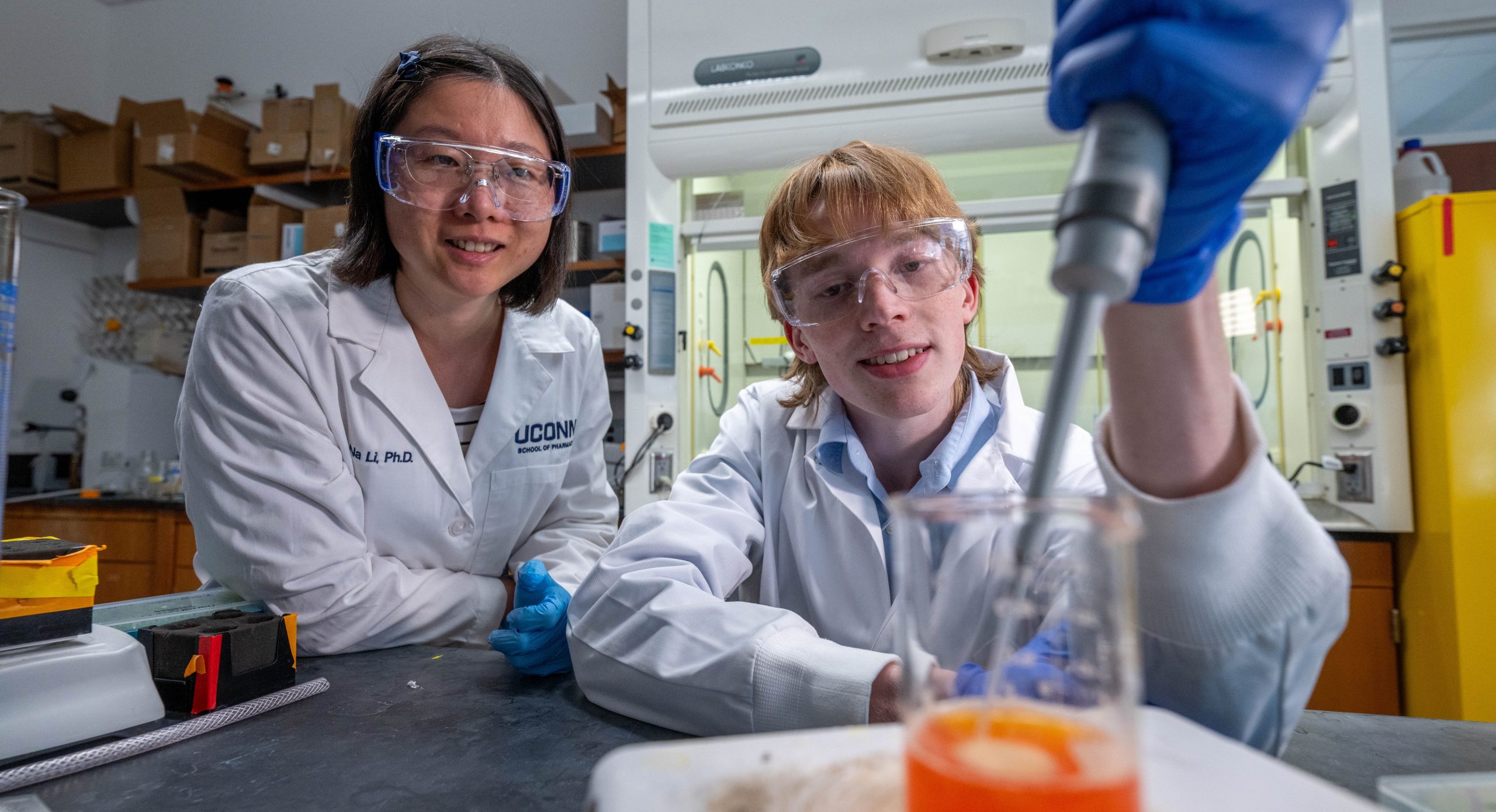
Pharmaceutical Sciences at UConn: Innovative, Entrepreneurial, Connected to the World
The Department of Pharmaceutical Sciences at the UConn School of Pharmacy has a rich history of excellence in all three facets of its core mission: teaching, research, and service. We do this through world class teaching and learning, scientific discovery and exchange, and health care improvement. The Department is home to 20 faculty members with expertise in the disciplines of Pharmaceutics, and Pharmacology and Toxicology, and Medicinal Chemistry.
At UConn, our graduate students enjoy a robust partnership with their faculty mentors. In addition to specialized research training in areas such as drug discovery, mode of action, drug formulation, and safety, all disciplines have unique core courses providing fundamental concepts critical to each discipline. Our department enjoys significant success in placing our Pharm.D. and Ph.D. graduates both locally and nationally in government, industry, and academia. The flexibility of our program also allows Pharm.D. candidates to customize their studies to garner additional expertise within pharmaceutical sciences and related research.
Pharmaceutics
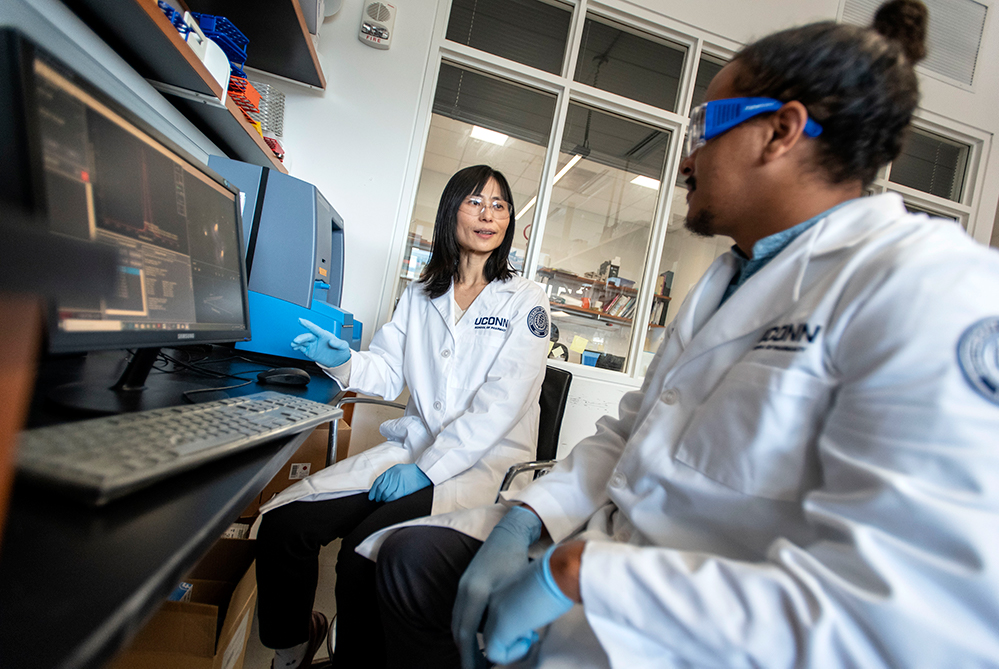
Pharmaceutics, the science and engineering of drug dosage form design, is a highly multi-disciplinary field requiring expertise in chemistry, engineering, pharmacy, materials science, mathematics, and the biological sciences. The area of research ranges from fundamental studies of the physicochemical properties of drugs and related molecules to dosage forms and delivery systems.
Contact:
Xiuling Lu - Division Coordinator
Pharmacology and Toxicology
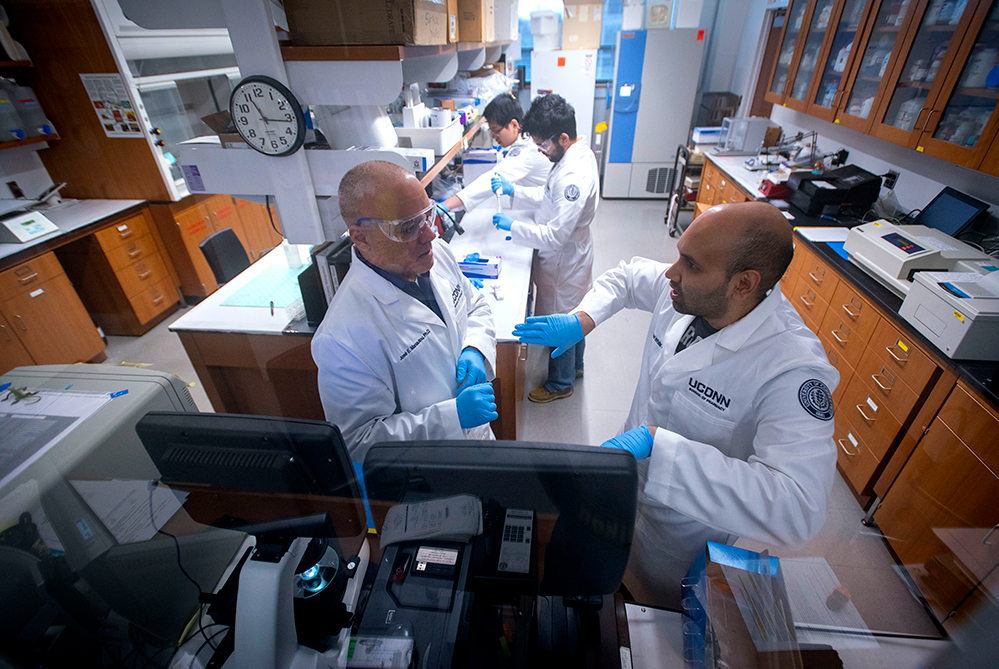
The pharmacology and toxicology disciplines explore the mechanisms underlying the action of drugs, chemicals, and environmental toxicants. The study of both pharmacology and toxicology integrates the principles and skills of biology and chemistry in an effort to understand the molecular, cellular and organismal effects of chemicals on biological systems.
Contact:
Gregory C. Sartor - Division Coordinator
Medicinal Chemistry
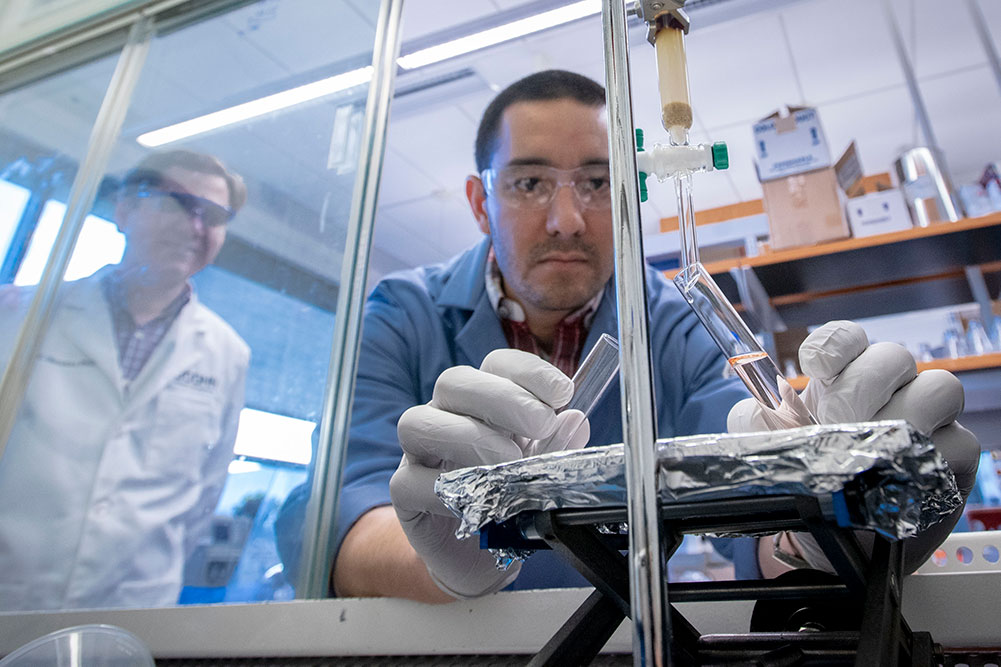
Investigators in medicinal chemistry explore the design, synthesis and mechanism of new drugs. Interested students often have backgrounds in chemistry and biology. Key areas of concentration within the department comprise structural biology, including the determination of structures of drug targets using X-ray crystallography and nuclear magnetic resonance (NMR), organic synthesis of new drugs and structure-based drug design.
Contact:
Olga Vinogradova - Division Coordinator
Faculty
Many of our faculty are supported by such organizations as the National Institutes of Health, the Food and Drug Administration, and the National Science Foundation. The Department includes two Endowed Chairs and two Board of Trustees Distinguished Professors. Our faculty are highly regarded for their scholarly contributions, service and engagement in the global scientific community. Our research programs are innovative, multi-faceted, and collaborative always striving to identify and characterize therapies for treatment of human diseases, increasing public health and quality of life.
Teaching and Training
The department has a deep commitment to teaching and training. Our teaching mission is achieved through an active and rigorous graduate program in all three disciplines. The Department also shares the responsibility of teaching the Doctor of Pharmacy (Pharm.D.) curriculum with the Department of Pharmacy Practice. Graduates of the professional pharmacy program are given the skills and knowledge required to provide patient-centered pharmaceutical care.
We also continue our long tradition of training the next generation of pharmaceutical scientists. In addition to highly specialized research training in areas such as drug discovery, mode of action, drug formulation, and safety, all disciplines have unique core courses designed to provide fundamental concepts critical to each discipline. Our department enjoys great success in placing our PhD graduates both locally and nationally in government, industry, and academia.
The Department maintains strong ties to most clinical-oriented programs including those in the department of Pharmacy Practice, UConn Health Center, and UConn science departments such as Molecular and Cellular Biology, Physiology and Neurobiology, Nutritional Sciences, and Chemistry. Many faculty are also affiliated with the Institute for Systems Genomics. Students in the department have a wide range of opportunities to tailor their studies to meet their individual goals.